
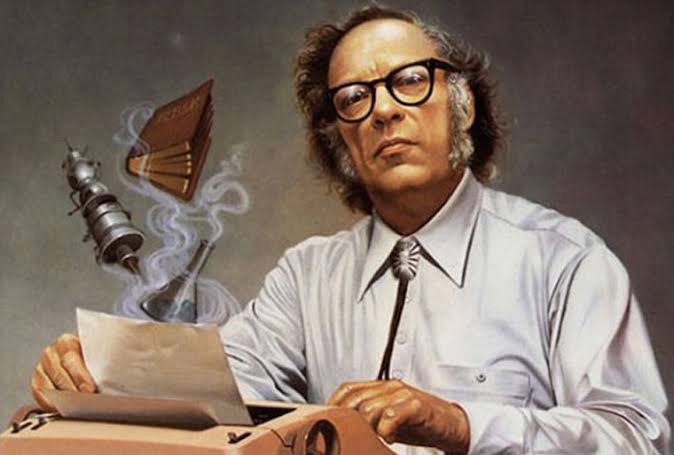
1992년 4월 6일, 구 소련 태생 미국의 소설가로 ‘로봇 3원칙’ 개념을 제시한 아이작 아시모프 (Isaac Asimov, 1920 ~ 1992) 별세
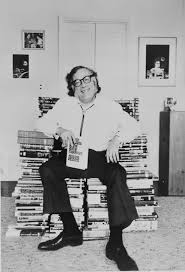
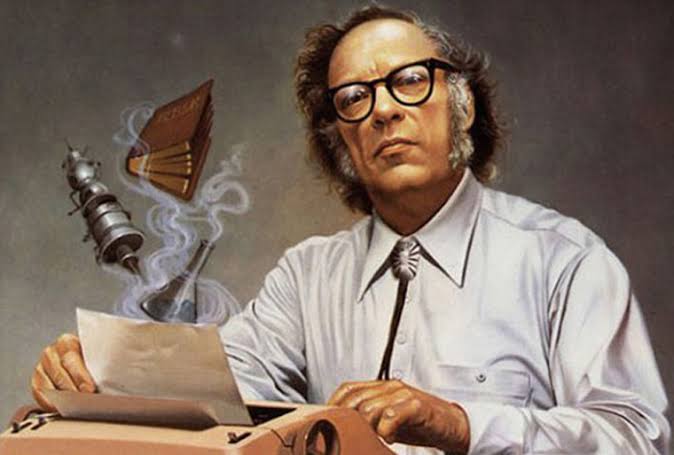
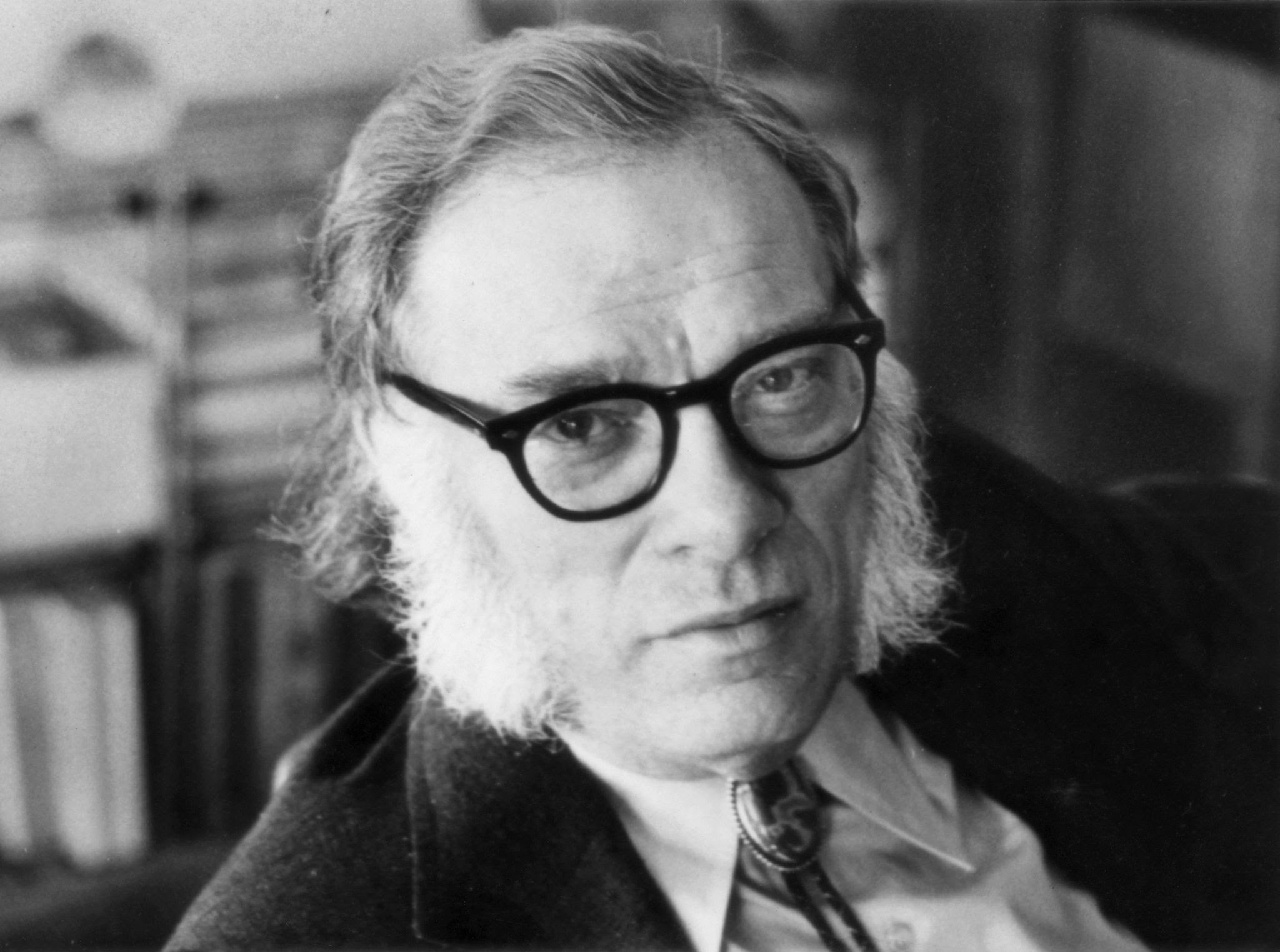
아이작 아시모프 (Isaac Asimov, 1920년 1월 2일 ~ 1992년 4월 6일)는 미국의 과학 소설가이자 저술가, 또한 보스턴 대학교의 생화학 교수였다.
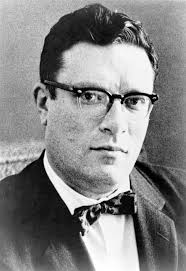
– 아이작 아시모프 (Isaac Asimov)
.본명: 이사크 유도비치 아지모프 (Isaak Yudovich Azimov)
.출생: 1920년 1월 2일경, 소비에트 러시아 페트로비치
.사망: 1992년 4월 6일 (72세), 미국 뉴욕주 뉴욕시
.국적: 미국 (1928–92)
.직업: 소설가, 저술가, 교수
.장르: SF
.활동: 1939년 – 1992년
.학력: 보이스 고등학교 (졸업, –1935), 컬럼비아 대학교 (화학 / 학사, 1935–39), 컬럼비아 대학교 대학원 (화학 / 석사, 1939–41), 컬럼비아 대학교 대학원 (생화학 / 박사, 1945–48)
.배우자: 거트루드 블러거만 (1942년 – 1973년, 이혼), 지넷 오팔 젭슨 (1973년 결혼)
.자녀: 2명
.종교: 무종교(무신론)
아이작 아시모프 (Isaac Asimov, 1920 ~ 1992)는 러시아 출신의 미국 작가이자 보스턴 대학교의 생화학 교수였으며, 20세기 최고의 과학 소설 (SF) 거장 중 한 명으로 손꼽힌다.
그는 평생 500권 이상의 책을 집필하거나 편집한 다작 작가로 유명하며, SF뿐만 아니라 역사, 성서 해설, 과학 교양서 등 거의 모든 지식 분야를 다루었다.
그는 자신의 생애 동안 500권 이상의 책을 쓰고 다듬어 로버트 A. 하인라인, 아서 C. 클라크와 함께 공상과학소설계의 “삼대 거물” (Big Three)로 여겨진다.
또한, 그는 9만여 개의 편지와 엽서를 쓰고 받았으며, 공상과학뿐만 아니라 미스터리와 판타지 등의 장르의 소설도 썼다.
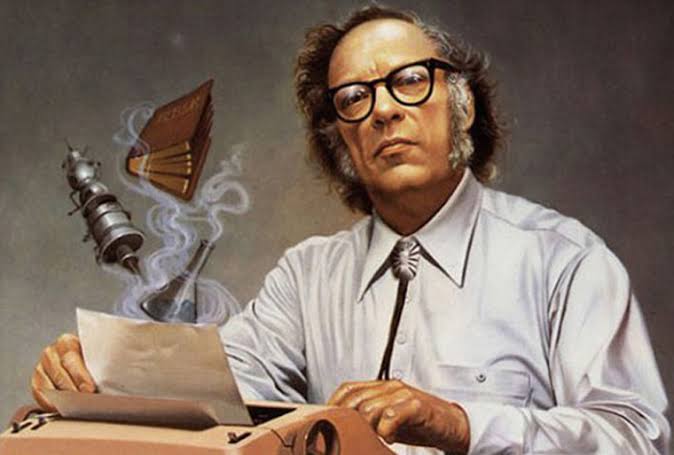
○ 생애 및 활동
1920년 1월 2일 러시아의 페트로비치 (Petrovichi) 에서 출생하였으며 3살 때 가족이 미국으로 이주하였다.
948년 컬럼비아 대학에서 생화학 박사 학위를 취득하여 보스턴대학교에서 생화학 교수를 역임하였다. 그러나 그를 정작 유명인으로 만든 것은 SF 소설이었다.
21세의 나이에 훗날 SF 소설의 초석이 되는 파운데이션 시리즈 (Foundation Series)를 시작하였다. 그는 로봇, 엠파이어, 파운데이션 시리즈 등 수상 경력이 있는 SF 소설로 많은 사랑을 받았고 과학에서부터 셰익스피어, 역사에 이르기까지 다양한 주제에 대해 470권이 넘는 책을 저술하였다.
미국 과학 소설 및 판타지 작가 협회로부터 SF 소설의 그랜드 마스터라는 별명을 얻게 되었다. 50년 가까이 모든 연령층의 독자들에게 즐거움과 교훈을 선사하다가 1992년 4월 72세의 나이로 사망하였다.
대표작으로는 총 일곱 편으로 구성된 ‘파운데이션’ 시리즈를 비롯해 『강철 도시』,『벌거벗은 태양』 등의 로봇 시리즈, 그리고 『우주의 기류』, 『별들은 먼지처럼』등의 은하제국 3부작과 네뷸러상과 휴고상을 모두 수상한 『신들 자신』 등이 있으며, 영화 <아이, 로봇>과 <바이센테니얼 맨>의 원작인 「아이, 로봇」, 『200년을 산 사나이』가 있다.
아이작 아시모프는 휴고상, 네뷸러상 등을 수차례 수상했으며, 유수 대학으로부터 14개의 명예박사 학위를 받았다.
1971년에는 미국SF작가협회에서 ‘SF의 그랜드마스터’ 칭호를 받은 바 있다. 그리고 그의 이름을 딴 소행성, 과학 잡지, 초등학교가 있고, SF 및 교양과학 분야에 각각 그의 이름이 붙은 상이 있을 정도로 지금도 전 세계적으로 많은 명성을 유지하고 있다.
그 명성은 화성의 크레이터와 1981년에 발견된 소행성에 ‘아시모프’라는 이름이 붙여질 정도다.
1942년 한 과학 잡지에 발표한 단편 ‘Runaround’ 에서 유명한 ‘로봇 3원칙’ 개념을 제시했다.
– 수상과 인정
아시모프는 매년 12개 이상의 작품상을 받았고, 6개 이상의 공로상을 받았다. 또한, 아시모프는 여러 대학에서 14개의 명예 학위를 받았다.
1955년 – 세계 SF 컨벤션에서 공로상 수상.
1957년 – 토머스 에디슨 재단의 최우수 과학 도서상 수상.
1960년 – 미국심장협회의 하워드 W. 블레이크슬리 (Howard W. Blakeslee)상 수상.
1962년 – 보스턴 대학교 출판 공로상.
1963년 – 판타지 & 사이언스 픽션에 실린 아시모프의 수필들에 대한 휴고 특별상 수상.
1963년 – 미국 예술 과학 아카데미의 회원 등록.
1964년 – 미국 SF와 판타지 작가들 (Science Fiction and Fantasy Writers of America)에게 아시모프의 책 《Nightfall》(1941)이 역대 최고의 공상과학 단편 책으로 선정.
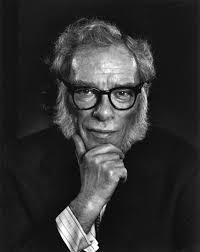
○ 작품
생전에 ‘글 쓰는 기계’라는 별명을 얻을 만큼 오로지 집필만을 즐겼으며 소설과 논픽션 등 500여 권에 달하는 책을 냈다.
대표작으로는 『나는 로봇이야』, 『미스테리 환상여행』, 『로봇』 시리즈, 『파운데이션』 시리즈, 『은하제국』 시리즈, 『아시모프의 과학소설 창작백과』, 『아이, 로봇』, 『아자젤』 등의 소설과 『아시모프의 물리학』, 『아시모프의 천문학 입문』, 『우주의 비밀』 등 다수의 과학 에세이가 있다.
◇ Selected bibliography
– Science fiction
•Greater Foundation series
.The Robot series:
The Caves of Steel. 1954(first Elijah Baley SF-crime novel)
The Naked Sun. 1957. (second Elijah Baley SF-crime novel)
The Robots of Dawn. 1983. (third Elijah Baley SF-crime novel)
Robots and Empire. 1985.(sequel to the Elijah Baley trilogy)
.Galactic Empire novels:
Pebble in the Sky. 1950. (early Galactic Empire)
The Stars, Like Dust. 1951. (long before the Empire)
The Currents of Space. 1952. (Republic of Trantor still expanding)
.Foundation prequels:
Prelude to Foundation. 1988.
Forward the Foundation. 1993.
.Original Foundation trilogy:
Foundation. 1951.
Foundation and Empire. 1952. (also published with the title ‘The Man Who Upset the Universe’, D-125, in about 1952)
Second Foundation. 1953.
.Extended Foundation series:
Foundation’s Edge. 1982.
Foundation and Earth. 1986.
.Lucky Starr series (as Paul French / Main article: Lucky Starr series / All published by Doubleday & Co)
David Starr, Space Ranger (1952)
Lucky Starr and the Pirates of the Asteroids (1953)
Lucky Starr and the Oceans of Venus (1954)
Lucky Starr and the Big Sun of Mercury (1956)
Lucky Starr and the Moons of Jupiter (1957)
Lucky Starr and the Rings of Saturn (1958)
.Norby Chronicles (with Janet Asimov / Main article: Norby / All published by Walker & Company)
Norby, the Mixed-Up Robot (1983)
Norby’s Other Secret (1984)
Norby and the Lost Princess (1985)
Norby and the Invaders (1985)
Norby and the Queen’s Necklace (1986)
Norby Finds a Villain (1987)
Norby Down to Earth (1988)
Norby and Yobo’s Great Adventure (1989)
Norby and the Oldest Dragon (1990)
Norby and the Court Jester (1991)
.Novels not part of a series (Novels marked with an asterisk have minor connections to the Foundation and Robot series.)
The End of Eternity (1955), Doubleday
Fantastic Voyage (1966), Bantam Books (paperback) and Houghton Mifflin (hardback) (a novelization of the movie)
The Gods Themselves (1972), Doubleday
Fantastic Voyage II: Destination Brain (1987), Doubleday (not a sequel to Fantastic Voyage, but a similar, independent story)
Nemesis (1989), Bantam Doubleday Dell
Nightfall (1990), Doubleday, with Robert Silverberg (based on “Nightfall”, a 1941 short story written by Asimov)
Child of Time (1992), Bantam Doubleday Dell, with Robert Silverberg (based on “The Ugly Little Boy”, a 1958 short story written by Asimov)
The Positronic Man (1993), Bantam Doubleday Dell, with Robert Silverberg (based on The Bicentennial Man, a 1976 novella written by Asimov)
.Short-story collections
I, Robot. Gnome Books initially, later Doubleday & Co. 1950.
The Martian Way and Other Stories. Doubleday. 1955.
Earth Is Room Enough. Doubleday. 1957.
Nine Tomorrows. Doubleday. 1959.
The Rest of the Robots. Doubleday. 1964.
Through a Glass, Clearly. New English Library. 1967.
Asimov’s Mysteries. Doubleday. 1968.
Nightfall and Other Stories. Doubleday. 1969.
The Early Asimov. Doubleday. 1972.
The Best of Isaac Asimov. Sphere. 1973.
Buy Jupiter and Other Stories. Doubleday. 1975.
The Bicentennial Man and Other Stories. Doubleday. 1976.
The Complete Robot. Doubleday. 1982.
The Winds of Change and Other Stories. Doubleday. 1983.
The Edge of Tomorrow. Tor. 1985.
The Alternate Asimovs. Doubleday. 1986.
The Best Science Fiction of Isaac Asimov. Doubleday. 1986.
Robot Dreams. Byron Preiss. 1986.
Azazel. Doubleday. 1988.
Robot Visions. Byron Preiss. 1990.
Gold. Harper Prism. 1995.
Magic. Harper Prism. 1996.
- Mysteries
.Novels
The Death Dealers (1958), Avon Books, republished as A Whiff of Death by Walker & Company
Murder at the ABA (1976), Doubleday, also published as Authorized Murder
•Short-story collections
.Black Widowers series
Tales of the Black Widowers (1974), Doubleday
More Tales of the Black Widowers (1976), Doubleday
Casebook of the Black Widowers (1980), Doubleday
Banquets of the Black Widowers (1984), Doubleday
Puzzles of the Black Widowers (1990), Doubleday
The Return of the Black Widowers (2003), Carroll & Graf
.Other mysteries
Asimov’s Mysteries (1968), Doubleday
The Key Word and Other Mysteries (1977), Walker
The Union Club Mysteries (1983), Doubleday
The Disappearing Man and Other Mysteries (1985), Walker
The Best Mysteries of Isaac Asimov (1986), Doubleday
- Nonfiction
• Popular science
.Collections of Asimov’s essays for F&SF (The following books collected essays which were originally published as monthly columns in The Magazine of Fantasy and Science Fiction and collected by Doubleday & Co)
Fact and Fancy (1962)
View from a Height (1963)
Adding a Dimension (1964)
Of Time and Space and Other Things (1965)
From Earth to Heaven (1966)
Science, Numbers, and I (1968)
The Solar System and Back (1970)
The Stars in Their Courses (1971)
The Left Hand of the Electron (1972)
The Tragedy of the Moon (1973)
Asimov On Astronomy (updated version of essays in previous collections) (1974
Asimov On Chemistry (updated version of essays in previous collections) (1974)
Of Matters Great and Small (1975)
Asimov On Physics (updated version of essays in previous collections) (1976)
The Planet That Wasn’t (1976)
Asimov On Numbers (updated version of essays in previous collections) (1976)
Quasar, Quasar, Burning Bright (1977)
The Road to Infinity (1979)
The Sun Shines Bright (1981)
Counting the Eons (1983)
X Stands for Unknown (1984)
The Subatomic Monster (1985)
Far as Human Eye Could See (1987)
The Relativity of Wrong (1988)
Asimov on Science: A 30 Year Retrospective 1959–1989 (1989) (features the first essay in the introduction)
Out of the Everywhere (1990)
The Secret of the Universe (1991)
.Other general science essay collections
Only a Trillion (1957), Abelard-Schuman.
Is Anyone There? (1967), Doubleday, (which includes the article in which he coined the term “spome”)
Today and Tomorrow and— (1973), Doubleday
Science Past, Science Future (1975), Doubleday.
Please Explain (1975), Houghton Mifflin.
Life and Time (1978), Doubleday
The Roving Mind (1983), Prometheus Books, new edition 1997.
The Dangers of Intelligence (1986), Houghton Mifflin.
Past, Present and Future (1987), Prometheus Books.
The Tyrannosaurus Prescription (1989), Prometheus Books
Frontiers (1990), Dutton
Frontiers II (1993), Dutton
.Other science books by Asimov
The Chemicals of Life (1954), Abelard-Schuman.
Inside the Atom (1956), Abelard-Schuman.
Building Blocks of the Universe (1957; revised 1974), Abelard-Schuman.
The World of Carbon (1958), Abelard-Schuman.
The World of Nitrogen (1958), Abelard-Schuman.
Words of Science and the History Behind Them (1959), Houghton Mifflin.
The Clock We Live On (1959), Abelard-Schuman.
Breakthroughs in Science (1959), Houghton Mifflin.
Realm of Numbers (1959), Houghton Mifflin.
Realm of Measure (1960), Houghton Mifflin
The Wellsprings of Life (1960), Abelard-Schuman.
Life and Energy (1962), Doubleday.
The Genetic Code (1962), The Orion Press
The Human Body: Its Structure and Operation (1963), Houghton Mifflin.
The Human Brain: Its Capacities and Functions (1963), Houghton Mifflin.
Planets for Man (with Stephen H. Dole) (1964), Random House, reprinted by RAND in 2007.
An Easy Introduction to the Slide Rule (1965), Houghton Mifflin.
The Intelligent Man’s Guide to Science (1965), Basic Books
The title varied with each of the four editions, the last being Asimov’s New Guide to Science (1984).
The Universe: From Flat Earth to Quasar (1966), Walker.
The Neutrino (1966), Doubleday.
Understanding Physics Vol. I, Motion, Sound, and Heat (1966), Walker.
Understanding Physics Vol. II, Light, Magnetism, and Electricity (1966), Walker.
Understanding Physics Vol. III, The Electron, Proton, and Neutron (1966), Walker.
Photosynthesis (1969), Basic Book.
Our World in Space (1974), New York Graphic.
Eyes on the Universe: A History of the Telescope (1976), Andre Deutsch Limited.
The Collapsing Universe (1977), Walker.
Extraterrestrial Civilizations (1979), Crown.
Visions of the Universe with illustrations by Kazuaki Iwasaki (1981), Cosmos Store.
Exploring the Earth and the Cosmos (1982), Crown.
The Measure of the Universe (1983), Harper & Row
Think About Space: Where Have We Been and Where Are We Going? with co-author Frank White (1989), Walker
Asimov’s Chronology of Science and Discovery (1989), Harper & Row, second edition adds content thru 1993.
Beginnings: The Story of Origins (1989), Walker
Isaac Asimov’s Guide to Earth and Space (1991), Random House.
Atom: Journey Across the Subatomic Cosmos (1991), Dutton.
Mysteries of Deep Space: Quasars, Pulsars and Black Holes (1994).
Earth’s Moon (1988), Gareth Stevens, revised in 2003 by Richard Hantula.
The Sun (1988), Gareth Stevens, revised in 2003 by Richard Hantula.
The Earth (1988), Gareth Stevens, revised in 2004 by Richard Hantula.
Jupiter (1989), Gareth Stevens, revised in 2004 by Richard Hantula.
Venus (1990), Gareth Stevens, revised in 2004 by Richard Hantula.

.Literary works (All published by Doubleday)
Asimov’s Guide to Shakespeare, vols I and II (1970).
Asimov’s Annotated “Don Juan” (1972)
Asimov’s Annotated “Paradise Lost” (1974)
Familiar Poems, Annotated (1976)
Asimov’s The Annotated “Gulliver’s Travels” (1980)
Asimov’s Annotated “Gilbert and Sullivan” (1988)
.The Bible
Words from Genesis (1962), Houghton Mifflin
Words from the Exodus (1963), Houghton Mifflin
Asimov’s Guide to the Bible, vols I and II (1967 and 1969, one-volume ed. 1981), Doubleday.
The Story of Ruth (1972), Doubleda.
In the Beginning (1981), Crown
.Autobiography(Main article: Autobiographies of Isaac Asimov)
In Memory Yet Green: The Autobiography of Isaac Asimov, 1920–1954 (1979, Doubleday)
In Joy Still Felt: The Autobiography of Isaac Asimov, 1954–1978 (1980, Doubleday)
I. Asimov: A Memoir (1994, Doubleday)
It’s Been a Good Life (2002, Prometheus Books), condensation of Asimov’s three volumes of autobiography, edited by his widow, Janet Jeppson Asimov
.History(All published by Houghton Mifflin except where otherwise stated)
The Kite That Won the Revolution (1963).
The Greeks (1965)
The Roman Republic (1966)
The Roman Empire (1967)
The Egyptians (1967)
The Near East (1968)
The Dark Ages (1968)
Words from History (1968)
The Shaping of England (1969)
Constantinople: The Forgotten Empire (1970)
The Land of Canaan (1971)
The Shaping of France (1972)
The Shaping of North America: From Earliest Times to 1763 (1973)
The Birth of the United States: 1763–1816 (1974)
Our Federal Union: The United States from 1816 to 1865 (1975).
The Golden Door: The United States from 1865 to 1918 (1977)
Asimov’s Chronology of the World (1991), HarperCollins.
The March of the Millennia (1991), with co-author Frank White, Walker & Company.
.Humor
The Sensuous Dirty Old Man (1971) (As Dr. A), Walker & Company.
Isaac Asimov’s Treasury of Humor (1971), Houghton Mifflin
Lecherous Limericks (1975), Walker.
More Lecherous Limericks (1976), Walker.
Still More Lecherous Limericks (1977), Walker.
Limericks, Two Gross, with John Ciardi (1978), Norton.
A Grossery of Limericks, with John Ciardi (1981), Norton.
Limericks for Children (1984), Caedmon
Asimov Laughs Again (1992), HarperCollins
.On writing science fiction
Asimov on Science Fiction (1981), Doubleday
Asimov’s Galaxy (1989), Doubleday
.Other nonfiction
Opus 100 (1969), Houghton Mifflin.
Asimov’s Biographical Encyclopedia of Science and Technology (1964), Doubleday (revised edition 1972)
Opus 200 (1979), Houghton Mifflin.
Isaac Asimov’s Book of Facts (1979), Grosset & Dunlap.
Opus 300 (1984), Houghton Mifflin.
Our Angry Earth: A Ticking Ecological Bomb (1991), with co-author Frederik Pohl, Tor.
참고 = 위키백과
크리스천라이프 편집부