

1937년 9월 10일, 미국의 과학자•논픽션 작가 재레드 다이아몬드 / 재러드 메이슨 다이아몬드 (Jared Mason Diamond, 1937 ~ ) 출생
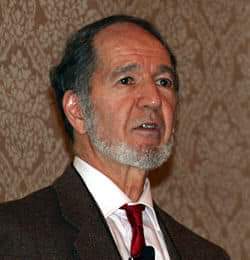
재러드 메이슨 다이아몬드 (Jared Mason Diamond, 1937년 9월 10일 ~ )는 미국의 과학자이자 논픽션 작가이다.

– 재레드 다이아몬드 (Jared Diamond)
.본명: 재러드 메이슨 다이아몬드 (Jared Mason Diamond)
.출생: 1937년 9월 10일, 미국 매사추세츠주 보스턴
.국적: 미국
.직업: 학자, 작가
.분야: 지리학, 생물물리학, 생리학, 조류학, 역사학, 생태학, 진화생물학, 인류학, 환경 결정론
.학력: 록스버리 라틴 스쿨, 하버드 대학교 (역사학 / 학사), 케임브리지 대학교, 트리니티 칼리지 (생리학 / 박사)
.현직: 캘리포니아 대학교 로스앤젤레스 캠퍼스(UCLA) 교수, 성균관대학교 석좌교수 (2021~)
.수상: 맥아더 지니어스 그랜트 (1995), 파이 베타 카파 과학상 (1997), 영국 과학출판상 (1997, 1998, 2006), 퓰리처상 (1998), 국제 코스모스상 (1998), 미국 국가 과학상 (1999), 타일러 환경공로상 (2001), 울프 농업상 (2013)
.배우자: 마리 코헨
.자녀: 2남 (1987년생; 쌍둥이)
현재 캘리포니아 대학교 로스앤젤레스 (UCLA)의 의과대학 생리학/지리학 교수로 재직중에 있다. 2021년부터 성균관대학교 학부대학의 석좌교수로 임명되었다.
생리학으로 과학 인생을 시작한 그는 조류학, 진화생물학, 생물지리학으로 자신의 영역을 점점 확장해 나갔으며 라틴어, 그리스어, 독일어, 프랑스어, 러시아어 등 수개국어를 구사한다. 과학의 대중화에 기여한 공로로 수여되는 영국의 과학출판상과 미국의 LA타임즈 출판상을 수상했다. 또한 그는 미국예술과학아카데미, 미국과학아카데미, 미국철학협회 회원으로 선정되었으며 미국지리학회에서 주는 상을 수상하기도 했다. 저서 《총, 균, 쇠》로 1998년 퓰리처상 일반 논픽션 부문을 수상했다.
○ 생애 및 활동
다이아몬드는 미국 매사추세츠주 보스턴에서 태어났다.
그의 부모는 모두 미국으로 이민을 간 동유럽 유대인 가족이었다.
아버지 루이스 다이아몬드는 소아 질환의 유전학을 전공한 의사였고, 어머니 플로라는 교사, 언어학자, 콘서트 피아니스트였다.
다이아몬드는 6살 때 피아노를 공부하기 시작했다. 몇 년 후 그는 아내를 위해 브람스의 간주곡 A장조를 연주한 후 아내에게 청혼할 것이었다.
원래 아버지를 따라 의사가 되고 싶었으나, 일곱 살 때부터 조류에 관심을 가지기 시작했다.
초, 중, 고등학교 및 학부과정 동안 주로 어학, 역사학, 작문 등을 배웠다.
대학교 4학년 때는 의학을 전공하려던 목표를 생태학으로 바꿨다.
1958년 하버드 대학에서 인류학과 역사학 학사, 1961년 케임브리지 대학 트리니티 칼리지에서 담낭막의 생리학과 생물 물리학 관련으로 박사 학위를 받았다.
대학원 첫 해에는 언어학자가 되고 싶어했다. 박사학위 이후 분자생물학, 진화생물학 (조류 진화), 생태지리학을 연구했다.
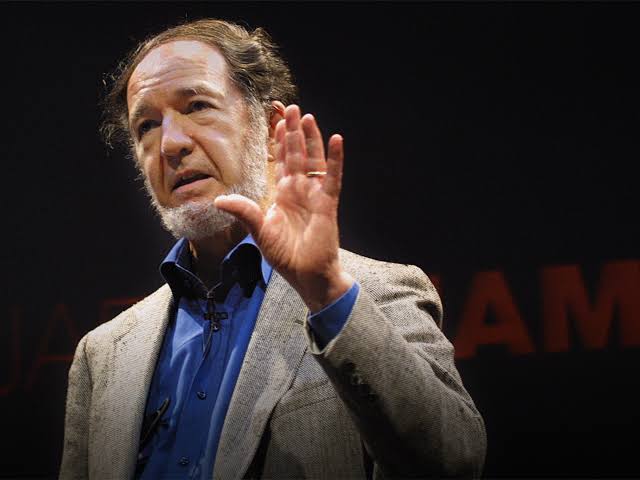
그는 《제3의 침팬지》(1991), 《총, 균, 쇠》(1997), 《섹스의 진화》(1997), 《문명의 붕괴》(2005) 등을 연이어 출간했다.
2010년에는 제임스 로빈슨을 비롯한 일군의 사회과학자들과 함께 인간 역사에 대한 과학적 탐구가 가능하다는 것이 ‘총, 균, 쇠’에서 잘 드러난 그의 문제의식을 담아 ‘Natural Experiment of History’라는 논문집을 출간했다.
2015년 ‘역사학, 사회과학을 품다: 새로운 방법론으로서 자연 실험’ 이름으로 번역되었다.
2013년에는 저서인 ‘어제까지의 세계’를 내놓았다. 이로서 그의 문명 대탐구 3부작인 《총, 균, 쇠》, 《문명의 붕괴》, 《어제까지의 세계》로 완결되었다.
세계적으로 유명한 과학 월간지 《네이처 Nature》, 《내추럴 히스토리 Natural History》, 《디스커버 discover》등 수많은 고정란에 기고하는 저널리스트이며 이들 과학지의 논설위원도 하는 등 과학 저술인으로도 활약하고 있다.
2019년, 한국을 방한하였다. 그리고 JTBC 차이나는 클라스에 출연, 강연하였다. 이번이 7번째 방한이라고 한다.
2021년 성균관대학교 학부대학 석좌교수로 임명되었다.
2021학년도 2학기 성균관대학교의 교양 수업 ‘대격변의시대’에서 교수로서 직접 강의를 하게 되었다.
다만 코로나로 인하여 재레드 다이아몬드는 LA에서 강의하고 학생들은 성균관대학교 인문사회과학캠퍼스 경영관 지하 3층 소극장에서 스크린으로 강의를 보거나, 실시간으로 온라인 수강을 하는 비대면 강의 형태로 진행된다.
재레드 다이아몬드 (Jared Diamond)는 생리학, 진화생물학, 인간생태학, 생물지리학에서 대가의 경지에 오른 르네상스 지식인으로 추앙받고 있다.

- 대중적 작품
.《제3의 침팬지》(1991)
다이아몬드의 첫 번째 대중 저서, 《제3의 침팬지》(1991)는 인류학, 진화생물학, 유전학, 생태학, 언어학 등의 증거를 통합하여 인간의 진화와 현대 세계와의 관련성을 검토한다. 이 책은 인간이 어떻게 다른 동물들과 다르게 진화했는지를 추적한다. 비록 우리의 DNA의 98% 이상을 우리의 가장 가까운 동물인 침팬지와 공유했음에도 불구하고 말이다. 이 책은 또한 언어, 예술, 농업, 흡연과 약물 사용, 그리고 다른 독특한 인간 속성들에 대한 동물적 기원을 조사한다.
.《총, 균, 쇠》(1997)
《총, 균, 쇠》는 1997년에 출판되었다. 왜 유라시아 사람들이 미국 원주민, 호주인, 아프리카인들을 정복하거나 추방했는지에 대해 질문한다. 이 결과는 유라시아 민족 자체의 생물학적 이점 때문이 아니라 유라시아 대륙의 특징, 특히 다양한 야생 식물과 동물의 다양성, 그리고 그 위도 변화가 거의 없는 동/서 주요 축이 가축화, 사람, 기술의 확산을 선호했기 때문이라고 주장한다.
이 책의 첫 번째 부분은 왜 소수의 야생 동식물과 동물들이 서식하기에 적합하다고 증명되었는지에 초점을 맞추고 있다. 두 번째 부분에서는 그러한 가정집단을 기반으로 한 지역 식량 생산이 어떻게 치밀하고 계층화된 인간 인구, 글쓰기, 중앙집권적인 정치 조직, 전염성 전염병을 발전시켰는지를 논한다. 세 번째 부분은 서로 다른 대륙과 세계 지역 간의 식량 생산과 인간 사회의 발전을 비교한다.
.《섹스의 진화》(1997)
다이아몬드는 일반적으로 당연하게 여겨지지만 우리의 동물 친척들 사이에서 매우 특이한 인간 성징의 근본적인 특징들에 대한 진화적 요인에 대해 논한다. 그러한 특징으로는 장기간의 부부관계 (결혼), 공유된 공동영토 내에서 경제적으로 협력하는 쌍들의 공존, 어머니뿐만 아니라 아버지에 의한 보살핌 제공, 공공장소에서가 아닌 사적인 곳에서 성관계를 갖는 것, 은폐된 배란, 월경 주기의 대부분을 포괄하는 여성 성접대 등이 있다.
.《문명의 붕괴》(2005)
《문명의 붕괴》(2005)에서는 왜 옛 사회가 붕괴되거나 계속 번창하는지를 알아보기 위해 다양한 과거 사회를 조사하고 이러한 역사적 사례로부터 현대 사회가 무엇을 배울 수 있는지를 고려한다. 그는 주로 문화적 요인에 기초한 과거 사회의 실패에 대한 설명에 반대하며, 대신 생태학에 초점을 맞춘다. 이 책은 왜 일부 사회가 비참한 결정을 내리는지, 대기업이 환경에 어떤 영향을 미치는지, 오늘날 우리의 주된 환경 문제는 무엇인지, 그리고 개인이 그러한 문제에 대해 무엇을 할 수 있는지를 질문함으로써 결론짓는다.

- 수상
1997년 영국 과학출판상 (제3의 침팬지)
1997년 미국 LA타임스출판상 (제3의 침팬지)
1998년 영국 과학출판상 (총, 균, 쇠)
1998년 퓰리처 상 일반논픽션 부문 (총, 균, 쇠)
1992 Tanner Lecturer, University of Utah
1992 Rhône-Poulenc Prize for Science Books for The Third Chimpanzee
1997 Phi Beta Kappa Science Book Prize for Guns, Germs and Steel
1998 Pulitzer Prize for General Non-Fiction for Guns, Germs and Steel
1998 California Book Awards, Gold Medal in nonfiction for Guns, Germs and Steel
1998 Aventis Prize for Science Books for Guns, Germs and Steel
1998 International Cosmos Prize
1999 Lannan Literary Award for Nonfiction
1999 National Medal of Science
2001 Tyler Prize for Environmental Achievement
2002 Lewis Thomas Prize for Writing about Science
2004 A foreign holder of honorary title of Academician in Academy of Finland
2005 Elected Honorary Fellow, Trinity College, Cambridge, England
2006 Royal Society Prize for Science Books for Collapse (shortlisted)
2006 Dickson Prize in Science
2008 PhD Honoris Causa at the Katholieke Universiteit Leuven, Belgium
2013 Wolf Prize in Agriculture
2016 American Humanist Association Humanist of the Year

○ 저서
- 주요저서
《제3의 침팬지》The Third Chimpanzee,1996
《섹스의 진화》Why is Sex Fun?, 1997, 2005
《문명의 붕괴》Collapse, 2004, 2005
《총, 균, 쇠》Guns, Germs, and Steel, 2005
- Books
1972 Avifauna of the Eastern Highlands of New Guinea, Publications of the Nuttall Ornithological Club, No. 12, Cambridge, Mass., pp. 438.
1975 M. L. Cody and J. M. Diamond, eds. Ecology and Evolution of Communities. Belknap Press, Harvard University Press, Cambridge, Mass.
1979 J. M. Diamond and M. LeCroy. Birds of Karkar and Bagabag Islands, New Guinea. Bull. Amer. Mus. Nat. Hist. 164:469–531
1984 J. M. Diamond. The Avifaunas of Rennell and Bellona Islands. The Natural History of Rennell Islands, British Solomon Islands 8:127–168
1986 J. M. Diamond and T. J. Case. eds. Community Ecology. Harper and Row, New York
1986 B. Beehler, T. Pratt, D. Zimmerman, H. Bell, B. Finch, J. M. Diamond, and J. Coe. Birds of New Guinea. Princeton University Press, Princeton
1992 The Third Chimpanzee: The Evolution and Future of the Human Animal
1997 Why is Sex Fun? The Evolution of Human Sexuality
1997 Guns, Germs, and Steel: The Fates of Human Societies. W.W. Norton & Co.
2001 The Birds of Northern Melanesia: Speciation, Ecology, & Biogeography (with Ernst Mayr)
2003 Guns, Germs, and Steel Reader’s Companion
2005 Collapse: How Societies Choose to Fail or Succeed. New York: Penguin Books.
2010 Natural Experiments of History (with James A. Robinson).
2012 The World Until Yesterday: What Can We Learn from Traditional Societies?
2015 The Third Chimpanzee for Young People: The Evolution and Future of the Human Animal, Seven Stories Press
2019 Upheaval: Turning Points for Nations in Crisis, Little, Brown and Company,

- Articles
Pidot, A. L.; Diamond, J. M. (1964). “Streaming Potentials in a Biological Membrane”. Nature. 201 (4920): 701–702.
Diamond, J. M. (1964). “The Mechanism of Isotonic Water Transport”, The Journal of General Physiology. 48: 15-42 .
Berg, H. C.; Diamond, J. M.; Marfey, P. S. (1965). “Erythrocyte membrane: Chemical modification”. Science. 150 (3692): 64–67.
Diamond, J. M. (1966). “Zoological Classification System of a Primitive People”. Science. 151 (3714): 1102–1104.
Diamond, J. M.; Tormey, J. M. (1966). “Role of long extracellular channels in fluid transport across epithelia”. Nature. 210 (5038): 817–820.
Diamond, J. M.; Bossert, W. H. (1967). “Standing-Gradient Osmotic Flow: A mechanism for coupling of water and solute transport in epithelia”. The Journal of General Physiology. 50 (8): 2061–2083.
Cooke, I. M.; Diamond, J. M.; Grinnell, A. D.; Hagiwara, S.; Sakata, H. (1968). “Suppression of the action potential in nerve by nitrobenzene derivatives”. Proceedings of the National Academy of Sciences of the United States of America. 60 (2): 470–477.
Diamond, J. M.; Wright, E. M. (1969). “Biological Membranes: The Physical Basis of ION and Nonelectrolyte Selectivity”. Annual Review of Physiology. 31: 581–646.
Diamond, J. M. (1969). “Avifaunal equilibria and species turnover rates on the channel islands of california”. Proceedings of the National Academy of Sciences of the United States of America. 64 (1): 57–63.
Diamond, J. M. (1970). “Ecological consequences of island colonization by southwest pacific birds, I. Types of niche shifts”. Proceedings of the National Academy of Sciences of the United States of America. 67 (2): 529–536.
Diamond, J. M. (1970). “Ecological consequences of island colonization by southwest Pacific birds. II. The effect of species diversity on total population density”. Proceedings of the National Academy of Sciences of the United States of America. 67 (4): 1715–1721.
Diamond, J. M. (1971). “Comparison of faunal equilibrium turnover rates on a tropical island and a temperate island”. Proceedings of the National Academy of Sciences of the United States of America. 68 (11): 2742–2745.
Diamond, JM (1972). “Biogeographic kinetics: estimation of relaxation times for avifaunas of southwest pacific islands”. Proceedings of the National Academy of Sciences of the United States of America. 69 (11): 3199–203.
Diamond, J. M. (1973). “Distributional Ecology of New Guinea Birds: Recent ecological and biogeographical theories can be tested on the bird communities of New Guinea”. Science. 179 (4075): 759–769.
Dix, J. A.; Diamond, J. M.; Kivelson, D. (1974). “Translational diffusion coefficient and partition coefficient of a spin-labeled solute in lecithin bilayer membranes”. Proceedings of the National Academy of Sciences of the United States of America. 71 (2): 474–478.
Moreno, J. H.; Diamond, J. M. (1974). “Role of hydrogen bonding in organic cation discrimination by gallbladder epithelium”. Nature. 247 (5440): 368–369.
Diamond, J. M. (1974). “Colonization of Exploded Volcanic Islands by Birds: The Supertramp Strategy”. Science. 184 (4138): 803–806.
Lewis, S. A.; Diamond, J. M. (1975). “Active sodium transport by mammalian urinary bladder”. Nature. 253 (5494): 747–748.
Diamond, J. M. (1975). “The island dilemma: Lessons of modern biogeographic studies for the design of natural reserves”. Biological Conservation. 7 (2): 129–146.
Diamond, J. M.; Mayr, E. (1976). “Species-area relation for birds of the Solomon Archipelago”. Proceedings of the National Academy of Sciences of the United States of America. 73 (1): 262–266.
Island Biogeography and the Design of Natural Reserves (1976), in Robert M. May’s Theoretical Ecology: Principles and Applications, Blackwell Scientific Publications, pp. 163–186.
Mayr, E.; Diamond, J. M. (1976). “Birds on islands in the sky: Origin of the montane avifauna of Northern Melanesia”. Proceedings of the National Academy of Sciences of the United States of America. 73 (5): 1765–1769.
Diamond, J. M.; Gilpin, M. E.; Mayr, E. (1976). “Species-distance relation for birds of the Solomon Archipelago, and the paradox of the great speciators”. Proceedings of the National Academy of Sciences of the United States of America. 73 (6): 2160–2164.
Diamond, J. M. (1976). “Island Biogeography and Conservation: Strategy and Limitations”. Science. 193 (4257): 1027–1029.
Gilpin, M. E.; Diamond, J. M. (1976). “Calculation of immigration and extinction curves from the species-area-distance relation”. Proceedings of the National Academy of Sciences of the United States of America. 73 (11): 4130–4134.
Diamond, J. M.; May, R. M. (1977). “Species Turnover Rates on Islands: Dependence on Census Interval”. Science. 197 (4300): 266–270.
Jope, R. S.; Jenden, D. J.; Ehrlich, B. E.; Diamond, J. M.; Gosenfeld, L. F. (1980). “Erythrocyte choline concentrations are elevated in manic patients”. Proceedings of the National Academy of Sciences of the United States of America. 77 (10): 6144–6146.
Gilpin, M. E.; Diamond, J. M. (1981). “Immigration and extinction probabilities for individual species: Relation to incidence functions and species colonization curves”. Proceedings of the National Academy of Sciences of the United States of America. 78 (1): 392–396.
Diamond, J. M.; Veitch, C. R. (1981). “Extinctions and Introductions in the New Zealand Avifauna: Cause and Effect?”. Science. 211 (4481): 499–501.
Diamond, J. M. (1982). “Mammary gland as an endocrine organ: Implications for mastectomy”. Nature. 295 (5846): 191–192.
Diamond, J. M. (1982). “Rediscovery of the Yellow-Fronted Gardener Bowerbird”. Science. 216 (4544): 431–434.
Diamond, J. M. (1982). “Big-bang reproduction and ageing in male marsupial mice”. Nature. 298 (5870): 115–116.
Clausen, C.; Machen, T. E.; Diamond, J. M. (1982). “Changes in the Cell Membranes of the Bullfrog Gastric Mucosa with Acid Secretion”. Science. 217 (4558): 448–450.
Diamond, J. M. (1982). “Transcellular cross-talk between epithelial cell membranes”. Nature. 300 (5894): 683–685.
Diamond, J. M.; Karasov, W. H. (1983). “Gut physiology. Trophic control of the intestinal mucosa”. Nature. 304 (5921): 18.
Diamond, J. M. (1983). “Extinctions, catastrophic and gradual”. Nature. 304 (5925): 396–397.
Diamond, J. M. (1983). “Taxonomy by nucleotides”. Nature. 305 (5929): 17–18.
Loo, D. D.; Lewis, S. A.; Ifshin, M. S.; Diamond, J. M. (1983). “Turnover, membrane insertion, and degradation of sodium channels in rabbit urinary bladder”. Science. 221 (4617): 1288–1290.
Karasov, W. H.; Pond III, R. S.; Solberg, D. H.; Diamond, J. M. (1983). “Regulation of proline and glucose transport in mouse intestine by dietary substrate levels”. Proceedings of the National Academy of Sciences of the United States of America. 80 (24): 7674–7677.

Diamond, J. M. (1984). “Evolution of stable exploiter-victim systems”. Nature. 310 (5979): 632.
Diamond, J. M.; Keegan, W. F. (1984). “Anthropology: Supertramps at sea”. Nature. 311 (5988): 704–705.
Karasov, W. H.; Diamond, J. M. (1985). “Digestive adaptations for fueling the cost of endothermy”. Science. 228 (4696): 202–204.
Diamond, J. M. (1985). “Developmental biology. A reversible epithelium”. Nature. 318 (6044): 311.
Diamond, J. M.; Karasov, W. H.; Phan, D.; Carpenter, F. L. (1986). “Digestive physiology is a determinant of foraging bout frequency in hummingbirds”. Nature. 320 (6057): 62–63.
Diamond, J. M. (1986). “Ethnic differences: Variation in human testis Size”. Nature. 320 (6062): 488–489.
Diamond, J. M. (1986). “Molecular biology: Why do disused proteins become genetically lost or repressed?”. Nature. 321 (6070): 565–566.
Buddington, R. K.; Diamond, J. M. (1986). “Aristotle revisited: The function of pyloric caeca in fish”. Proceedings of the National Academy of Sciences of the United States of America. 83 (20): 8012–8014.
Cohen, M. M.; Diamond, J. M. (1986). “Medical research: Are we losing the war on cancer?”. Nature. 323 (6088): 488–489.
Diamond, J. M. (1986). “Developmental physiology: Hard-wired local triggering of intestinal enzyme expression”. Nature. 324 (6096): 408.
Diamond, J. M. (1987). “Survival in extreme isolation”. Nature. 325 (6103): 394.
Diamond, J. M. (1987). “Aristotle’s theory of mammalian teat number is confirmed”. Nature. 325 (6101): 200.
Diamond, J. M.; Karasov, W. H. (1987). “Adaptive regulation of intestinal nutrient transporters”. Proceedings of the National Academy of Sciences of the United States of America. 84 (8): 2242–2245.
Diamond, J. M. (1987). “How do flightless mammals colonize oceanic islands?”. Nature. 327 (6121): 374.
Diamond, J. M. (1987). “Abducted orphans identified by grandpaternity testing”. Nature. 327 (6123): 552–553.
Diamond, J. M. (1987). “Infectious, genetic or both?”. Nature. 328 (6127): 199–200.
Diamond, J. M. (1987). “Human use of world resources”. Nature. 328 (6130): 479–480.
Diamond, J. M.; Rotter, J. I. (1987). “Observing the founder effect in human evolution”. Nature. 329 (6135): 105–106.
Rotter, J. I.; Diamond, J. M. (1987). “What maintains the frequencies of human genetic diseases?”. Nature. 329 (6137): 289–290.
Diamond, J. M. (1987). “A darwinian theory of divorce”. Nature. 329 (6142): 765–766.
Diamond, J. M. (1987). “Causes of death before birth”. Nature. 329 (6139): 487–488.
The Worst Mistake in the History of the Human Race (May 1987) Discover pp. 64–66
Diamond, J. M. (1988). “Why cats have nine lives”. Nature. 332 (6165): 586–587.
Diamond, J. M. (1988). “DNA-based phylogenies of the three chimpanzees”. Nature. 332 (6166): 685–686.
Diamond, J. M. (1989). “Were Neanderthals the first humans to bury their dead?”. Nature. 340 (6232): 344.
Diamond, J. M. (1990). “Learning from saving species”. Nature. 343 (6255): 211–212.
Diamond, J. M. (1990). “Old dead rats are valuable”. Nature. 347 (6291): 334–335.
Diamond, J. M. (1991). “A way to world knowledge”. Nature. 352 (6336): 567.
Diamond, J. M. (1991). “Why are pygmies small?”. Nature. 354 (6349): 111–112.
Curse and Blessing of the Ghetto (March 1991) Discover, pp. 60–66
Diamond, J. M. (1992). “The red flag of optimality”. Nature. 355 (6357): 204–206.
Diamond, J. M. (1992). “Diabetes running wild”. Nature. 357 (6377): 362–363.
Diamond, J. M. (1992). “Twilight of the pygmy hippos”. Nature. 359 (6390): 15.
Diamond, J. M. (1992). “Rubbish birds are poisonous”. Nature. 360 (6399): 19–20.
Ferraris, R. P.; Diamond, J. M. (1993). “Crypt/villus site of substrate-dependent regulation of mouse intestinal glucose transporters”. Proceedings of the National Academy of Sciences of the United States of America. 90 (12): 5868–5872.
Diamond, J. M. (1993). “Quantitative design of life”. Nature. 366 (6454): 405–406.
Diamond, J. M. (1994). “Jewish Iysosomes”. Nature. 368 (6469): 291–292.
Diamond, J. M. (1994). “The last people alive”. Nature. 370 (6488): 331–332.
Dining With the Snakes (April 1994) Discover
Race Without Color (November 1994) Discover
Diamond, J. M. (1995). “How to be physiological”. Nature. 376 (6536): 117–118.
Diamond, J. M. (1996). “Competition for brain space”. Nature. 382 (6594): 756–757.
Diamond, J. M. (1996). “Wet transport proteins”. Nature. 384 (6610): 611–612.
The Curse of QWERTY (April 1997) Discover
Kinship With The Stars (May 1997) Discover
Japanese Roots (June 1998) Discover
Diamond, J. M. (1999). “Evolutionary biology. Dirty eating for healthy living”. Nature. 400 (6740): 120–121.
Diamond, J. M. (2000). “Taiwan’s gift to the world”. Nature. 403 (6771): 709–710.
Diamond, J. M. (2000). “Talk of cannibalism”. Nature. 407 (6800): 25–26.
Diamond, J. M. (2001). “Palaeontology: Australia’s last giants”. Nature. 411 (6839): 755–757.
Diamond, J. M. (2002). “Archaeology: Life with the artificial Anasazi”. Nature. 419 (6907): 567–569.
Jianguo Liu and Jared Diamond, “China’s environment in a globalizing world”, Nature, volume 435, pages 1179–1186, 30 June 2005.
What’s Your Consumption Factor? (January 2, 2008) The New York Times
Vengeance is Ours (April 2008) The New Yorker
Diamond, Jared (2011). “Why do some societies make disastrous decisions?”. In John Brockman (ed.). Culture: leading scientists explore civilizations, art, networks, reputation, and the on-line revolution. New York: Harper Perennial.
참고 = 위키백과, 교보문고
크리스천라이프 편집부