
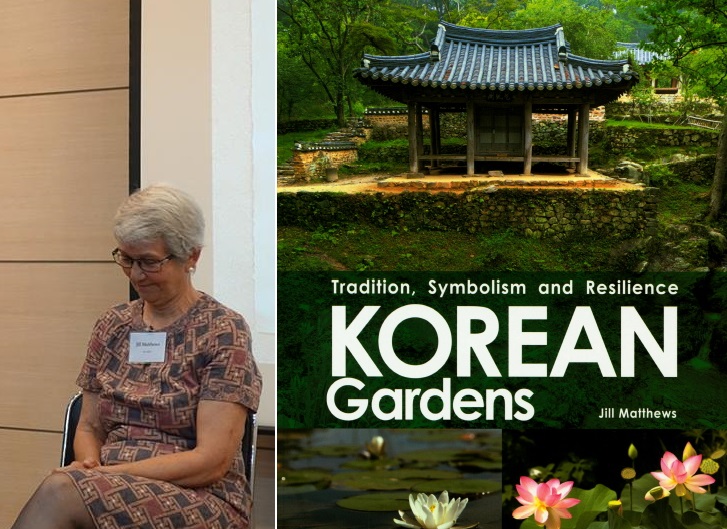
시드니한국문화원 ‘한국의 정원’(Korean Garden) 저자 강연회(9.26) 개최
9월 26일(수) 오후 6시, 시드니한국문화원에서
주시드니한국문화원(원장 박소정, 이하 ‘문화원’)에서는 오는 9월 26일(수) 오후 6시부터 8시까지 ‘한국의 정원’(Korean Garden: Tradition, symbolism and resilience)의 저자 질 매튜스(Jill Matthews)씨를 강사로 초청해 강연회를 문화원에서 연다.
‘한국의 정원’은 출간 후 지난 7월 9일 한국에서 출판회를 열었다. 출판회 당일 제임스 최 대사(주한호주대사관)는 한국의 정원을 외국인들에게 알리기 위한 그녀의 노력에 감사의 말씀을 전달했다.
저자 질 매튜스(Jill Matthews)는 호주 시드니 라이드 스쿨 원예사(조경 디자인) 및 예술 및 법률 대학 학위를 소지한 정원 디자이너로, New South Wales 대학교 한국 조경 연구소의 연구원, 호주 연구소 조경 디자이너(Australian Institute of Landscape Designers and Managers)다. 질 매튜스는 인도, 인도네시아, 싱가포르, 홍콩, 일본, 대만, 베트남, 말레이시아 및 중국에서 아시아를 광범위하게 여행하고 정원을 관찰하고 촬영했으며, 그녀는 30년 동안 8차례 한국을 방문하여 여러 지역의 정원을 방문했다. 그녀는 18개월 동안 도쿄에서 살았으며, 홍콩에서 가든 보존과 복원에 관한 논문을 저술하기도 했다. 저자는 오스트레일리아 정원사 협회, 홍콩 정원 가꾸기 협회, 왕립 아시아 협회(Royal Asiatic Society Hong Kong) 등에서 정기적으로 정원에 관련한 글과 논문을 발표하고 정원 디자인에 관한 다양한 기사를 발표했다.
크리스천라이프 편집부
…………………………………
Korean Gardens: Tradition, symbolism and resilience
Jill Matthews / Hollym International Corporation / 2018.06.08.
– Western Gardeners’ Guide to the Essence of Korean Traditional Gardens
Korean gardens strive to be in harmony with nature and to encourage the quiet contemplation of the natural world. They are intentionally humble in their conception and very different from Japanese and Chinese gardens. Korean gardens deserve to be more widely appreciated in the West as a separate, distinctive, venerable and continuing garden tradition, capable of wide appeal if better known. They are the unknown treasures among the world’s gardening traditions. The survival and continuous restoration of old Korean gardens demonstrate the cultural resilience and tenacity of the Korean people despite their tumultuous history.
This book introduces, describes and explains traditional Korean gardens to Western readers. It contains more than one hundred photos and maps and details of 20 notable gardens.
– Author: Jill Matthews
Jill Matthews is a garden designer who holds a Diploma of Horticulture (Landscape Design) Honours from the Ryde School of Horticulture in Sydney Australia, and university degrees in Arts and Law. She is a Member of the Australian Institute of Landscape Designers and Managers and a Research Associate of the Korea Research Institute at the University of New South Wales in Sydney. Jill has travelled widely in Asia and observed and photographed gardens in India, Indonesia, Singapore, Hong Kong, Japan, Taiwan, Vietnam, Malaysia and China. She has visited South Korea eight times over three decades, visiting gardens in every province. She has also lived in Tokyo and, for eighteen months, in Hong Kong where she researched and wrote her thesis on the Conservation and Restoration of the Private Tiger Balm Garden there. She makes regular presentations on aspects of Asian gardens in both Australia and Hong Kong to societies such as the Australian Garden History Society, the Hong Kong Gardening Soc iety and the Royal Asiatic Society Hong Kong, and has published numerous articles on aspects of garden design.
– Contents
Preface
Part 1. The Distinctive Nature of Korean Gardens
01 A Brief History of Korean Gardens: Cultural Resilience
02 What Makes Korean Gardens Distinctive?
03 Spirituality and Korean Gardens
04 Symbolism in Korean Gardens
05 Literature and Calligraphy
06 Chinese and Japanese Influences
Part 2.Twenty of Korea’s Finest Gardens
01 Palace Gardens
02 Tomb Gardens
03 Buddhist Temple Gardens
04 Confucian Literati Gardens
Part 3. Tables and Diagrams
– A recommendation
.The ‘foot’ and the ‘mind’ must be put to use to understand the genuine aesthetics of the Korean garden. The author has spared no foot-work nor mindful deliberation to successfully deliver the essence of the Korean garden in this book. I do not doubt that this book will guide those who wish to discover the true beauty of the Korean garden: its harmony with nature, reflection of the inner world, and yearning toward the outside world.
Professor Sung Jong-sang,
Department of Landscape Architecture, Dean Graduate School of Environmental Studies, Seoul National University
.This is an exquisitely written reference book concerning the traditional gardens and landscapes in South Korea. Horticulturists in western gardens today often unknowingly use plants and trees native to Korea, which have long been cultivated in Korean gardens. This book will entice any keen gardener or plantsman to make a visit to see these traditional gardens that are so clearly described in this wonderful book.
Tony Kirkham,
Head of the Arboretum, Royal Botanic Gardens, Kew, England
.The traditional gardens of Korea are one of the country’s best-kept secrets. Few visitors even realize what beauties exist. That is largely because Korean gardens are far less formal and ornamental and much closer to nature than the famed gardens of Japan and China. This book offers readers a key, which opens the door to Korean gardens in all their delicate beauty. It will guide those who wish to discover the true beauty of the Korean garden: its harmony with nature, reflection on the inner-world, and yearning toward the outside world.
Brother Anthony of Taize (An Son-jae),
President of the Royal Asiatic Society, Korea
.This beautiful book breaks new ground, illuminating the history and richness of Korean gardens for English-speakers. The author has a professional knowledge of horticulture, and gives a clear explanation of unique Korean attitudes to garden-making and nature … The author delivers lively observations concerning the complex and sophisticated design of traditional Korean gardens and rightly admires the determination of Koreans to reconstruct them, after repeated destruction.
Stuart Read,
National Management Committee, Australian Garden History Society
크리스천라이프 편집부