
호주 신규 발전사업 지원 프로그램
□ 주요내용
ㅇ Scott Morrison 호주 연방총리는 2019.3.27(수) 신규 발전사업 지원 프로그램 「Underwriting New Generation Investments」(UNGI) 최종 심사 대상 (short-list) 12개 사업을 발표함.
– 연방정부는 호주경쟁소비자위원회(ACCC)의 국가전력시장 개선 권고안 중 하나인 동 프로그램을 국가전력시장 개혁조치 4대 방안* 중 하나로 채택 후 추진 중
* (방안1) 전력 기본가격 도입, (방안2) 방안1 불이행시, 자산처분 명령 및 필요시 특검, (방안3) 급전가능 전력공급 의무화, (방안4) 신규 발전사업 선별 지원
– 2023년까지 단계적 추진 예정인 동 프로그램 1단계에 총 66개 신규 발전사업이 접수되었고 이 중 12개 사업 (총 설비용량 : 3,818MW)* 선별
* [신규] 양수발전 (pumped hydro) 6개, 가스발전 5개, [설비개선] 석탄 1개
– 최종 심사 대상자들의 발전사업 평균 탄소배출량은 0.27톤/MWh로 추산되며 이는 2018년 호주 국가전력시장 평균 탄소배출량 (0.82톤/MWh)의 1/3 수준
※ 신규 발전사업 지원 프로그램 (Underwriting New Generation Investments, UNGI)
ㅇ (프로그램 목적) ①시장경쟁과 전력공급 증가 통한 전력도매가 (wholesale electricity prices) 인하, ②대규모 전력소비자와 전력생산·판매자간 전력계약 협의 지원, ③전력계통 내 상시 용량 (firm capacity) 수준 증대 통한 전력공급 안정성 향상
ㅇ (운용기간 및 방식) 2023년까지 단계별 추진, 각 단계별 각종 재정지원 총액과 총 발전용량 상한 설정 예정 (※ 현재 금액·발전용량 상한은 미정이며 동 프로그램 참여 경쟁 유도 차원에서 상한선 미공개 계획)
– 운영방식 세부내용은 현재 구체화 중으로 이번 1단계 지원자 대상으로는 상대적 으로 정부가 신속하게 도입할 수 있는 하한가제 (floor price), 융자 및 소액보조금 지원 형태 제공 유력
* 지원방식 예시
– 하한가제 (floor price) : 정부가 정부설정 하한가에서 가중평균공급비용을 차감 후 차액을 공급량에 곱하여 해당 금액 사업자에게 지급 (예시) (정부설정 하한가 – 가중평균공급비용) x MWh 공급량
– 상·하한가제 (Cap and floor contracts, 정부지원 발전사업 운용 3년차부터 협의 가능) (예시1) 현물가격 (spot price) < 정부·사업자 합의 하한가 경우
: 합의 하한가에서 현물가격 차감, 정부 → 사업자에 차액 지급 (예시2) 현물가격 (spot price) > 정부·사업자 합의 상한가 경우 : 현물가격에서 합의 상한가 차감, 사업자 → 정부에 차액 지불
– 정산계약 (Contracts for difference, 정부지원 발전사업 운용 5년차부터 협의 가능) 정부·사업자 합의 권리행사가격 (strike price) 기준으로 차액 지급 또는 징수 (예시1) 현물가격 < 합의 권리행사가격 경우 : 합의 권리행사가격 - 현물가격, 정부 → 사업자에 차액 지급 (예시2) 현물가격 > 합의 권리행사가격 경우 : 현물가격 - 합의 권리행사가격, 사업자 → 정부에 차액 지불
– 상한계약보증 (Underwriting cap contracts) : 일반적으로 피킹 (peaking) 발전사업자에 해당, 해당 사업자들의 상한계약 제공에 따른 재무위험 경감 지원
– 융자 및 소액 보조금 (Loans and Small grants)
ㅇ (지원대상) 호주 및 해외 투자자 (※ 해외 투자자의 경우 호주외국인투자심사위원회 (Foreign Investment Review Board, FIRB) 승인 획득 필요)
ㅇ (지원자격) ①합의 기간 내 사업 완료 위해 필요한 기술·상업·재무적 역량 보유, ②이사회 또는 최고경영자 제안사업 지지 서한 및 정부지원 필요 진술서 제출, ③프로그램 관련 보고 및 기록유지 의무 이행, 소송·수사 관련정보 공개 등
ㅇ (사업요건, ※2단계 수정 가능) 다음의 내용 증명 필요, ①국가전력시장 내 발전소 소재, ②최소 30MW 설비용량, ③대규모 전력소비자와 및 전력판매사업자들과 최소 3년 이상 발전량 대부분 구매계약 (PPA) 원칙적 동의 획득, ④전력구매자의 상시 전력공급 수요 충족, ⑤상당량의 지분 참여 및 민간 프로젝트 파이낸싱 조달 노력, ⑥제안된 사업기간 내 최종투자결정 (final investment decision, FID) 도달 등
ㅇ (평가사항) ①기술·상업적 실행 가능성, ②공용 전력계통 개선비용 등을 포함한 총 사업비, ③사업개발단계, ④총 발전용량 대비 정부지원 필요 규모, ⑤시장경쟁 촉진에 미치는 영향, ⑥전력공급가격 경쟁력, ⑦전반적 탄소배출 용량, ⑧전력계통 안정성과 신뢰성에 미치는 영향, ⑨기관·민간투자자 제안사업 참여 정도
(2019.3.28.)
주호주대사관
……………………………………..
신규발전사업 지원 프로그램-가이드라인
Underwriting New Generation Investments Call for Registrations of Interest
13 December 2018
Contents
1.Overview ………………………………………………………. 3
2. Program Implementation ……………………………….. 4
2.1. Call for Registrations of Interest ………………….. 4
2.2. Request for proposals …………………………………. 4
3. Support Mechanisms ……………………………………… 5
4. Proponent eligibility criteria ……………………………. 6
4.1. Who is eligible? …………………………………………… 6
5. Project eligibility criteria …………………………………. 6
6. Project merit criteria ……………………………………… 7
7. Submitting a Registration of Interest ………………… 7
7.1. Information sought for the ROI ……………………… 7
7.2. How to submit a Registration of Interest ………… 8
7.3. Joint ROI Proposals ………………………………………. 8
8. Next steps………………………………………………………. 8
9. Enquiries and feedback …………………………………… 8
Appendix A. Definitions of key terms ……………………. 9
1. Overview
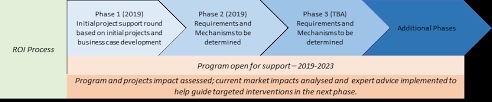
The Australian Government has progressed to the Registration of Interest (ROI) phase of its Underwriting New Generation Investments Program (the program). This multi-phase program has been developed to give the Government an ongoing mechanism to bring targeted investment into the system that will lower prices and increase reliability. The multi-phase approach will allow the Government to underwrite investment in an agile manner while reducing the impacts of market intervention. The multi- phased approach will also allow the Government to concurrently manage the development of proposals and projects over the life of the program. The Australian Competition and Consumer Commission’s (ACCC) Retail Electricity Pricing Inquiry found that competition in the wholesale electricity market is not working as well as it could and this has affected electricity affordability. The ACCC identified a market failure in which some project developers are unable to obtain debt finance as a result of some smaller retailers or large commercial or industrial customers being unable to commit to long term offtake agreements, or having insufficient creditworthiness. This is preventing some smaller retailers and large commercial and industrial customers from accessing the benefits of new, independent, low-cost generation.
The program will provide financial support to facilitate the development of new firm generation capacity. It will be technology neutral, providing a level playing field to enable the best and lowest cost generation options to be supported. All technologies allowed under Australian law will be eligible under the program, including ‘greenfield’ and ‘brownfield’ projects, such as upgrades or life extensions of existing generators.
The additional supply will be required to be firm or firmed. This does not need to be solely provided through a single generation project, but could be firmed through a combination of generation, storage, demand response and financial contracts packaged through a retailer or other brokerage service provider. For example, the output of a variable renewable generator could be firmed through contracts with one (or more) gas generators, or by co-locating a storage device with the generator.
The program’s objectives are to:
reduce wholesale electricity prices by increasing competition and supply
assist commercial and industrial customers access affordable energy supply arrangements
improve reliability by increasing the level of firm and firmed capacity in the system.
The multi-phased program will be open over four years until 2022-23. Each phase will be tailored, based on expert advice, to be fit for purpose in delivering on the program’s objectives.
This ROI will be used to develop a pipeline of projects across multiple phases. The appropriate phase for projects will depend on their stage of development, likely funding mechanism and market need. Phase One of the program will open shortly after this ROI process concludes. Further ROI processes may occur as required to update the program.
The amount of support available under each phase of the program will be capped. This will include caps on both the amount of financial support/ government liability available, and the amount of generation capacity that will be supported. These thresholds are yet to be determined. Upper limits will not be published in order to maintain competitive pressure under the program. The minimum eligible project size will be 30MW.
Over its life, the program may offer support through a range of mechanisms including floor price contracts, cap and floor (collar) contracts, contracts for difference, underwriting of cap contracts, loans and grants. The range of support mechanism available in each phase will be specified at the commencement of that phase. The support mechanisms available during the first phase of the program are anticipated to be limited to those that the government can implement quickly, such as a floor price; loans; and small grants to support business case development and small upgrades. Other mechanisms not made available in phase one may be made available under subsequent phases after engagement with project proponents. These will be developed in parallel with the implementation of Phase One so they may be available in subsequent phases.
The final eligibility and merit criteria that will be applied to proposals may differ depending on the kinds of support sought. The Government reserves the right to determine the appropriate support mechanisms and the assessment criteria that will best achieve the program’s outcome and objectives for each phase of the program.
Information about the program, including dates for the commencement and closure of each phase will be published on www.energy.gov.au.
The key terms used in this document have been defined in Appendix A.
2. Program Implementation
2.1. Call for Registrations of Interest
The purpose of the ROI process is to:
Sound out the market to enable the Government to develop an understanding of the range of potential projects that are available and could be supported under the program.
Inform the design of the program, including the eligibility and merit criteria to be applied in the current phase of the program.
Develop an initial pipeline of projects that covers all firmed technologies.
The ROI process is indicative only and does not represent a hard gate for participation in the program. It is not a selection process and ROIs will not be assessed against eligibility and merit criteria.
The Government will refine the design of the program in the light of the information it receives through the ROI process. The eligibility and assessment criteria provided in this document are indicative only and should not be relied upon as representing the final criteria. Detailed guidance for Phase One of the program, including final assessment criteria, will be published prior to the commencement of the formal request for proposals.
ROIs are due by 23 January 2019.
2.2. Request for proposals
The Government will run a formal Request for Proposals (RFP) for phase 1 of the program in the first quarter of 2019. The RFP process will seek detailed proposals for projects to be considered for support under the program. The RFP will be accompanied by final program guidelines, including final eligibility and merit criteria.
3. Support Mechanisms
The program may offer support through a range of mechanisms, with different mechanisms available during each phase. Some examples are set out below. The support mechanisms available during the first phase of the program are anticipated to be limited to those that the government can implement quickly, such as a floor price; loans; and small grants to support business case development and small upgrades. Other mechanisms not made available in phase one may be made available under subsequent phases after engagement with project proponents.
Floor Price
The program may provide access to a financial product that imposes an effective price floor on the sale electricity price received by the proponent, set at a level sufficient to cover the cost of debt servicing obligations. It would operate like a put option, with the Government agreeing to pay the option holder the difference between an agreed price floor and the project’s weighted average dispatch price over a defined period, subject to defined trigger thresholds being met.
The product would be based on departures from the project’s longer term weighted average dispatch price rather than a 30 minute (or 5 minute) settlement price. It is envisaged the time period over which to calculate an average price is proposed to align with business cash flow requirements to service debt.
The Government would make financial contributions to the proponent where the project’s average weighted dispatch price over the defined period falls below the floor price. Payments to project proponents would be made according to the following formula:
(PFloor – PAverage weighted dispatch) x MWhDispatched
The floor price minus the project’s average weighted dispatch price multiplied by the shortfall generation amount. Where the figure is negative—the project’s average weighted dispatch price in the region is greater than the price floor—no payment would be made.
The Government would only cover the price difference between zero and the floor price. It would not provide payments to cover negative average prices.
The floor price would be set deliberately low to ensure the government is not providing a return on equity. The actual floor price set between the Government and any project proponent is expected to vary between projects based on an analysis of the revenue required to cover debt on specific projects.
Loans
The Government may provide upfront capital for projects and receive a return over a set repayment period, with terms to be agreed.
Small grants
The Government may provide small grants to support the development of business cases for new firm generation projects or small upgrades to deliver additional firm capacity.
Cap and floor (collar) contracts
The Government and Project Proponent may agree to a floor price and cap price which would be enacted after year three. Similar to the floor price contract, the Government would pay the Project Proponent the difference when spot price is below the floor price. However, if the spot price exceeds the cap price the Project Proponent would pay the difference between spot price and the cap. The Project Proponent would keep the gains between the floor and cap prices.
Contracts for difference
The Government may agree to a strike price with the Project Proponent which would be triggered after year five. The parties would then have a contract for difference where the Government would pay the Project Proponent the difference when spot price is below the strike price and the Project Proponent would pay the difference to the Government when the spot price is above the strike price.
To ensure only generation that is firm or firmed is targeted, the strike price may be on the basis of:
a pre-specified and fixed volume of output, akin to existing ‘flat’ baseload swaps, or
a particular load profile, akin to existing ‘load following’ hedges.
Underwriting cap contracts
The Government could support investment in new generation by underwriting cap contacts, which are normally sold by peaking generators. This underwrite would reduce financial risks for generators offering cap contracts.
4. Proponent eligibility criteria
Indicative proponent eligibility criteria for participation in the program are outlined below. The Government may add to, amend or remove criteria prior to the commencement of the RFP process.
4.1. Who is eligible?
To be eligible for project support, proponents may need to demonstrate that they meet the following kinds of requirements:
Be a corporation to which section 51(xx) of the Constitution applies. Foreign investors can apply to the extent they meet the criteria, subject to normal Foreign Investment Review Board approval.
Have the technical, commercial and financial capacity (including partners) to deliver the project in the proposed timeline.
Provide evidence from the Board (or support from the owner or Chief Executive Officer if there is no Board) that the Project is supported and a declaration that the project would not have gone ahead without support under the Program.
Agree to timeframes for project delivery.
Adhere to reporting and record keeping requirements of the program.
Be willing to agree to conditions of support under a contact, including, that over the life of the support agreement, the Government support would be withdrawn if the Project ceases to meet eligibility requirements.
Disclose any legal proceedings or investigations to the best of their knowledge, pending or threatened against them or a related body corporate as defined in the Corporations Act 2001 (Cth).
Are not named as an organisation that has not complied with the Workplace Gender Equality Act 2012 (Cth).
Are not named as an organisation on the list of persons and entities designated as terrorists. The list and more information on the anti-terrorism requirements are available at dfat.gov.au/icat/UNSC_financial_sanctions.html.
5. Project eligibility criteria
Indicative project eligibility criteria for participation in the program are outlined below. The Government may add to, amend or remove criteria prior to the commencement of the RFP process.
To be eligible for support, projects proponents may have to demonstrate that the project will:
take place within an interconnected network within Australia.
deliver at least 30 MW of additional generation capacity.
be supported by commercial and industrial customers and/or small retailers (customers) that have agreed in-principle to purchase the majority of energy from the project for a minimum of 3 years.
provide (either individually or in combination with other instruments) additional firm electricity supply which meets the needs of its customers.
involve a significant equity contribution.
have made reasonable endeavours to obtain private project finance.
be able to proceed to final investment decision (FID) within a reasonable period of receiving support under the program.
6. Project merit criteria
Indicative project merit criteria for participation in the program are outlined below. The Government may add to, amend or remove criteria prior to the commencement of the RFP process.
The merits of a project could be assessed against the following kinds of criteria:
The technical and commercial viability of the project in the proposed location.
The cost of the project to the electricity system as a whole, particularly with respect to requirements for upgrades to the shared network.
The stage of development of the project. Projects at an advanced stage of development will be more competitive than those at an earlier stage of development.
The amount of support being sought relative to the amount of capacity delivered. Projects seeking less support relative to the capacity delivered will be more competitive than those seeking more.
The project’s impact on competition in the market region within which it will be located. Projects that increase competition and reduce market concentration will be more competitive than those that do not.
The competitiveness of the price at which the project will supply its customers.
The overall emissions intensity of the firmed electricity product supplied to customers. Projects delivering an electricity product at a lower emissions intensity will be deemed higher merit.
The impact of the project on the reliability and security of the interconnected network.
The extent of involvement and contributions from other public or private debt and equity investors. The criteria may be weighted. This will be clarified prior to the release of the RFP.
7. Submitting a Registration of Interest
7.1. Information sought for the ROI
ROIs should be high-level, but include sufficient detail to enable program administrators to develop a working knowledge of a project. ROIs should be around 10 pages in length and include:
A high-level description of the proposed project (including but not limited to location, capacity, generation technology, how the generation will be firm or firmed).
Details of project participants and prospective customers.
Details of its development and funding status and timing of milestone to completion. If available, the following items would be helpful: o A high level summary of the business plan. o An indicative funding plan and capital structure (debt and equity mix). o A project timeline, including the status of relevant permits and approvals.
A brief description of which support mechanism is likely to be most appropriate and how it would work to unlock investment for the project.
All sensitive information provided through the ROI process will be treated in accordance with the notices contained in the Cover Sheet.
7.2. How to submit a Registration of Interest
Registrations of Interest should be provided to UnderwritingNewGeneration@environment.gov.au by 5:00pm (AEDT) on Wednesday 23 January 2019.
Proponents will receive confirmation that the proposal has been received.
7.3. Joint ROI Proposals
Some organisations may want to join together as a group to deliver a project. In these circumstances, a lead organisation for the proposal must be specified. The lead organisation should complete the ROI and identify all other members of the proposed group.
8. Next steps
ROIs will be reviewed for the purpose of informing program design and development. They will not be assessed against the indicative eligibility and merit criteria at this stage.
The Phase One RFP is anticipated to commence in the first quarter of 2019 and the Phase Two RFP is anticipated to commence in late 2019.
9. Enquiries and feedback
For further information or clarification about the Underwriting New Generation Investments Program, to provide feedback, or if proponents need further guidance around the ROI process they can contact the program manager via email at UnderwritingNewGeneration@environment.gov.au.
Appendix A. Definitions of key terms
In this document unless otherwise defined:
Consultant means a consultant or service provider engaged by us to provide services to assist us in the performance of our functions. Customers means Commercial and Industrial and/or small retailer customers. Commercial and Industrial customers are characterised by large electricity usage, generally more than 100 MWh per year and can include manufacturers, supermarkets, universities and other large businesses. Small retailers with those with a less than 10 per cent retail market share in the state of where the generation project is located. Department means the Department of the Environment and Energy.
ROI proposal means the project documentation submitted in response to the ROI process.
Firm capacity means generation available at a given time, for example: coal, or gas-fired generation – or – variable generation (such as wind) with onsite storage (such as batteries).
Firmed capacity means variable generation (such as wind or solar) that: is contracted with a certain proportion of firm capacity across the grid; or that is supported through a combination of generation on the grid, storage, demand resources behind the meter, flexible demand, flexible network capability, load following contracts and financial contracts packaged through a retailer or other brokerage service provider.
Minister means the Minister for Energy.
Personal Information means the same as in the Privacy Act 1988 (Cth).
Program means the Underwriting New Generation Investments program.
Program Delegate means an employee of the Department who is authorised by the Minister, or is otherwise duly authorised, to carry out the relevant functions in respect of the Program.
Project means a project described in an ROI proposal for the Underwriting New Generation Investments program.
Project Partner means a person, organisation or institution that the proponent has engaged as a joint venturer, contractor or consultant to help deliver the project as part of its ROI proposal.
Proponent means an entity that submits an ROI proposal for Underwriting New Generation Investments program.
Reliability means that a power system has enough generation, demand response and network capacity to supply customers with the energy that they demand with a very high degree of confidence .
Security means that a power system is secure when technical parameters such as voltage and frequency are maintained within defined limits. To maintain frequency the power system has to instantaneously balance electricity supply against demand.
Support means the Support made available by the Commonwealth of Australia to successful proponents under the Program.