
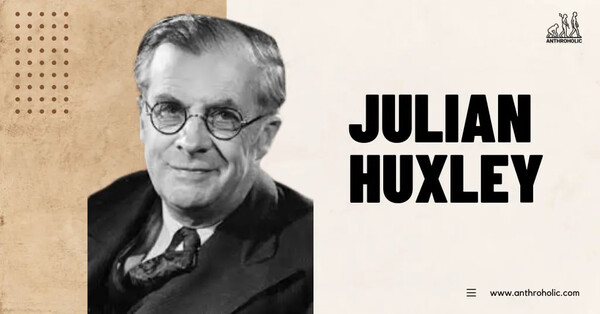
1887년 6월 22일, 영국의 생물학자 줄리언 헉슬리 (Julian Huxley, 1887 ~ 1975) 출생
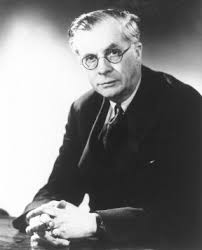
줄리언 헉슬리 기사 (Sir Julian Huxley, FRS, 1887년 6월 22일 ~ 1975년 2월 14일)은 영국의 생물학자이자 작가로, 유네스코의 초대 사무총장이다. 과학을 대중화 한 사람으로 유명하다.
줄리언 헉슬리는 헉슬리 가의 일원으로 그의 동생은 작가 올더스 헉슬리이고 이복 동생은 노벨상을 수상한 생물학자 앤드루 헉슬리이며, 아버지는 작가 레너드 헉슬리, 할아버지는 생물학자 토머스 헨리 헉슬리이다.
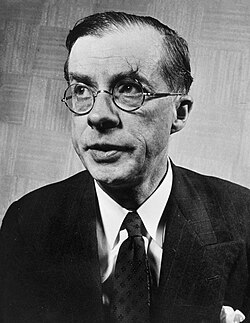
– 줄리언 헉슬리 (Julian Huxley)
.본명: 줄리언 소렐 헉슬리 경 (Sir Julian Sorell Huxley)
.출생: 1887년 6월 22일, 그레이트브리튼 아일랜드 연합왕국 잉글랜드 런던
.사망: 1975년 2월 14일 (87세), 영국 잉글랜드 런던
.국적: 영국
.직업: 생물학자, 작가
.가족: 올더스 헉슬리 (동생)
.서훈: 1958년 기사작위(Knight Bachelor) 서임
영국의 생물학자, 작가. 20세기 과학의 발전에 크게 기여했을 뿐 아니라, 과학을 대중에게 알리는 데에도 힘썼다.
특히 진화생물학, 조류학, 그리고 과학 철학 분야에서 뛰어난 업적을 남겼다.
또한 유네스코의 초대 사무총장을 역임하며 국제적인 협력과 교육 증진에 헌신했다.
그의 친동생이 <멋진 신세계>로 유명한 작가 올더스 헉슬리이다.
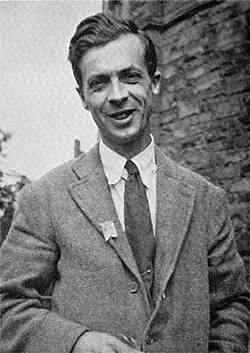
○ 생애 및 활동
1887년 6월 22일, 런던에서 저명한 작가 레슬리 스테판의 손자이자 소설가 올더스 헉슬리의 형으로 태어났다.
이튼 칼리지와 옥스퍼드 대학교 베일리얼 칼리지에서 동물학을 공부하며 뛰어난 학문적 재능을 보였다.
특히 옥스퍼드에서는 진화생물학의 선구자 윌리엄 웰던의 지도를 받으며 학문적 기반을 다졌다.
.학문적 경력
옥스퍼드 대학교에서 강사로 재직하며 조류의 행동과 생리학에 대한 연구를 수행했다.
이후 라이스 대학교와 킹스 칼리지 런던에서 교수로 재직하며 진화생물학 분야에서 중요한 업적들을 남겼다.
특히 현대 진화 이론의 발전에 기여했으며, 개체군 유전학, 진화 생태학, 그리고 행동 생태학 분야에서 선구적인 연구를 수행했다.
.과학 대중화
과학을 대중에게 알리는 데에도 큰 노력을 기울였다. 라디오 방송, 강연, 그리고 다양한 저술 활동을 통해 과학 지식을 널리 알렸다.
대표적인 저서로는 ‘과학과 사회’, ‘진화론의 현대적 종합’, 그리고 ‘새로운 술잔을 위한 새로운 포도주’ 등이 있다.
.유네스코 활동
1946년 유네스코의 초대 사무총장으로 임명되어 국제적인 협력과 교육 증진에 힘썼다.
유네스코 헌장의 초안을 작성하고, 교육, 과학, 그리고 문화 분야에서 국제적인 협력을 위한 기반을 마련했다.
.별세
1975년 2월 14일, 영국 잉글랜드 런던에서 별세했다. 향년 87세
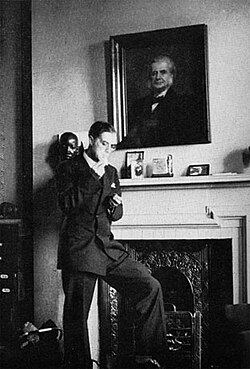
○ 주요 업적 및 평가
20세기 과학의 발전에 크게 기여했을 뿐 아니라, 과학을 대중에게 알리는 데에도 힘쓴 인물로 평가받는다. 또한 유네스코를 통해 국제적인 협력과 교육 증진에 기여하며 인류의 발전에 헌신했다.
.현대 진화 이론: 다윈의 진화론과 멘델의 유전학을 통합하여 현대 진화 이론의 발전에 기여했다.
.조류학: 조류의 행동, 생리학, 그리고 생태학에 대한 연구를 통해 조류학 발전에 기여했다.
.과학 대중화: 과학 지식을 대중에게 알리는 데 힘썼으며, 과학과 사회의 관계에 대한 논의를 이끌었다.
.유네스코: 유네스코의 초대 사무총장으로서 국제적인 협력과 교육 증진에 헌신했다.
- Terms coined
Clade (1957): a monophyletic taxon; a single species and its descendants
Cline (1938): a gradient of gene frequencies in a population, along a given transect
Ethnic group (1936): as opposed to race
Evolutionary grade (1959): a level of evolutionary advance, in contrast to a clade
Mentifact (1955): objects which consist of ideas in people’s minds
Morph (1942): as more correct and simpler than polymorph
Ritualization (1914): formalised activities in bird behaviour, caused by inherited behaviour chains
Sociofact (1955): objects which consist of interactions between members of a social group
Transhumanism (1957): the transforming of human beings
- Titles and phrases
Religion Without Revelation (1927, 1957)
The New Systematics (1940)
The Uniqueness of Man (1941)
Evolution: The Modern Synthesis (1942)
Evolutionary Ethics (1943)
Evolution as a Process (1954)
Essays of a Humanist (1964)
The Future of Man (1966)
○ 저서
영국의 대표적인 진화생물학자이자 유네스코 (UNESCO) 초대 사무총장을 지낸 줄리언 헉슬리 (Julian Huxley, 1887 ~ 1975)는 다윈의 자연선택설과 멘델의 유전학을 하나로 통합한 ‘현대 종합설’ (Modern Synthesis)의 선구자로서 생물학, 진화론, 인문주의적 가치를 담은 수많은 책을 집필했다.
그의 주요 저서로는 <진화: 현대 진화 이론> (1942)이 있다.
- 대표 저서 및 학술서
진화: 현대적 종합 (Evolution: The Modern Synthesis, 1942): 흩어져 있던 생물학 이론들을 통합하여 ‘현대 종합설’이라는 용어와 체계를 확립한 그의 가장 중요하고 기념비적인 학술 저작이다.
생명 동물의 세계에서의 개체 (The Individual in the Animal Kingdom, 1912): 초기 연구 시절 동물 개체성과 진화의 관계를 탐구한 책이다.
척추동물의 성 발달 (The Development of Sex in Vertebrates, 1924): 척추동물의 성적 생물학적 메커니즘을 규명한 학술 공동 저서다.
상대 성장의 문제 (Problems of Relative Growth, 1932): 생물의 성장에 따른 형태 변화를 수학적·생물학적으로 분석하여 생물측정학에 크게 기여한 책이다.
- 대중 과학서 및 수필집
한 생물학자의 에세이 (Essays of a Biologist, 1923): 생물학적 관점에서 인간과 사회를 바라본 초기 대중 에세이집이다.
대중 과학 에세이 (Essays in Popular Science, 1926): 대중의 눈높이에 맞추어 과학적 지식을 쉽게 풀어낸 책이다.
생명의 과학 (The Science of Life, 1930): 유명 소설가 H.G. 웰스(H.G. Wells) 및 그의 아들 G.P. 웰스와 공동 집필한 책으로, 생명과학 전반을 집대성해 대중적으로 큰 성공을 거두었다.
아프리카의 전망 (Africa View, 1931): 동아프리카 여행 경험을 바탕으로 현지 생태계와 교육, 문화적 관찰을 기록한 기행서다.
- 인문주의 및 철학 저서
계시 없는 종교 (Religion Without Revelation, 1927): 신이나 초자연적 계시 없이도 인간이 도덕성과 영성을 유지할 수 있다는 ‘진화적 인문주의’ 철학을 담은 대표작이다.
새로운 인문주의를 향하여 (Toward a New Humanism, 1957): 인류의 미래가 생물학적 진화를 넘어 문화적·정신적 진화로 나아가야 함을 역설한 책이다.
진화적 인문주의 (Evolutionary Humanism, 1964): 과학과 인간의 가치를 결합하여 인류가 직면한 위기를 해결하고자 한 그의 사상이 총망라된 저서다.
- Selected works
.Articles
“Transhumanism.” Journal of Humanistic Psychology, vol. 8, no. 1 (January 1968): 73–76.
“Huxley gives the outline of what he believes future humanity could—and should—look like. By pointing out the numerous limitations and feebleness the human nature is—at the time—prone to, and by confronting them with the possibilities humankind has, Huxley expresses the need to research and put into use all possible measures that would enable man achieve utmost perfection.”
.Books
The Individual in the Animal Kingdom. Cambridge University Press (1912)
Courtship Habits of the Great Crested Grebe (1914) “A landmark in ethology.”
Essays of a Biologist (1923)
Essays in Popular Science (1926)
The Stream of Life (1926)
The Tissue-Culture King (1926) [short story]
Animal Biology, with J. B. S. Haldane (1927)
Religion Without Revelation (1927) [Revised ed. 1957]
Ants (1929)
Science of Life: A Summary of Contemporary Knowledge About Life and its Possibilities, with H. G. & G. P. Wells (1929–30)
First issued in 31 fortnightly parts published by Amalgamated Press, 1929–31, bound up in three volumes as publication proceeded. First issued in one volume by Cassell in 1931, reprinted 1934, 1937, popular edition, fully revised, 1938. Published as separate volumes by Cassell 1934–37: I The Living Body. II Patterns of life (1934). III Evolution—fact and theory. IV Reproduction, heredity and the development of sex. V The history and adventure of life. VI The drama of life. VII How animals behave (1937). VIII Man’s mind and behaviour. IX Biology and the human race. Published in New York by Doubleday, Doran & Co. 1931, 1934, 1939; and by The Literary Guild 1934. Three of the Cassell spin-off books were also published by Doubleday in 1932: Evolution, fact and theory; The human mind and the behavior of Man; Reproduction, genetics and the development of sex.
Bird-watching and Bird Behaviour (1930)
An Introduction to Science with Edward Andrade (1931–34)
What Dare I Think?: The Challenge of Modern Science to Human Action and Belief. London: Chatto & Windus; New York: Harper (1931)
Africa View (1931)
Captive Shrew and Other Poems (1932)
Problems of Relative Growth (1932) (on allometry)
A Scientist Among the Soviets (1932)
If I Were Dictator. London: Methuen; New York: Harper (1934)
Scientific Research and Social Needs (1934)
Elements of Experimental Embryology, with Gavin de Beer (1934)
Thomas Huxley’s Diary of the Voyage of HMS Rattlesnake (1935)
We Europeans, with A.C. Haddon (1936)
Animal Language (1938) [Reprinted 1964] Photographs and audio recordings of animal calls by Ylla.[106]
Present Standing of the Theory of Sexual Selection. In: Gavin de Beer (ed). Evolution: Essays on Aspects of Evolutionary Biology. Oxford: Clarendon Press (1938): 11–42.
Living Thoughts of Darwin (1939)
New Systematics. Oxford (1940)
“…this multi-author volume, edited by Huxley, is one of the foundation stones of the ‘modern synthesis’, with essays on taxonomy, evolution, natural selection, Mendelian genetics and population genetics.”
Democracy Marches. London: Chatto & Windus with Hogarth Press; New York: Harper (1941). Foreword by Lord Horder.
The Uniqueness of Man. London: Chatto & Windus (1941) (Reprinted 1943)
Published in U.S. as Man Stands Alone. New York: Harper (1941)
On Living in a Revolution. New York: Harper (1944)
Evolution: The Modern Synthesis. London: Allen & Unwin (1942); New York: Harper (1943)
“Summarizes research on all topics relevant to the modern synthesis of evolution and Mendelian genetics up to the Second World War.”
Reprinted (1943), (1944), (1945), (1948), (1955).
2nd ed. (1963) New introduction and bibliography by the author.
3rd ed. (1974) New introduction and bibliography by nine contributors.
New ed. (2010) Cambridge: MIT Press. Foreword by Massimo Pigliucci and Gerd B. Müller.
Evolutionary Ethics (1943)
TVA: Adventure in Planning (1944)
Evolution and Ethics, 1893–1943. London: Pilot.
Published in U.S. as Touchstone for Ethics: 1893-1943. New York: Harper. 1947 – via Internet Archive. with text from T. H. (Thomas Henry) Huxley.
Man in the Modern World (1947) Essays selected from The Uniqueness of Man (1941) and On Living in a Revolution (1944)
Soviet Genetics and World Science: Lysenko and the Meaning of Heredity. London: Chatto & Windus
Published in U.S. as Heredity, East and West. New York: Schuman (1949).
Evolution in Action. New York: Harper & Brothers. 1953 – via Internet Archive.
Evolution as a Process with Hardy A. C. and Ford E. B. (editors). London: Allen & Unwin (1954)
From an Antique Land: Ancient and Modern in the Middle East (1954)
Revised ed. (1966)
Kingdom of the Beasts with W. Suschitzky (1956)
Biological Aspects of Cancer (1957)
New Bottles for New Wine. London: Chatto & Windus; New York: Harper (1957)
Reprinted as Knowledge, Morality, Destiny. New York: New American Library (1960)
Reprinted as “Knowledge, Morality, Destiny, I.” Psychiatry, vol. 14, no. 2 (1960): 129–140.
The Treasure House of Wild Life 13 Nov, More meat from game than cattle 13 Nov, Cropping the wild protein 20 Nov, Wild life as a World Asset, second page 27 Nov; The Observer newspaper articles that led to the setting up of the World Wildlife Fund (1960)
The Humanist Frame (editor) (1961)
The Coming New Religion of Humanism (1962)
Essays of a Humanist (1964) [reprinted 1966, 1969, 1992]. ISBN 0-87975-778-7.
The Human Crisis (1964)
Darwin and his World with Bernard Kettlewell (1965)
Aldous Huxley 1894–1963: A Memorial Volume. (editor) (1965)
The Future of Man: evolutionary Aspects. (1966)
The Wonderful World of Evolution (1969)
Memories (autobiography).
volume 1 (1970)
volume 2 (1973)
Mitchell Beazley Atlas of World Wildlife. London: Mitchell Beazley & Zoological Society of London (1973)
Republished as The Atlas of World Wildlife. Cape Town: Purnell (1973)
.Films
Huxley was associated with several nature films in the 1930s, 1940s and 1950s.
The Private Life of the Gannets (1934)
The Earthworm (1936)[108]
Animals of the Rocky Shore (1937)
Monkey Into Man (1938)
Coelacanth (1951) (with David Attenborough)
The Pattern of Animals (1953) (with David Attenborough)
참고 = 위키백과, 나무위키
크리스천라이프 편집부