
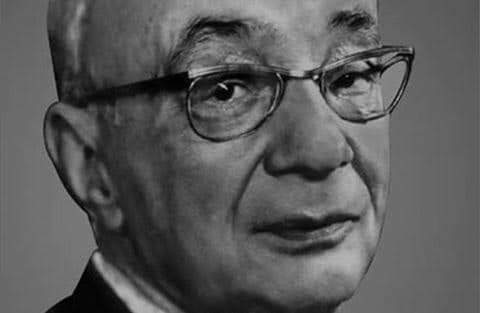
1983년 11월 23일, 우크라이나의 작가 미콜라 바잔 (Mykola Bazhan, 1904 ~ 1983) 별세
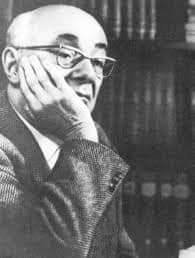
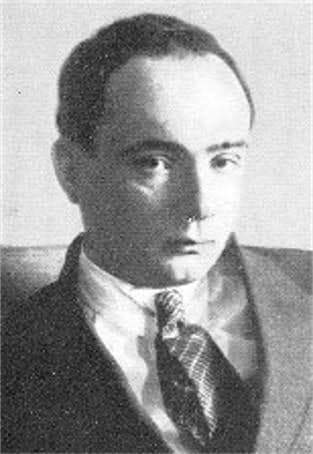
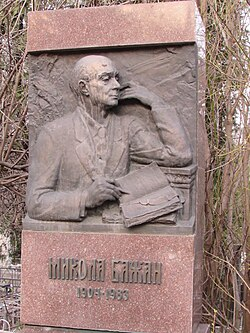
미콜라 플라토노비치 바잔 (Mykola Bazhan, 우: Микола Платонович Бажан; 1904년 9월 26일 ~ 1983년 11월 23일)은 소비에트 연방의 작가이자 시인이다.
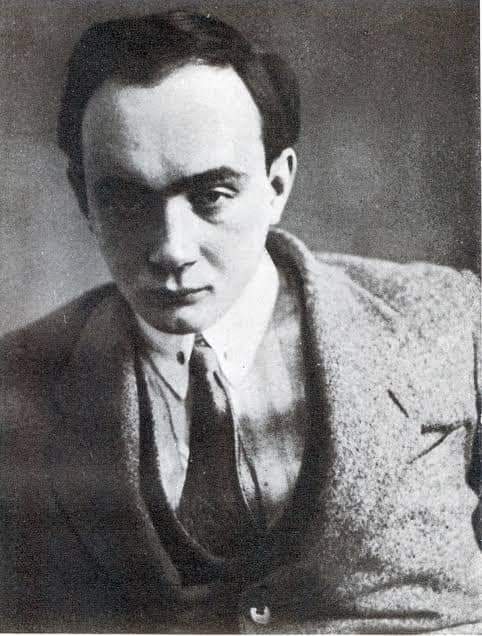
– 미콜라 바잔 (Mykola Bazhan)
.출생: 1904년 10월 9일, 우크라이나 케미아네츠 포딜스키
.사망: 1983년 11월 23일, 우크라이나 키예프
.부모: Platon Artemovych Bazhan
.주요저서: Flight Through a Storm
.수상: Shevchenko National Prize in Literature
○ Awards and prizes
Shota Rustaveli State Prize of the Georgian SSR (1937)
Order of Lenin (1939, 1954, 1960, 1964, 1974)
Order of the Red Banner (1940s)
Stalin Prize (1946, 1949)
Order of the Red Banner of Labour (1948, 1967)
Taras Shevchenko State Prize of the Ukrainian SSR (1965)
State Prize of the Ukrainian SSR (1971)
Hero of Socialist Labour (1974)
미콜라 플라토노비치 바잔 (우: Микола Платонович Бажан, 1904년 10월 9일 ~ 1983년 11월 23일)은 소련의 우크라이나 작가, 시인, 그리고 높은 훈장을 받은 정치인이자 공인이었다. 그는 우크라이나 소비에트 사회주의 공화국 과학 아카데미 회원 ( 1951년), 우크라이나 소비에트 사회주의 공화국 과학기술 공로자 (1966년), 조지아 소비에트 사회주의 공화국 예술계 유명 인사(1964년), 우즈베키스탄 소비에트 사회주의 공화국 인민 시인이었다.
바잔은 소련 최고 소비에트 의 인민 대표로 5회(1946-1962) 중 2회, 우크라이나 SSR 최고 평의회에서 9회(1963-1980) 중 6회를 지냈다. 그는 소련 공산당 중앙위원회 위원이었으며, 우크라이나 SSR 공산당 중앙위원회 위원으로 여러 차례 선출되었다 (총 25회 중 17회, 21회). 1943-49년에는 우크라이나 SSR 장관 위원회 부의장을 역임했다.
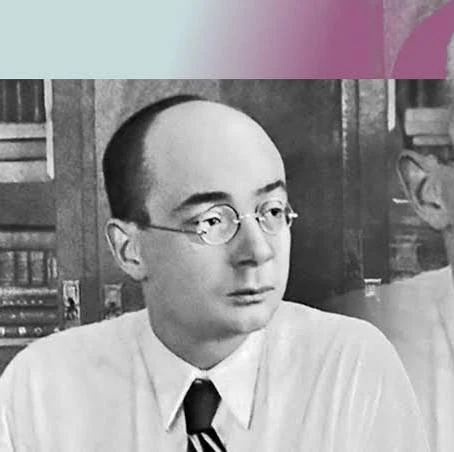
○ 생애 및 활동
미콜라 플라토노비치 바잔은 1904년 10월 9일, 미콜라 바잔은 포돌리아 주의 행정 중심지인 카메네츠 시에서 태어났지만 , 어린 시절은 키예프 주의 우만 에서 보냈다 . 그의 아버지 플라톤 아르테모비치 바잔은 폴 타바 지역 출신으로 군사 지도 제작자 이자 우크라이나 인민군 참전 용사였다.
1923년 Mykola Bazhan은 Uman Cooperative College를 졸업하고 키예프 로 이사하여 키예프 협동 연구소 (1921-1923)와 키예프 외교 연구소(1923-1925)에서 공부했다. 그는 미래주의 문학 운동에 적극적으로 참여했으며 그의 첫 번째 시인 “Ruro-marsh”(“Руро-марш”)는 1923년 키예프에서 출판되었다. 1926년 하르키우에서 출판된 바잔의 첫 번째 시집인 Seventeenth Patrol은 뚜렷하게 미래주의적이었다. 그러나 같은 해에 바잔은 미래주의 그룹을 떠나 유럽 문화의 고전적 모델과 제휴하고 회원에게 문학적 우수성을 요구하는 예술 연합인 VAPLITE에 가입했다. 이 시기에 바잔은 표현주의, 낭만주의, 바로크 예술의 특징을 결합한 독특한 스타일을 개발했다. 건물 (1929)은 고딕 성당, 우크라이나 바로크 양식의 문, 모더니스트 주택 의 복잡한 이미지를 통해 이러한 문학적 아이디어를 대표한다.
1930년대에 바잔의 작품은 “반프롤레타리아”로 여겨졌고 여러 공식적인 반민족주의 캠페인의 주제가 되었다. 1937년에 그는 체포가 임박했다고 느꼈고 집에서 거의 자지 않았다. 1939년에 바잔은 중세 조지아 시인 쇼타 루스타벨리의 서사시 “호랑이 가죽을 입은 전사”를 우크라이나어로 번역한 공로로 레닌 훈장을 받았다. 바잔은 키예프의 한 도시 공원에서 체포를 피해 숨어 지내던 중 신문을 통해 이 사실을 알게 되었다. 결국 니키타 흐루쇼프는 그에게 체포 명령이 내려졌다고 말했지만, 스탈린은 그의 루스타벨리 번역본을 좋아하여 마음을 바꿨다. 1940년에 미콜라 바잔은 소련 공산당에 가입했고 같은 해 우크라이나 작가 연합 상임위원회 위원이 되었다.
위대한 애국 전쟁 동안 바잔은 군 기자가 되었고 소비에트 우크라이나를 위한 신문의 편집자가 되었다. 1943년에 그는 스탈린그라드 노트북이라는 책을 출판했고, 이로 인해 1946년에 스탈린상을 받았다. 1953-59년에 바잔은 우크라이나 작가 연합을 이끌었다. 연합의 수장으로서 1954년 5월, 흐루쇼프 해빙이 시작될 때 그는 우크라이나 공산당 중앙위원회에 편지를 보냈는데, 그 편지에서 그는 작품을 출판하고 1937-1938년에 대부분이 살해되거나 처형된 바실 추막, 미로슬라프 이르찬, 미키타 체르니아프스키, 이반 미키텐코, 필립 카펠호로드스키의 창의적인 전기를 우크라이나 소비에트 문학사에 도입하는 문제를 제기했다. 1956년 7월 2일 그는 우크라이나 공산당 중앙위원회에서 억압받던 여러 작가들의 재활 문제를 제기했다. 작가로는 바실 보빈스키, 흐리호리 에픽, 이반 쿨리크, 미콜라 쿨리쉬 등이 있다.
1970년 바잔은 노벨 문학상 후보로 지명되었으나 소련 당국으로부터 후보 지명을 거부하는 편지를 쓰도록 강요당했다.
1957년부터 사망할 때까지 바잔은 우크라이나 소비에트 백과사전 출판사 본판의 창립 편집장을 역임했다. 그의 생전에 출판이 완료되지는 않았지만, 초판은 1959년부터 1965년까지 17권으로 구성된 《우크라이나 소비에트 백과사전》으로 출간되었다. 이후 전개된 상황에 따라 최종본인 12권짜리 두 번째 작품은 1977년부터 1985년까지 출간되었다. 이 출판사는 또한 수많은 다른 주요 우크라이나 참고 문헌을 집필했다. 바잔은 또한 《우크라이나 소비에트 사회주의 공화국 국가》의 공동 저자 중 한 명이었다 .그는 1983년 키예프에서 사망했다.
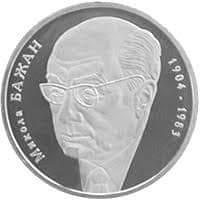
○ Bazhan’s poetry in English translation
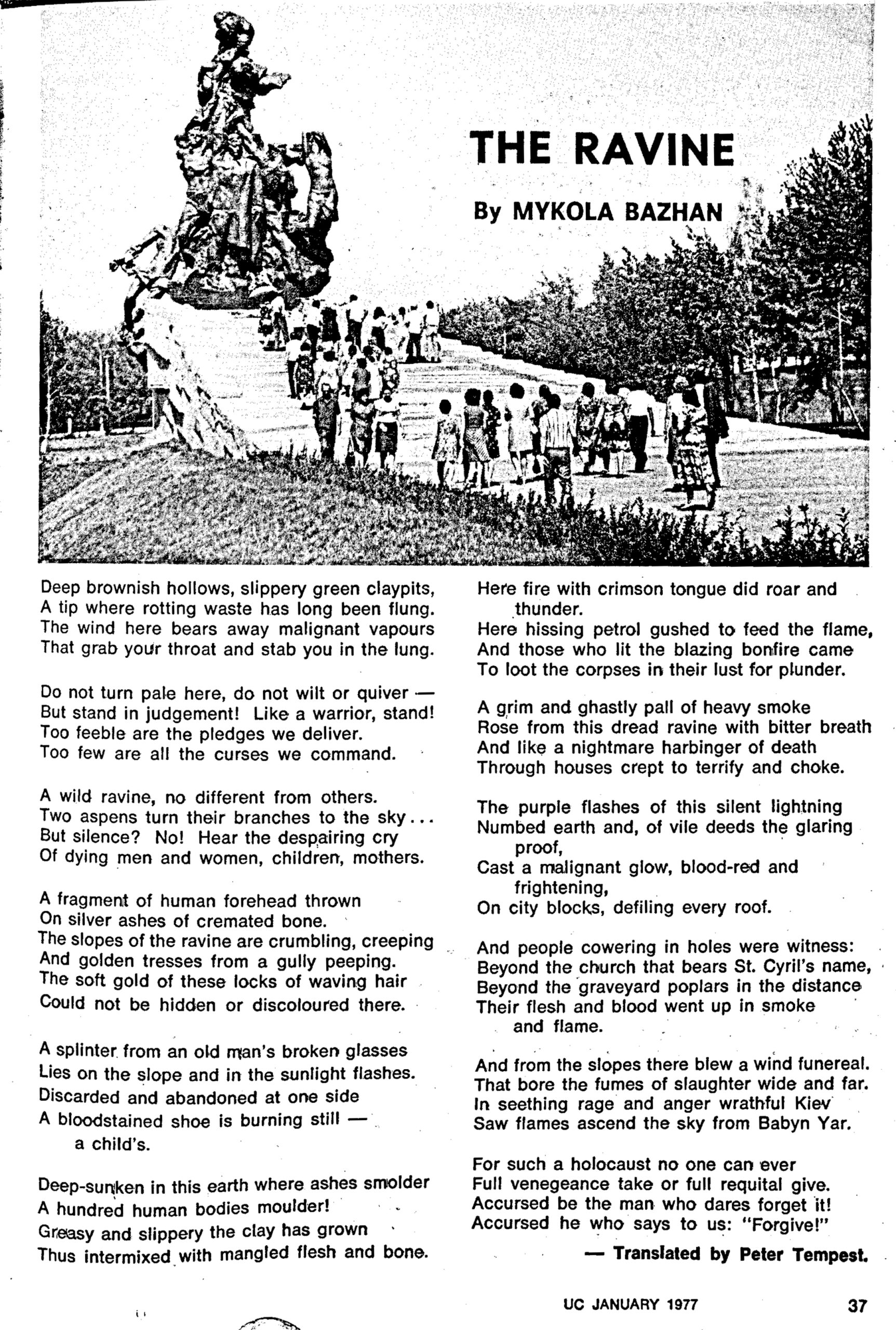
Deep brownish hollows, slippery green claypits,
rotting debris in a ravine.
The wind here bears away malignant vapors
that grab your throat and stab you in the lung.
Do not turn pale or flinch, do not turn back.
Stand — as before a judge, firm as a warrior!
In times like these, our oaths all seem so weak.
We lack the curse to curse the horrors here.
A plain ravine, dirty and cluttered.
Two aspens turn their branches to the sky…
But silence? No — a hundred thousand hearts
sound their despairing, dying cry.
The silver ashes of burnt bones.
A cracked piece of a human head.
The crumbling banks of the ravine.
And, climbing from the ditch, a golden braid —
earth hasn’t swallowed and decay has spared
the soft gold of this waving hair.
On one bank, in the wet mud, flashes
a splinter from an old man’s glasses.
Off to the side, half rotted through —
a child’s small bloodstained shoe.
Deep-sunken in this earth and trampled in the clay,
a hundred thousand bodies putrefy;
the clay is slick and greasy, mashed
with mangled human flesh.
Here crimson tongues of fire thundered,
here hissing petrol gushed to feed the flame.
The body-burners, to their eternal shame,
had searched the corpses in their lust for plunder.
A pall of heavy smoke rose from this pit.
Exhaling death and stifling with its nightmares,
it crept through houses, one after another,
like some dread monster, deaf and mute.
Black-purple flashes of this silent lightning
wandered across the horror-stricken earth,
casting a glow, blood-red and frightening,
on all who lived beneath Kievan roofs.
People who cowered in their homes bore witness,
staring beyond St. Cyril’s domes,
beyond the graveyard poplars in the distance,
seeing their flesh and blood go up in flames.
A deathly wind blew from the ditch —
the fumes of death, of bodies burnt.
And Kiev, wrathful Kiev watched
as flames rushed up from Babi Yar.
We can’t do penance for that fire, those ashes —
we can’t avenge them all, however long we live.
Curses on all who hope they can forget this!
Curses on all who tell us to forgive! _ Translated by Peter Tempest, revised by Boris Dralyuk
Rust-colored cavity, green clay,
rotting garbage, moats.
In terror of itself the wind
enters the lungs, the wind
of rusted badlands.
Do not pale, nor shrink,
nor shudder – Stand as if
facing judgement!
Upright- like a warrior- stand!
There is no oath sufficient to swear,
There is no curse sufficient to lay.
Just a ravine, ragged and unkempt,
The trembling branches of two pale aspens.
This is not silence! This – the
Ceaseless scream of a hundred thousand hearts,
the dying wail of all hope lost.
Silver ashes of burnt bones.
A cracked shard of cranial bone.
The walls of the ravine crumble.
Two golden braids аslither from а hole,
no rot, no hiding for the golden curls.
In the moist sludge between steep walls
the glimmer of а pair of crushed reading glasses,
A child’s bloodied shoe decaying on its side.
A terrifying mark of a hundred thousand putrefactions;
The gley is fat with trampled shards of man.
This is the place of scarlet fires,
This is the place of brooks of tar,
of colliers picking apart the corpses
In search of gemstones and gold.
Heavy, oppressive, insufferable smoke
floats over the noxious ravine.
It breathes death, breathes nightmare,
a deaf monster crawling through the streets
and creeping into houses.
Black and scarlet flames wander
along the land that lost its speech in horror,
the bloody hues reflect on Kiev’s soiled roofs
the bloody hues reflect on Kiev’s soiled spires.
The city folk is watching from its sorry hovels
how beyond the monastery domes,
beyond the graveyard poplars
burns human flesh and blood.
Another gravely gust from the ravine –
the soot of pyres of death
the fumes of burning flesh.
And Kiev’s ired face is gazing
at Babi Yar writhing in flames.
There is no remorse to quell this fire,
No measure set for retribution still.
Be cursed the one who dares forget!
Be cursed the one who asks forgiveness! _ Translated from the Ukrainian, by Roman Turovsky
A muddy, clay green pit, its ruddy void
A rotted-out ravine, full of waste.
They cut into your lungs, these ominous
Putrid winds from far-off rustlands.
Don’t flinch; don’t pale; don’t turn away.
Stand tall, as though before a judge, a soldier.
We cannot find the curses to condemn.
The oaths — we cannot find the oaths to swear.
Straightforward pit! Disordered pit, untidy,
The branches of two white aspen tremble.
No. Here among the dead it isn’t silent:
A hundred thousand dying hearts are sobbing
And human cinderbones burn silver.
A person’s forehead, broken into bits.
The crumbling slopes have slid into the void
To coax a golden braid out of the pit.
This twist of golden hair is delicate,
Not buried by the earth, not turned to ash.
And shimmering in the muddy, wet embankment
An old man’s shattered pair of reading glasses.
A child’s shoe, soaked in drying blood
Is cast aside, abandoned, rotting.
And buried underground, beneath the mud
Are a hundred thousand moldering bodies.
It’s slippery — this greasy clay, this flesh
Of mangled, headless human carcasses.
Here the angry tongues of fire hissed,
Here folks fueled the raging flames with gas,
But not before (the shame!) they’d searched each corpse,
Treasure-hunting in the murdered mass.
There rose, above the terrible ravine
A heavy, suffocating smoke,
Inhaling death, exhaling nightmares, choking
It’s way into the homes — a deaf-mute fiend.
Lightning — purple-black and silent, flared
Out across the horrorfrosted land.
The suburb sank beneath its evil glare,
Tarnishing the Kyiv households. And
The people, from their mournful cellars, saw
How, past the graveyard poplars, with their graves,
And, past the domes of Cyril, with their wreathes,
Their very flesh and blood went up in flames.
The ash from deathfires, corpses charred.
And Kyiv, angry Kyiv, witnessed this:
As flames rose toward the sky from Babyi Yar.
There is no penance for this kind of fire.
There is no vengeance for this kind of murder.
Damn the ones who say it’s in the past.
Damn the ones who say, “Forgive, it’s over.” _ Translated, from the Ukrainian, by Amelia Glaser
참고 = 위키백과
크리스천라이프 편집부