
명곡감상
이탈리아 작곡가로 바이올린 연주자 프란체스코 제미니아니 (Francesco Geminiani, 1687 ~ 1762)의 5 Concerti Grossi, Op. 7
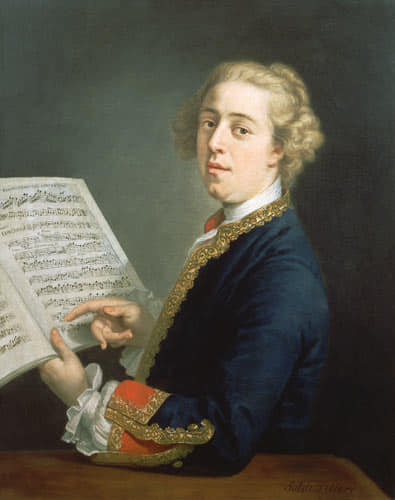
프란체스코 제미니아니 (Francesco Geminiani, 1687년 12월 3일, 루카 공화국 루카 ~ 1762년 9월 17일, 아일랜드 더블린)의 본명은 프란체스코 사베리오 제미니아니 (Francesco Saverio Geminiani)로 바로크 시대의 작곡가이자 이탈리아의 유명한 바이올리니스트들중 한명이다.
○ 생애 및 활동
1687년에 출생하여 나폴리에서 지내며 알레산드로 스카를라티에게 작곡을 배웠다. 바이올린에 대해서도 교습을 받았는데 이때 그를 가르쳤던 인물들이 카를로 암브로지오 로나티 (Carlo Ambrogio Lonati)와 아르칸젤로 코렐리. 1711년부터는 나폴리의 콘서트마스터로서 일했다.
1714년 이후로는 런던으로 이주하여 바이올리니스트로서의 명성을 더했다. 이 무렵에 그는 조지 프레드릭 헨델과도 교류했던 것으로 알려져 있으며, 그가 런던에서 가르쳤던 학생들 중에는 도메니코 스카를라티의 음악을 영국에 소개한 인물인 찰스 애비슨 (Charles Avison)을 비롯하여 마이클 페스팅 (Michael C. Festing) 및 세실리아 영 (Cecilia Young) 등이 손꼽힌다.
1761년 이후로는 아일랜드의 더블린으로 이주, 그곳에서 연주회장을 설립했다. 한번은 그가 정성을 다해 준비하던 악보를 하인이 가지고 도주한 적도 있다고 한다.
그의 음악은 활기차면서도 선율이 아름다운 것으로 이름높았다. 그의 리듬과 화려한 바이올린 실력은 이탈리아인들에게 유명해져서, 현지에서 “미친 사람” (Il Furibondo; The Madman)이라는 평을 듣기도 했다고 한다.
그는 코렐리의 영향을 따라서 합주 협주곡집을 3회 출판했는데, Op.2는 1732년, Op.3은 1733년, 그리고 Op.7은 1746년에 공개되었다. 그 외에도 바이올린 협주곡집을 세 번 썼고, 바이올린 트리오 12곡, 다수의 바이올린 솔로 작품을 썼다.
음악학적 출판 역시 상당한 열정을 쏟아서, 《Guida Harmonica》(1756)에서는 학술적 연구가치가 있는 지속저음의 패턴들이 다수 등장하며, 《바이올린 연주의 기술》(1751), 《하프시코드 및 오르간 등의 반주의 기술》(1754), 《하프시코드 레슨》(1760), 《기타 연주의 기술》(1760) 등 다양한 악기들에 대한 교습서를 남겼다.
○ Francesco Geminiani (1687-1762): 5 Concerti Grossi, Op. 7
00:00 Concerto No 5 in C minor: Andante – Allegro – Grave – Allegro
09:17 Concerto No 3 in C major, composto di tre stili differenti: Presto – Tempo giusto (Stile Francese) – Andante (Stile Inglese) con due flauti – Allegro assai (Stile Italiano)
17:35 Concerto No 1 in D major: Andante – Presto (L’ arte della fuga a 4 parti reali) – Andantino – Allegro moderato
27:50 Concerto No 6 in B flat major, a 5, 6, 7 e 8 parti reali, con un fagott: Allegro moderato, Adagio – Andante, Andante – Adagio, Presto – Affettuoso, Adagio – Allegro Moderato – Andante – Adagio – Allegro assai, Adagio, Presto
45:26 Concerto No 2 in D minor: Grave – Allegro assai – Andante – Allegro
I Musici
Concertino: Felix Ayo & Walter Galozzi, violin / Bruno Giuranna, viola / Enzo Altobelli, cello
The quaint prose of Sir John Hawkins in The History of Music (London, 1777) mentions Francesco Geminiani as having been born in Lucca “about the year 1680.” But doubt assails the scholar who would fix the exact date of this interesting event. Adolfo Betti, distinguished violinist of the Flonzaley Quartet, remarked that scholars had cited various years for the birth of Geminiani, ‘1680, 1674, 1667,” but that “neither is right.” Mr. Betti, searching for Geminiani data in 1933, found a document in the Church of San Giovanni, in Lucca, indicating that this first violinist of his age was born “in the first days of December, 1687.” Too little is known of his early life, save that he studied with Alessandro Scarlatti and in Rome with Corelli, that he met Handel, two years his senior, in Rome, and that he made a debut in Naples in 1705. He came to England in 1714, where his mastery of the violin astonished the musical world there, which had never heard anything to approach his clarity and ease and fastidious technique. There is a record of command performance before George I and his court, with Geminiani and his violin, and Handel at the harpsichord.
During this first visit to England, he attached himself to Baron Kielmansegg, chamberlain to George I as Elector of Saxony and much esteemed by that monarch. In 1716, Geminiani published and dedicated to the Baron twelve sonatas for “Violino, Violone [viola?] and Cembalo¨, perhaps substituting the cello which might be translated today into for the viola.
We are assured by Sir John that among Geminiani’s early teachers, before he became a disciple of Corelli, was “Carlo Ambrogio Lonati, called Il Gobbo, a most celebrated performer on the violin.” Much of Geminiani’s dignity and facile style he attributed to these early lessons from Lonati. Yet this was a mastery the English could not fathom. Burney writes of these sonatas that ‘‘some of them were too difficult to be played by anyone.”
But Geminiani’s contributions to the lore of Baroque music were not confined entirely to the golden note. About this time he completed and published A History of Playing on the Violin, in English, the first book of its kind ever published in any country, anticipating Leopold Mozart’s V iolinschule by some years. This book is listed by Grove, among the works left by Geminiani, as Opus 9.
The first set of six concerti grossi was published in 1732 and placed Geminiani in the first row among masters then living. These concerti grossi of Geminiani follow rather closely the pattern set by his teacher, Corelli. Those of Opus 7, published in 1746, are listed as “seven concerti in eight parts.” Despite Sir John’s somewhat smug pronouncement that Geminiani was an “utter stranger to the requirements of orchestral discipline,” all of these concerti reflect an exquisite degree of workmanship and tonal nicety and leave the initiated listener charmed and delighted by their melodic invention and rich harmonies.
It should be explained to those who may not be familiar with early forms that the concerto grosso has been defined as an “orchestral concerto,” although this glib phrase may be considered superficial. More accurate, perhaps, is the Grove description as “a succession of movements played by two or more solo instruments accompanied by a full or stringed orchestra. The term is applied more to the late 17th or early 18th Centuries than to the present day, though there are modern instances of its use (e.g., Ernest Bloch’s Concerto Grosso for pianoforte and strings). In form, these works bore a close analogy to the Overture and Suite peculiar to the middle of the 18th Century.”
Geminiani, after some five years in England, left London for Paris, where his success was equally illustrious and where he indulged, “somewhat to excess,’ writes the righteous Burney, a passion for gambling. But we find him again in England, where he gave every evidence of intending a permanent residence. He died in 1762, in Dublin, where he had gone to visit a pupil, Matthew Dubourg.
Notes by JULIAN SEAMAN
Epic (LC 3467) 1958
참고 = 유튜브
크리스천라이프 편집부