
인문학 시리즈
왜 인문학을 연구해야 하는가?
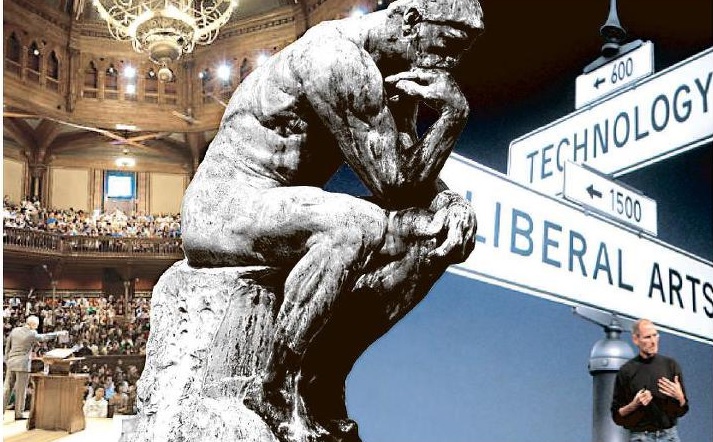
왜 인문학을 연구해야 하는가? 이 질문에 대해 어느 기자의 주장을 통해 그 이유를 들어보자.
시사전문지 애틀랜틱(The Atlantic)의 기자 소피아 길버트는 ‘Learning to Be Human’이라는 기사를 통해 기술 중심으로 빠르게 변화하는 세상에서 우리를 ‘인간답게 유지하기 위해서’는 인문학 연구가 필수라고 한다. “문학, 역사, 예술, 음악, 철학 등 인문학이 알려주는 인간적인 삶과 그에 대한 해석은 과학이나 기술로는 풀 수 없는 문제입니다”
소피아는 길고 체계적인 연구가 필요한 인문학과는 달리 구글이나 네이버와 같이 기술이 중심인 기업들이 우리에게 주는 순간적인 만족에 대한 집착에서 벗어나야 한다고 강조한다.
이처럼 인문학은 인간 사회를 구성하는 가장 기본적이고 필수적인 학문이다.
사람은 경제적 부유함 속에서 삶을 살 수는 있지만 이것만 충족된다고 해서 인간적인 삶을 살 수는 없다. 인문학은 삶의 좌절, 고통, 슬픔, 아픔, 상처 등을 이해할 수 있는 성숙한 자기 이해와 그 의미를 반추하고 또 다른 미래를 꿈꾸게 만들고 의미있는 삶을 추구하게 한다. 정신적 삶은 눈에 보이거나 오감을 통해 만져지는 것은 아니어도 분명 삶을 의미있게 만드는 힘이 있다. 삶을 건강하고 균형있게 만드는 것이다.
오늘날 학문의 통섭(consilience)이 중요한 시대적 화두가 되고 있다. 지식의 경계를 넘어서, 즉 과거와 현재, 동양과 서양, 자연과학과 사회과학의 경계를 넘는데 인문학이 그 교차적 융합지가 되고 있다. 자연과학과 사회과학, 철학, 문학을 횡단하는 환경학, 수학과 물리학에서 출발해 사회이론까지 적용범위를 넓혀가는 네트워크 과학 등이 모두 인문학이라는 교차중심지에서 경계넘기를 시도하며 탄생한 새로운 통섭의 학문이다.
오늘날 인문학, 자연과학, 예술, 로봇공학, 유전학, 진화학, 뇌과학, 법학, 경제학, 종교학 등 다양한 영역에서 학제적 연구나 통섭적 연구의 필요성이 더욱 증대되고 있다. 이를 위해서는 사물을 기존과 달리 바라보는 시선이나 사고가 필요하다.
창조나 통섭의 능력은 인류가 남긴 정신적 텍스트에 대한 통찰력 있는 해석을 통해 새로운 삶의 원리나 의미를 생성할 수 있는 동사적 표현능력에서 만들어진다. 인문정신은 종교, 문화, 역사, 공간, 권력, 의미 등의 사이에서 창의적 변화를 야기시킨다.
크리스천라이프 편집부
………………………
[기사 참조]
Learning to Be Human
_ SOPHIE GILBERT (JUN 30, 2016)
In an era fixated with science, technology, and data, the humanities are in decline. They’re more vital than ever.
Earlier this month, the Washington Post journalist Jeff Guo wrote a detailed account of how he’d managed to maximize the efficiency of his cultural consumption. “I have a habit that horrifies most people,” he wrote. “I watch television and films in fast forward … the time savings are enormous. Four episodes of Unbreakable Kimmy Schmidt fit into an hour. An entire season of Game of Thrones goes down on the bus ride from D.C. to New York.”
Guo’s method, which he admits has ruined his ability to watch TV and movies in real time, encapsulates how technology has allowed many people to accelerate the pace of their daily routines. But is faster always better when it comes to art? In a conversation at the Aspen Ideas Festival, co-sponsored by the Aspen Institute and The Atlantic, Drew Gilpin Faust, the president of Harvard University, and the cultural critic Leon Wieseltier agreed that true study and appreciation of the humanities is rooted in slowness—in the kind of deliberate education that can be accrued over a lifetime. While this can seem almost antithetical at times to the pace of modern life, and as subjects like art, philosophy, and literature face steep declines in enrollment at academic institutions in the U.S., both argued that studying the humanities is vital for the ways in which it teaches us how to be human.
The statistics Faust cited paint a fairly grim portrait of the humanities’ declining prestige. At the end of World War II, 11 percent of students nationwide chose to major in the humanities. In the 1960s, this figure rose to 17 percent, but now it stands at around 6 percent. Students are increasingly drawn to vocational majors in subjects like business, medicine, science, and education. “What we need to do is recognize the limitations of that mentality,” Wieseltier said. “The purpose of the humanities is not primarily utilitarian, it is not primarily to get a job … The purpose of the humanities is to cultivate the individual, cultivate the citizen.”
Part of the problem, he argued, is a culture that—aided by technology—has come to value speed and conclusive answers over leisurely thought and complex questions. The “instant gratification of Google,” he said, has reduced knowledge “to the status of information, but information is highly inferior. Knowledge requires inquiry, method, and above all, time.” The impulse to voraciously consume as much news (or as many television shows) as possible in a short span of time is fundamentally at odds with deep consideration of questions about the universe, or measured study of culture. Faust cited a Harvard art history professor who assigns her students the task of spending three hours looking at a single work of art in a museum. Initially they’re horrified, she said, but “by hour three they’re seeing all kinds of things that they hadn’t noticed in hour one.”
The irony of the humanities’ declining prestige is that what they teach seems to be urgently needed in a polarized culture. “The humanities are such an important vehicle for widening the world … for teaching empathy for people outside yourself,” Faust said. “In this time of increasing tribalism, this seems like such a critical role.” History teaches students about the context of choices made in the past. Philosophy forces them to think about morality. Theater, literature, and film put students into the mindset of others. In difficult times, people inevitably turn to the humanities to try to understand adversity. “People in trouble don’t turn to regression analysis,” Wieseltier said. “Their souls require the fortification and the wisdom that only humanistic thinking can provide.”
As more and more things become quantifiable, from workouts to Netflix binges to the number of dollars per visitor a museum exhibition costs, both argued that it’s critical for students to realize that not everything can be reduced to a data point. “Many of the deepest experiences in life can’t be numerically measured,” Wieseltier said. “What the humanities teach, what literature and art and music and philosophy and history teach, is that the correct description and analysis of human life is not a scientific affair.” Or as Faust put it, in a quote frequently attributed to Albert Einstein, “Not everything that counts can be counted, and not everything that can be counted counts.”
_ SOPHIE GILBERT is a staff writer at The Atlantic, where she covers culture.