
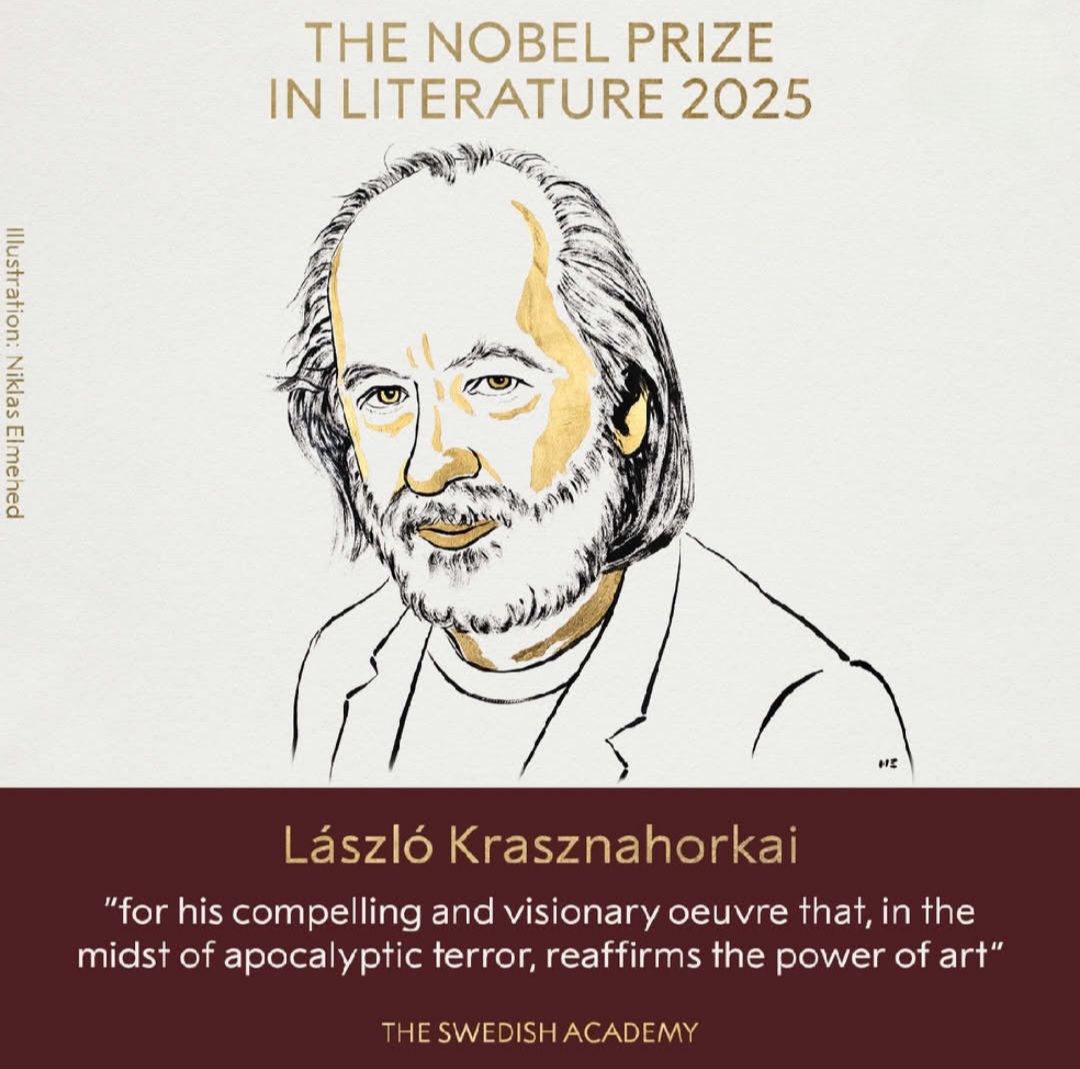
2025 노벨문학상
헝가리의 소설가 ‘크러스너호르커이 라슬로’ 수상해
“강렬·예언적 작품세계”
2025년 노벨문학상 수상자로 헝가리를 대표하는 소설가 크러스너호르커이 라슬로 (71세, Krasznahorkai László)가 선정됐다.
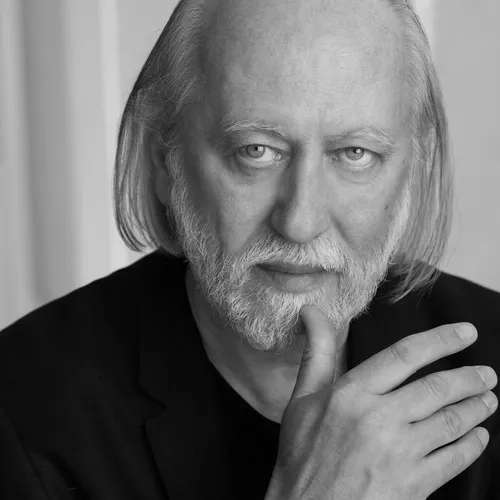
스웨덴 한림원은 10월 9일 (현지 시각) 선정 이유에 대해 “종말론적 공포의 한가운데서도 예술의 힘을 다시금 증명해내는 강렬하고도 비전적인 작품 세계를 구축한 작가”라고 선정 이유를 밝혔다.
2002년 노벨문학상을 수상한 케르테스 임레 (1929 ~ 2016)에 이어 23년 만의 두 번째 헝가리인 수상이다.
라슬로는 ‘사탄탱고’ (1985), ‘저항의 멜랑콜리’ (1989) 등으로 알려진 작가다.
그는 2015년 맨 부커 국제상 수상으로 세계적 권위를 확보했다.
그는 벨라 타르 감독과의 영화 각본 협업으로도 유명하다. 이를 통해 자신만의 독특한 세계관을 확장하고 있다.
라슬로는 카프카를 거쳐 토마스 베른하르트로 이어지는 중유럽 문학의 위대한 서사적 전통을 계승하는 작가다.
그의 작품은 부조리함과 기괴한 과장이 특징이다.
이번 라슬로의 노벨상 수상은 동유럽 문학의 위상을 재확인하며, 노벨상이 지향하는 시대정신과 미학적 깊이를 동시에 충족시켰다는 평가다.
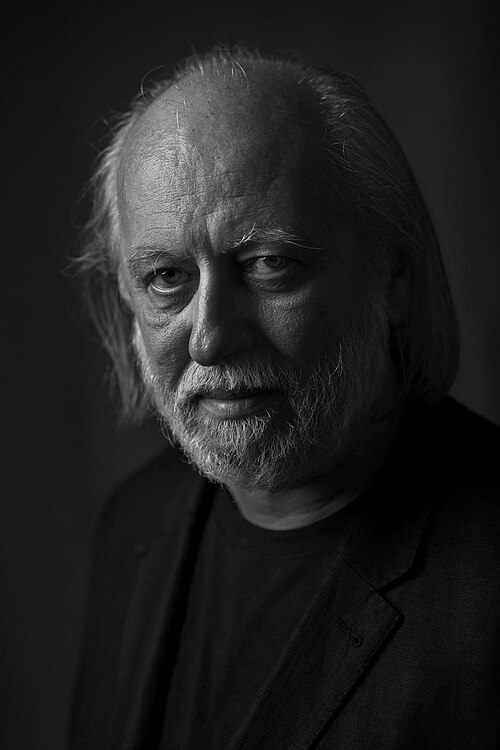
- 출생 및 주요 작품
1954년 1월 5일 헝가리 출생
1983년 부다페스트 대학에서 문학 전공
1985년 데뷔 장편소설 ‘사탄탱고'(S tántangó) 출간
1985년 단편소설 ‘은혜로운 관계: 죽음의 단편들’ (Kegyelmi viszonyok : halálnovellák) 출간
1987년 요제프 아틸라 상 수상
1989년 장편소설 ‘저항의 멜랑콜리’ (Az ellenállás melankóliája) 출간
1992년 장편소설 ‘우르가의 죄수’ (Az urgai fogoly) 출간
1998년 단편집 ‘이사야가 왔다’ (Megjött Ézsaiás) 출간
1999년 장편소설 ‘전쟁과 전쟁’ (Háború és háború) 출간
2003년 장편소설 ‘북쪽에서 언덕, 남쪽에서 호수, 서쪽에서 도로, 동쪽에서 강’ (Északról hegy, D lről tó, Nyugatról utak, Keletről folyó) 출간
2004년 헝가리 최고 권위 문학상인 ‘코슈트 상’ (Kossuth Prize) 수상
2004년 장편소설 ‘천국 아래 파괴와 슬픔’ (Rombolás s bánat az Ég alatt) 출간
2008년 장편소설 ‘서왕모의 강림’ (Seiobo járt odalent) 출간
2009년 단편·산문집 ‘마지막 늑대’ (Az utolsó farkas) 출간
2015년 헝가리 작가 최초 맨부커 국제상 (Man Booker International Prize) 수상
2016년 장편소설 ‘벵크하임 남작의 귀향’ (B ró Wenckheim hazatér) 출간
2018년 장편소설 ‘맨해튼 프로젝트’ (A Manhattan-terv) 출간
2018 장편소설 ‘궁전을 위한 기초작업’ (Aprómunka egy palotáért) 출간
2019 장편소설 ‘언제나 호메로스’ (Mindig Homéroszna) 출간
2024년 장편소설 ‘헤르슈트 07769 : 플로리안 헤르슈트의 바흐 소설 : 이야기’ (Herscht 07769 : Florian Herscht Bach-regénye : elbeszélés) 출간
2024년 소설 ‘젬레가 사라지다’ (Zsömle odavan) 출간
2025년 노벨문학상
- 영화 각본 (Film)
1988년 ‘파멸’ (Damnation ) 벨라 타르 감독; 공동 각본
1990년 ‘마지막 배 도시 생활’ (Az utolsó hajó) 벨라 타르 감독; 공동 각본
1994년 ‘사탄탱고’ (S tántangó) 벨라 타르 감독; 공동 각본 (소설 ‘사탄탱고’ 원작)
2000년 ‘베크마이스터 하모니즈 벨라’ (Werckmeister harmóniák) 타르 감독; 공동 각본 (소설 ‘저항의 멜랑콜리’ 원작)
2007년 ‘런던에서 온 사나이’ (A Londoni férfi) 벨라 타르 감독; 공동 각본 (조르주 심농 소설 원작)
2011년 ‘토리노의 말’ (A Torinói ló) 벨라 타르 감독; 공동 각본
The 2025 Nobel Prize in Literature is awarded to the Hungarian author László Krasznahorkai “for his compelling and visionary oeuvre that, in the midst of apocalyptic terror, reaffirms the power of art.”
The author László Krasznahorkai was born in 1954 in the small town of Gyula in southeast Hungary, near the Romanian border. A similar remote rural area is the scene of Krasznahorkai’s first novel ‘Sátántangó’, published in 1985 (‘Satantango’, 2012), which was a literary sensation in Hungary and the author’s breakthrough work. The novel portrays, in powerfully suggestive terms, a destitute group of residents on an abandoned collective farm in the Hungarian countryside just before the fall of communism. Silence and anticipation reign, until the charismatic Irimiás and his crony Petrina, who were believed by all to be dead, suddenly appear on the scene. To the waiting residents, they seem as messengers either of hope or of the last judgement. The satanic element referred to in the title of the book is present in their slave morality and in the pretences of the trickster Irimiás which, effective as they are deceitful, leave almost all of them tied up in knots. Everyone in the novel is waiting for a miracle to happen, a hope that is from the very outset punctured by the book’s introductory Kafka motto: ‘In that case, I’ll miss the thing by waiting for it.’ The novel was made into a highly original 1994 film in collaboration with the director Béla Tarr.
The American critic Susan Sontag soon crowned Krasznahorkai contemporary literature’s ‘master of the apocalypse’, a judgement she arrived at after having read the author’s second book ‘Az ellenállás melankóliája’ (1989; ‘The Melancholy of Resistance’, 1998). Here, in a feverish horror fantasy played out in a small Hungarian town nestled in a Carpathian valley, the drama has been heightened even further. From the very first page, we – together with the charmless Mrs Pflaum – find ourselves entering a dizzying state of emergency. Ominous signs abound. Crucial to the dramatic sequence of events is the arrival in the city of a ghostly circus, whose main attraction is the carcass of a giant whale. This mysterious and menacing spectacle sets extreme forces in motion, prompting the spread of both violence and vandalism. Meanwhile, the inability of the military to prevent anarchy creates the possibility of a dictatorial coup. Employing dreamlike scenes and grotesque characterisations, László Krasznahorkai masterfully portrays the brutal struggle between order and disorder. None may escape the effects of terror.
In the novel ‘Háború és háború’ (1999; War & War, 2006) Krasznahorkai shifts his attention beyond the borders of his Hungarian homeland in allowing the humble archivist Korin to decide, as his life’s final act, to travel from the outskirts of Budapest to New York such that he might, for a moment, take his place at the centre of the world. Back home in the archives, he has found an exceptionally beautiful ancient epic about returning warriors that he hopes to make known to the world. Krasznahorkai’s prose has developed towards the flowing syntax with long, winding sentences devoid of full stops that has become his signature.
Continue reading about the 2025 Nobel Prize in Literature: https://bit.ly/4pMBORJ
제공 = 노벨위원회
크리스천라이프 편집부