
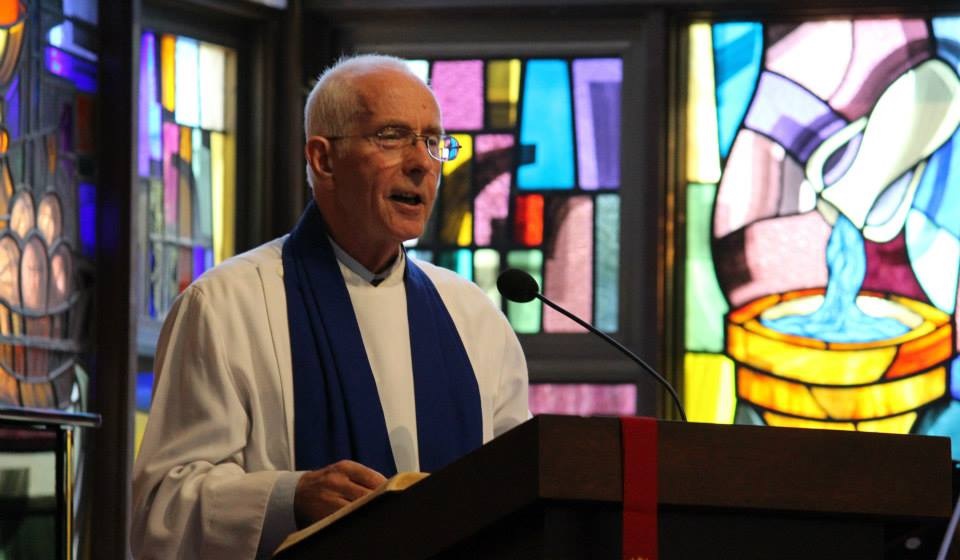
with Rev. Prof. Dean Drayton

I am what I am
The setting always matters. The apostle Paul says, “I am what I am”. He sounds like Popeye the Sailor Man with his “I yam what ayam” holding aloft his can of empowering spinach. Popeye is so blatant and out there. No doubt about his own identity. I am what I am.
But the setting always matters. Paul is writing to the church in Corinth. He is listing those to whom Christ appeared- many people.
Last of all, as to one untimely born, he appeared also to me. For I am the least of the apostles, unfit to be called an apostle, because I persecuted the church of God. But by the grace of God I AM WHAT I AM, and his grace toward me has not been in vain. (1 Cor 15:8-10a)
There it is, the decisive qualification; ‘By the grace of God I am what I am.’ For Paul is mightily aware of the fact that he persecuted God’s church. He believed that the church was a blasphemous rejection of the living God. He had spent his life serving God’s law. He had been proud to say he was a real Hebrew who had kept the law blamelessly. And then the risen Christ appeared to him and he had found that he was actually persecuting God. Paul could have been broken, spent his life berating and accusing himself for what he had done. But he didn’t because of the Lord who had accosted him. He spent the rest of his life living in the grace of God. He wrote that through Christ he had obtained access to this grace of God in which we stand. He explained that standing in the grace of God was living “in Christ”. He was not living ‘for Christ’, he was living in the presence of the grace of Christ.
Unlike Popeye, his identity was, not from what he had achieved, not from what he had set out to do, not even from the achievement of his dreams. And despite his actively working against the purposes of God, his identity was not fixated on the mistakes he had made, the failures he had endured, the rejection of others. Neither success nor failure was uppermost. Instead his whole identity was the gift that was given by the present reality of the grace of God.
“By the grace of God, I am what I am”
What a different setting for anyone’s life and identity – living alive to the presence of God
Rev Professor Dean Drayton
National President of the UCA 2003-2006
나는 나입니다
상황과 맥락은 언제나 중요합니다. 사도 바울은 “나는 나입니다(I am what I am)”라고 말합니다. 이 말은 마치 힘을 솟게 하는 시금치 통조림을 치켜들고 “나는 나야(I yam what ayam)”라고 외치는 뱃사람 뽀빠이를 연상시킵니다. 뽀빠이는 자신의 정체성에 대해 아주 솔직하고 거침이 없으며, 조금의 의구심도 없습니다. “나는 나입니다.”
하지만 상황과 맥락은 언제나 중요합니다. 바울은 고린도 교회에 편지를 쓰고 있었습니다. 그는 그리스도께서 나타나셨던 사람들, 즉 수많은 이들을 열거하고 있었습니다.
맨 마지막으로, 마치 때가 되지 않아 난 자 같은 내게도 나타나셨습니다. 나는 하나님의 교회를 박해했기에 사도라 불릴 자격조차 없는, 사도 중 가장 작은 자입니다. 그러나 하나님의 은혜로 ‘나는 나’가 되었으며, 내게 베푸신 그분의 은혜는 헛되지 않았습니다. (고린도전서 15:8-10a)
바로 여기에 결정적인 자격 요건이 있습니다. ‘하나님의 은혜로 나는 나입니다.’ 바울은 자신이 하나님의 교회를 박해했다는 사실을 뼈저리게 인식하고 있었기 때문입니다. 그는 교회가 살아 계신 하나님을 모독하고 거부하는 집단이라고 믿었습니다. 그는 평생 하나님의 율법을 섬기며 살았습니다. 그는 율법을 흠잡을 데 없이 지켜온 진정한 히브리인이라는 사실을 자랑스럽게 여겼습니다. 그러다 부활하신 그리스도께서 그에게 나타나셨고, 그는 자신이 실은 하나님을 박해하고 있었음을 깨달았습니다. 바울은 자신의 과거 행적 때문에 무너져 내리거나 평생 스스로를 자책하고 비난하며 살 수도 있었을 것입니다. 하지만 그를 만나주신 주님 덕분에 그는 그러지 않았습니다. 그는 남은 생애를 하나님의 은혜 안에서 살았습니다. 그는 그리스도를 통해 우리가 서 있는 이 하나님의 은혜에 들어갈 수 있게 되었다고 기록했습니다. 그는 하나님의 은혜 안에 서 있다는 것이 곧 ‘그리스도 안에서’ 사는 것이라고 설명했습니다. 그는 ‘그리스도를 위해’ 사는 것이 아니라, 그리스도의 은혜가 임재하는 그 안에서 살고 있었던 것입니다.
뽀빠이와 달리, 그의 정체성은 그가 이룬 업적이나 이루고자 했던 일, 혹은 꿈을 성취한 결과에서 비롯된 것이 아니었습니다. 하나님의 뜻을 거스르며 적극적으로 행동했음에도 불구하고, 그의 정체성은 자신이 저지른 실수나 겪었던 실패, 혹은 타인에게 거부당했던 경험에 얽매여 있지 않았습니다. 성공이나 실패가 그의 삶의 중심을 차지한 것도 아니었습니다. 오히려 그의 정체성 전체는 하나님의 은혜라는 현재의 실재가 그에게 베푼 선물이었습니다.
“하나님의 은혜로 나는 지금의 내가 되었습니다.”
하나님의 임재 안에서 살아간다는 것—이는 그 어떤 사람의 삶과 정체성에 있어서도 참으로 남다른 차원의 모습입니다.
번역 = 김환기 사관