
1996년 11월 21일, 파키스탄의 노벨물리학상 수상자 압두스 살람 (Muhammad Abdus Salam, 1926 ~ 1996) 별세
무함마드 압두스 살람 (Muhammad Abdus Salam, 1926년 1월 29일 ~ 1996년 11월 21일) 박사는 파키스탄의 이론물리학자이다. 1979년에 약전자기 이론으로, 두 미국인 물리학자인 스티븐 와인버그, 셸던 리 글래쇼와 함께 노벨 물리학상을 받았다. 이탈리아의 트리에스테에 국제 이론 물리 센터가 세워진 이후 이곳의 소장을 지냈다.
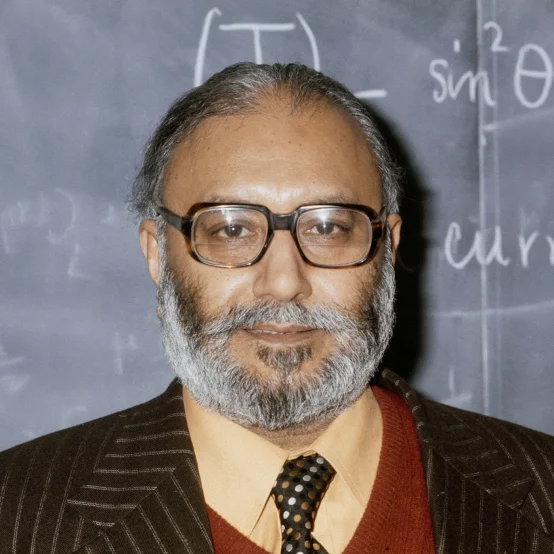
– 무함마드 압두스 살람 (Muhammad Abdus Salam)
.출생: 1926년 1월 29일, 영국령 인도 제국 펀자브 주 사히왈
.사망: 1996년 11월 21일(70세), 잉글랜드 옥스퍼드셔주 옥스퍼드
.국적: 파키스탄
.분야: 이론물리학
.소속: 국제 이론 물리 센터, 케임브리지 대학교, 임페리얼 칼리지 런던
.출신 대학: Jhang 고등학교 (졸업 1940), 거버먼트 칼리지 대학교 (Government College University 학사 1944), 펀자브 대학교 (석사 1946), 케임브리지 대학교 (박사 1951)
.지도 교수: 니컬러스 케머 (Nicholas Kemmer), 폴 톤턴 매슈스 (Paul Taunton Matthews)
.지도 학생: 유발 네에만 (히: יובל נאמן), 마이클 더프, 존 찰턴 폴킹혼 (John Charlton Polkinghorne)
.수상: 노벨 물리학상 (1979), 영국 명예 대영 제국 훈장 2등급 (honorary KBE, 외국인대상 정원외 명예훈장, 1989)
무함마드 압두스 살람은 파키스탄의 이론물리학자다.
1979년에 약전자기 이론으로, 두 미국인 물리학자인 스티븐 와인버그, 셸던 리 글래쇼와 함께 파키스탄인으로서는 최초로 노벨 물리학상을 받았다.
수상 소감에서 “이휘소는 현대 물리학을 10여 년 앞당긴 천재이다. 이휘소가 있어야 할 자리에 내가 있는 것이 부끄럽다”고 밝혔다.
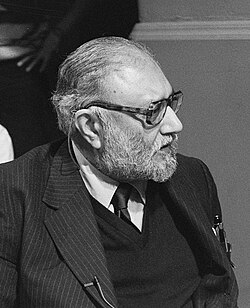
○ 생애 및 활동
1926년 펀자브인 부부에게서 태어난 압두스 살람은 이미 14살에 펀자브 대학교 입학 시험에서 사상 최고점을 획득하는 등 천재성을 보였으며 이후 라호르에 위치한 국립 대학교에서 수학하면서 1944년 라마누잔의 수식을 연구한 저서를 펴내기도 했다.
이후 케임브리지 대학교 교수, 임페리얼 칼리지 런던 교수 등을 거치면서 물리학계에서 커다란 두각을 나타내는 동시에 통일장 이론 형성에 영향을 끼치는 여러 이론들을 발표한다.
이러한 명성 하에 압두스 살람 박사는 파키스탄 원자력 위원회 위원, 파키스탄 과학 평의회 회원, 대통령 과학 수석 자문관을 지내고 미국과 스웨덴의 과학 아카데미 회원에 선출되기도 했었으나 1974년 파키스탄 의회가 이슬람교의 한 분파이던 아흐마디야 파를 이슬람의 한 분파로 인정하지 않는 법안을 통과시키고 뒤이어 아흐마디야 파에 대한 탄압을 강화하자 아흐마디야 신도였던 압두스 살람 박사는 여기에 항의하여 영국으로 건너가 타계할 때까지 영국에 머무르게 된다.
이탈리아의 트리에스테에 국제 이론 물리 센터가 세워진 이후 이곳의 소장을 지냈으며 1996년 영국 옥스퍼드 대학교에서 70세를 일기로 별세하였다.
○ 학력
~1940년: Jhang 고등학교 (졸업)
1940년~1944년: 거버먼트 칼리지 대학교 (학사)
1944년~1946년: 펀자브 대학교 (석사)
1949년~1951년: 케임브리지 대학교 (박사)
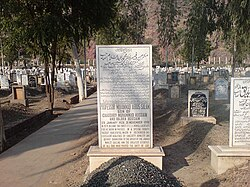
○ Awards and recognition
Nobel Prize in Physics (Stockholm, Sweden) (1979)
Hopkins Prize (Cambridge University) for “the most outstanding contribution to Physics during 1957–1958”
Adams Prize (Cambridge University) (1958)
Fellow of the Royal Society (1959)
Smith’s Prize (Cambridge University) (1950)
Sitara-e-Pakistan by the President of Pakistan for contribution to science in Pakistan (1959)[148]
Pride of Performance Award by the President of Pakistan (1958)
First recipient of James Clerk Maxwell Medal and Prize (Physical Society, London) (1961)
Hughes Medal (Royal Society, London) (1964)
Atoms for Peace Award (Atoms for Peace Foundation) (1968)
J. Robert Oppenheimer Memorial Prize and Medal (University of Miami) (1971)
Guthrie Medal and Prize (1976)
Sir Devaprasad Sarvadhikary Gold Medal (Calcutta University) (1977)
Matteuci Medal (Accademia Nazionale dei Lincei, Rome) (1978)
John Torrence Tate Medal (American Institute of Physics) (1978)
Royal Medal (Royal Society, London) (1978)
Nishan-e-Imtiaz by the President of Pakistan for outstanding performance in Scientific projects in Pakistan (1979)
Einstein Medal (UNESCO, Paris) (1979)
Shri R.D. Birla Award (India Physics Association) (1979)
Order of Andrés Bello (Venezuela) (1980)
Order of Istiqlal (Jordan) (1980)
Order of Merit of the Italian Republic (1980)
Josef Stefan Medal (Josef Stefan Institute, Ljublijana) (1980)
Gold Medal for Outstanding Contributions to Physics (Czechoslovak Academy of Sciences, Prague) (1981)
Peace Medal (Charles University, Prague) (1981)
Doctor of Science from University of Chittagong (1981)
Lomonosov Gold Medal (USSR Academy of Sciences) (1983)
Premio Umberto Biancamano (Italy) (1986)
Dayemi International Peace Award (Bangladesh) (1986)
First Edinburgh Medal and Prize (Scotland) (1988)
“Genoa” International Development of Peoples Prize (Italy) (1988)
Honorary Knight Commander of the Order of the British Empire (1989)
Catalunya International Prize (Spain) (1990)
Copley Medal (Royal Society, London) (1990)
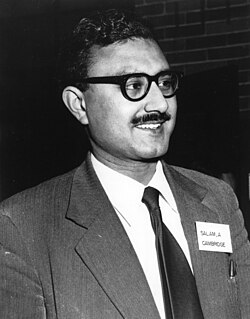
○ Contributions
Salam’s primary focus was research on the physics of elementary particles. His particular numerous groundbreaking contributions included:
two-component neutrino theory and the prediction of the inevitable parity violation in weak interaction;
gauge unification of weak and electromagnetic interactions, the unified force is called the “Electroweak” force, a name given to it by Salam, and which forms the basis of the Standard Model in particle physics;
predicted the existence of weak neutral currents, and W and Z bosons, before their experimental discovery
symmetry properties of elementary particles; unitary symmetry;
renormalization of meson theories;
gravity theory and its role in particle physics; two tensor theory of gravity and strong interaction physics;
unification of electroweak with strong nuclear forces, grand unification theory;
related prediction of proton-decay;
Pati–Salam model, a grand unification theory;
Supersymmetry theory, in particular formulation of Superspace and formalism of superfields in 1974;
the theory of supermanifolds, as a geometrical framework for understanding supersymmetry, in 1974;
Supergeometry, the geometric basis for supersymmetry, in 1974;
application of the Higgs mechanism to ‘electroweak symmetry breaking’;
prediction of the magnetic photon in 1966;
○ Institutes named after Abdus Salam and other named entities
Abdus Salam Centre for Physics (Department of Physics), Quaid-e-Azam University, Islamabad, Pakistan
Abdus Salam National Centre for Mathematics (ASNCM), Government College University, Lahore, Pakistan.
Abdus Salam Chair in Physics (ASCP), Government College University, Lahore, Pakistan.
Abdus Salam International Centre for Theoretical Physics, Trieste, Italy.
Abdus Salam School of Mathematical Sciences, Lahore, Pakistan
The Edward Bouchet Abdus Salam Institute (EBASI)
Abdus Salam Library at Imperial College London
참고 = 위키백과, 나무위키
크리스천라이프 편집부