
명곡감상
프랑스의 작곡가•오르가니스트•지휘자•피아니스트 카미유 생상 (Charles-Camille Saint-Saëns, 1835 ~ 1921)의 Piano Concerto No. 2, Op. 22 (1868) [Pascal Rogé]
샤를카미유 생상스 (프: Charles-Camille Saint-Saëns, 1835년 10월 9일 ~ 1921년 12월 16일)는 프랑스의 작곡가, 오르가니스트, 지휘자, 피아니스트이며, 특히 〈동물의 사육제〉, 〈죽음의 무도〉, 〈삼손과 데릴라〉, 〈피아노 협주곡 2번〉, 〈첼로 협주곡 1번〉 , 〈바이올린 협주곡 3번〉 ,〈서주와 론도 카프리치오소〉, 〈교향곡 제3번 ‘오르간’〉으로 알려져 있다. 섬세한 음색과 풍요로운 악기구성으로 유명하다.

– 카미유 생상스 (Charles-Camille Saint-Saëns)
.출생: 1835년 10월 9일, 프랑스 파리
.사망: 1921년 12월 16일, 알제리 알제
.국적: 프랑스
.부모: Jacques Joseph Victor Saint-Saëns, Clémence Saint-Saëns
.배우자: Marie Laure Emile Truffot (1875 ~ 1921년)
.자녀: Jean-François Saint-Saëns, André Saint-Saëns
생상스는 프랑스 파리에서 태어났다. 정부 서기였던 그의 아버지는 그가 탄생한 후 3달 만에 죽었다. 절대음감의 소유자였던 그는 2살 때 피아노를 치기 시작하였으며 곧바로 작곡을 시작할 수 있었다. 1839년 3월 22일로 날짜가 기록된, 최초로 작곡한 곡인 피아노를 위한 작은 단편은 현재 프랑스 국립도서관에서 보관 중이다. 그의 조숙함은 음악에만 제한을 두지 않았다. 그는 3살 경에 읽고 쓸 줄 알았으며 7살 때는 라틴어를 완전히 터득했다. 12세 때 모차르트, 헨델 등의 작곡가들의 곡으로 연주회를 가졌다. 13세에 파리 음악원에 들어갔고, 18세에 《제1교향곡》을 썼다. 28세에 마들레느 교회에서 오르간을 쳤으며, 29세에 그의 가장 유명한 작품들 중 하나인 《제3교향곡》을 작곡하였다. 36세 때에는 ‘국민 음악 협회’를 설립하여 프랑스의 음악을 일으키는 데 힘썼다. 46세에 아카데미 회원이 되었다. 그리고 51세때 그는 사후에도 사랑받게 될 《동물의 사육제》를 작곡하였다. 그의 음악의 주류를 이루고 있는 것은 교향 작품으로 기악을 중요시하였으며, 형식·편성·대위법에 있어서 우수하였다. 문학·과학 등에도 조예가 깊었다.
○ Camille Saint-Saëns – Piano Concerto No. 2, Op. 22 (1868) [Pascal Rogé]
Charles-Camille Saint-Saëns (9 October 1835 – 16 December 1921) was a French composer, organist, conductor and pianist of the Romantic era. His best-known works include Introduction and Rondo Capriccioso (1863), the Second Piano Concerto (1868), the First Cello Concerto (1872), Danse macabre (1874), the opera Samson and Delilah (1877), the Third Violin Concerto (1880), the Third (“Organ”) Symphony (1886) and The Carnival of the Animals (1886).
Piano Concerto No. 2 in G minor, Op. 22 (1868)
Dedication A Madame A. de Villers née de Haber
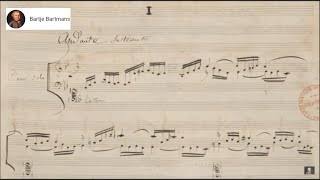
Manuscript score 1868, dated May 2.
Performance indicators in German in pencil in the first movement, p.18 (-4 Viertel schlagen”) and 27 (“8telschlage”) are perhaps from the hand of Ferdinand David, who was the conductor of the work in the Gewandhaus in Leipzig October 15, 1868.
- Andante sostenuto (0:00)
- Allegro scherzando (11:36)
- Presto (17:28)
Pascal Rogé, piano and the Royal Philharmonic Orchestra conducted by Charles Dutoit
- Description by Roger Dettmer
Saint-Saëns composed and first played this work in 1868. It is scored for pairs of winds, horns and trumpets, plus timpani and strings. During his long and prodigiously creative life — first as a child prodigy, then as a “Futurist,” then as a conservative, and finally as a vituperating fossil — Saint-Saëns composed five piano concertos between the ages of 20 and 61. The Second (and enduringly most popular) was created hurriedly in the spring of 1868 after the Russian pianist/composer/conductor Anton Rubinstein asked him to arrange a Paris concert. Because the Salle Pleyel was solidly booked and therefore not available for three more weeks, Saint-Saëns proposed that he himself write a new piece for the occasion. On May 6, with Rubinstein conducting, he introduced the Second Concerto, although not with much success. There had not been time to practice it sufficiently, and a portion of the audience was put off by the work’s stylistic swings (“from Bach to Offenbach” was pianist Sigismond Stojowski’s bon mot of the month).
Gabriel Fauré, a pupil of Saint-Saëns at the time, remembered years later that he had shown his teacher a Tantum ergo setting. Saint-Saëns glanced at it hurriedly, then said, “Give this to me. I can make something of it!” What emerged was the main theme of the first movement (Andante sostenuto) of the new G minor Piano Concerto, following a solo improvisation in the manner of Bach to get things started. A gentler sub-theme (the composer’s own) has a Chopinesque flavor, especially in its keyboard embroidery in thirds.
Like Saint-Saëns’ opening movement and finale, an Allegro scherzando in between is written in sonata form. The spirit is nonetheless elfin, in the Mendelssohn manner — much as the Frenchman’s long-finished but not-yet-published Second Symphony had been — although the second theme in the second movement of the concerto anticipates the Carnival des animaux, still two decades down the road.
The finale is a Presto tarantella in 2/2 time, whose G minor tonality reminds us that Mendelssohn ended his “Italian” Symphony 35 years earlier with a minor-key tarantella. If Saint-Saëns’ premiere audience was not immediately cordial — Parisians had become as exasperatingly superficial as the Viennese — Franz Liszt praised the Second Concerto without stint, saying that it pleased him “singularly.” Not for the first time, nor for the last, was his praise prescient. Later on, of course, Parisian audiences let everyone believe they’d loved it from the start.
크리스천라이프 편집부