

1975년 12월 4일, 무사유의 위험성을 경고한 독일 출신 정치 이론가•철학자 한나 아렌트 (Hannah Arendt, 1906 ~ 1975) 별세
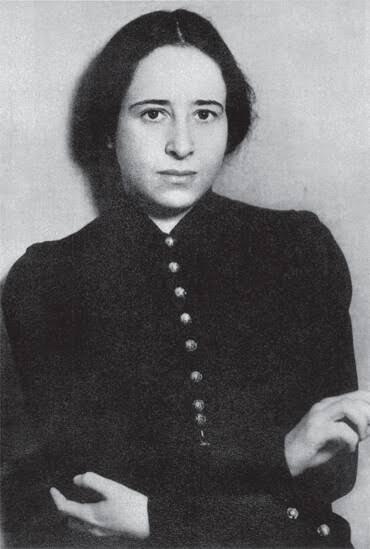
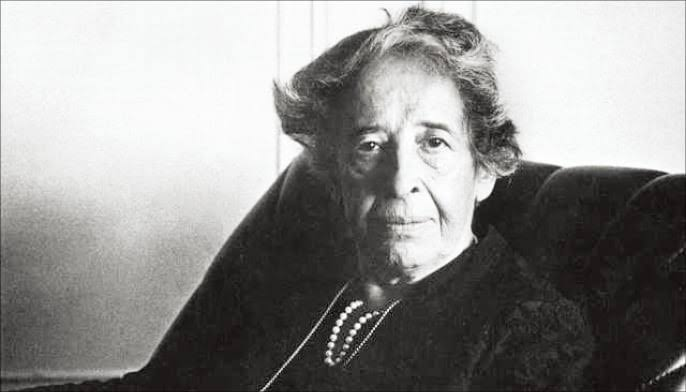
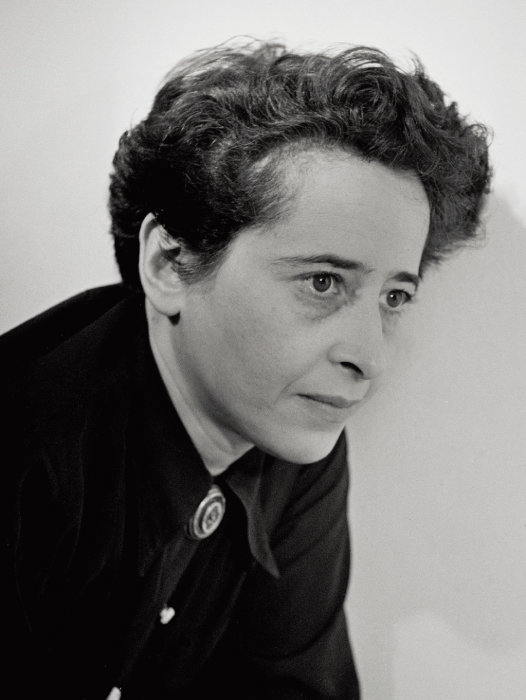
한나 아렌트 (독: Hannah Arendt, 1906년 10월 14일 ~ 1975년 12월 4일)는 독일 출신의 정치 이론가이다. 종종 정치 철학자로 평가되지만, 아렌트 자신은 항상 철학은 “단독자인 인간”에 관심을 갖는다는 이유로 그러한 호칭을 거절했다. 그는 대신에 자신을 정치 이론가로 묘사했는데, 그 이유는 그의 업적이 “‘한 인간’이 아닌 ‘인류’가 지구에 살며 세계에 거주한다.”는 사실에 중심을 두고 있기 때문이다.
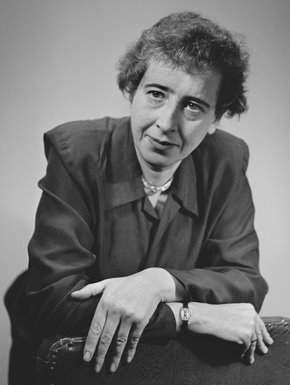
– 한나 아렌트 (Hannah Arendt)
.본명: 요한나 콘 아렌트 (Johanna Cohn Arendt)
.출생: 1906년 10월 14일, 독일 제국 하노버 린덴
.사망: 1975년 12월 4일 (69세), 미국 뉴욕 주 뉴욕 시 맨해튼
.국적: 독일 제국 → 미국
.직업: 정치철학자
.학력: 지트니크 학교, 샤르로텐부르크 라이지움, 루이제 학교 (1917~21, 1924 졸업), 마르부르크 대학교, 프라이부르크 대학교, 하이델베르크 대학교 (1926~29, 1929년 철학박사), 베를린 정치학대학교
.경력: 프린스턴 대학교 교수 (1959~63), 웨슬리언 대학교 연구교수 (1961~), 시카고 대학 교수 (1963~67), 사회연구를 위한 새 학교 교수 (1968~)
.배우자: 귄터 앤더스 (1929~37, 이혼), 하인리히 블뤼허 (1940~70, 사별)
.종교: 무종교 (무신론)
미국의 학자, 연구가.
독일 출신 유대계 인사로, 미국에서 정치철학자로 활동했다.
20세기의 가장 영향력 있는 정치이론철학가 중 한 사람으로, 고전적 시민 공화주의의 맥락에서 적극적 시민의식의 필요성을 강조했다.
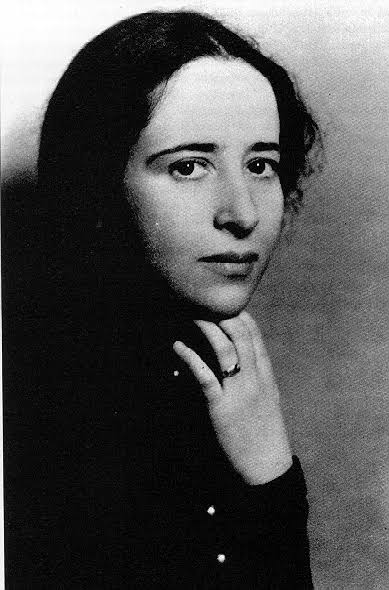
– 생애 및 활동
아렌트는 당시 독립적이었던 린덴(지금은 하노버의 일부)에서 세속적 유대인 집안에 태어났으며 쾨니히스베르크 (이 도시는 그가 존경한 선구자 이마누엘 칸트의 고향이었다)와 베를린에서 자랐다. 그는 마르부르크 대학에서 하이데거의 밑에서 철학을 공부했으며, 그와 길고 산발적인 연애 관계에 있었는데, 이후 나치에 적극 협력하던 그에게 깊은 환멸을 느끼게 되어 그를 떠나 하이델베르크로 이주하였다. 그곳에서 실존주의 철학자이자 심리학자인 카를 야스퍼스의 지도를 받아, 아우구스티누스의 사상에 입각하여 사랑의 개념에 대한 논문을 썼다.
이 논문은 1929년에 출판되었으나, 아렌트는 1933년에 유대인이라는 이유로 교수 자격 취득(하빌리타치온; 독일에서의 교수 자격 취득)을 금지당했으며, 따라서 독일 대학에서 강의하는 것도 좌절되었다. 그래서 독일에서 피신하여 파리 시로 갔다. 파리에서 그녀는 문학 평론가이며 마르크스 신비주의자인 발터 벤야민과 친구가 되었다. 프랑스에서 아렌트는 유대계 망명자들을 돕기 위해 일했다. 그러나 제2차 세계 대전 중 프랑스가 선전포고를 한 뒤 독일이 프랑스 일부를 군사적으로 점령하고, 유대인이 수용소에 강제 이송되게 되자, 아렌트는 프랑스에서 도주해야 했다. 1940년에, 아렌트는 독일 시인이자 철학자인 하인리히 블뤼허와 결혼했다. 1941년에는 아렌트를 포함하여 2500명 정도 되는 유대계 망명자에게 불법으로 비자를 발행해 준 미국 외교관 하이램 빙엄 4세의 도움으로 남편과 어머니와 함께 미국으로 망명했다. 그는 그 뒤 독일 출신 유대인 공동체에서 활발하게 활동했으며, 주간 《아우프바우》(Aufbau)지에 기고했다.
제2차 세계대전이 끝나고 아렌트는 하이데거와의 관계를 회복했으며, 독일 비(非)나치스화 청문회에서 하이데거를 위해 증언했다. 이는 평소 하이데거를 깊이 존경하던 남편 하인리히 블뤼허의 권유에 따른 것으로 알려졌으나, 후일 그녀가 하이데거의 정부로 대학 시절부터 불륜 관계였기 때문으로 밝혀졌다. 비록 그가 나치에 협조하였다는 과오가 있었을지라도 그의 사상과 철학이 세상을 위해 꼭 필요하다는 것을 인정해 그녀가 증언했다고 하나, 이것이 거짓이라는 주장도 있다. 1950년에 그녀는 미국 귀화 시민(naturalized citizen)이 되었으며, 1959년에는 프린스턴 대학에서 전임 교수직에 지명받은 최초의 여성이 되었다.
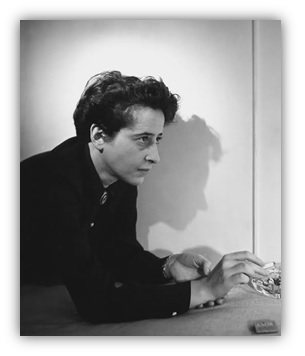
– 성과
아렌트의 업적은 권력(power)의 속성 및 정치, 권위(authority), 그리고 전체주의와 같은 주제들에 관한 것이다.
그의 업적의 상당한 부분은 집단적 정치 행동과 같은 의미로서의 자유의 개념을 긍정하는 데 초점을 두고 있다. “자유는 정치가 끝나는 데서 시작한다”는 자유주의의 가정에 대항하여, 아렌트는 자유를 공적이고 연합적인 것으로 이론화하였으며, 이러한 자유의 개념을 보여 주기 위해 그리스의 폴리스와, 미국 군구(township), 파리 코뮌과 시민권 운동들 (특히 1960년대의)의 예를 들었다.
《뉴요커》에 낸 그의 아이히만 공판에 대한 보고서 (나중에 《예루살렘의 아이히만》이라는 책으로 발전하게 된다)에서 그는 악이 근본적인 것인지 아니면 단순히 진부함(banality; 평범한 사람들이 그들의 활동이나 비 <非> 활동이 낳을 결과에 대한 비판적 사고 없이 명령에 복종하고 다수 의견에 따르려 하는 경향)의 작용인지에 대한 질문을 던졌다. 그는 생각없음 (thoughtlessness)이 결과적으로 악의 진부함을 낳는다는 결론을 내렸으며, 이는 철저히 파편화되고 소외된 개인들과 그들의 수동적이고 마치 죽어 있는 듯하며 ‘생각없이’ 모든 것을 안이하게 수용하는 생활에 던져진 강렬한 메시지로 작용하였다.
그는 또한 《전체주의의 기원》도 집필했는데, 여기서 그는 공산주의와 나치주의의 뿌리와 그들의 반유대주의와의 연관성을 추적하였다. 이 책은 어떤 사람들은 모순된 것으로 믿는 두 주제를 비교한 까닭에 논쟁을 불러일으켰다.
한나 아렌트는 1975년에 사망하여, 남편이 오랫동안 강의한 뉴욕주 허드슨 강 유역 애넌데일 (Annandale-on-Hudson, New York)에 있는 바드 대학에 묻혔다.
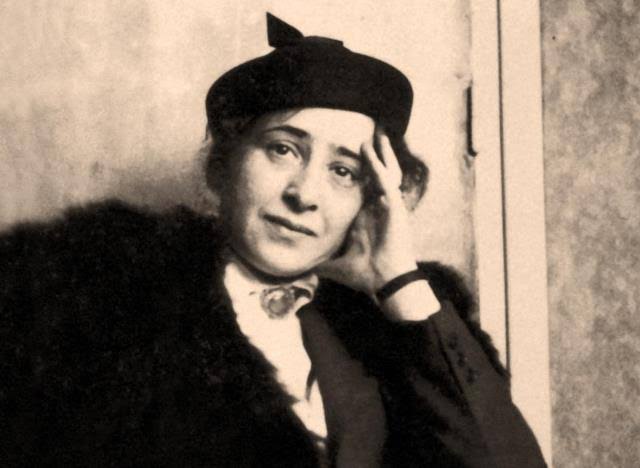
– 권력론
아렌트에 있어 권력은 ‘한 개인의 소유물이 될 수 없으며, 그것은 집단이 함께 유지되는 한에서만 존재하는 것’으로 규정된다.
한 사람이 가질 수 있는 능력으로서 그리고 타인의 의지에 반하는 경우에도 그 사람으로 하여금 자신이 원하는 대로 행동할 수 있게 하는 수단으로서 권력은 폭력으로 규정되는 것이다.
아렌트는 폭력과 정치적 지배의 양식으로서 권력을 엄격히 대비시킨다.
즉, 상호이해를 지향하는 의사소통이 갖는 합의를 통해 나오는 힘인 권력과 타인의 의지를 자신의 목적을 위한 도구로 만들 수 있는 힘인 폭력은 구분되어야만 한다고 보고 있다.
폭력은 집단의 목표를 실현하기 위해 정치지도자가 규범적 결정에 도달하고 집행하게 되는 것으로서 자원들에 대한 조작이나 강제적 수단을 지칭하며, 권력은 집합적 목표를 위해 동원되는 피지배자들이 동의하는 것을 의미한다.
– 대중매체 : 영화
한나 아렌트 (Hannah Arendt)는 2014년 8월 22일에 개봉한 영화이다.
감독은 마가레테 폰 트로타이며, 한나 아렌트 역은 바바라 수코와가 맡았다.
독일계 유대인 철학자이자 정치 사상가인 한나 아렌트가 1960~1964년까지 겪었던 실화를 다루었다.
한나는 나치 전범인 칼 아돌프 아이히만의 재판 내용을 보며, “악의 평범성”을 개념화한다.
하지만 그녀의 행동은 가족, 유대계 커뮤니티와 사상계 등 모든 사람의 반대에 부딪히게 된다.
– 저작
.전체주의의 기원 (The Origins of Totalitarianism, 1951년)
.라헬 바른하겐 : 유대인 여성의 삶 (Rahel Varnhagen : The Life of a Jewish Woman, 1958년)
.인간의 조건 (The Human Condition, 1958년)
.과거와 미래 사이 (Between Past and Future, 1961년)
.예루살렘의 아이히만: 악의 평범성에 대한 보고 (Eichmann in Jerusalem: A Report on the Banality of Evil, 1963년)
.혁명에 관하여 (On Revolution, 1963년)
.어두운 시대의 사람들 (Men in Dark Times, 1968년)
.공화국의 위기 : 정치에 있어서 거짓말 (Crises of the Republic: Lying in Politics, 1969년)
.시민적 불복종 (Civil Disobedience, 1969년)
.폭력의 세기 (On Violence, 1969년)
.정신의 삶 (The Life of the Mind, 1978년)
* List of selected publications
- Bibliographies
Heller, Anne C (23 July 2005). “Selected Bibliography: A Life in Dark Times”. Anne C. Heller. Archived from the original on 18 August 2018. Retrieved 17 August 2018.
Kohn, Jerome (2018). “Bibliographical Works”. The Hannah Arendt Center for Politics and Humanities at Bard College. Archived from the original on 1 July 2018., in HAC Bard (2018)
Yanase, Yosuke (3 May 2008). “Hannah Arendt’s major works”. Philosophical Investigations for Applied Linguistics. Archived from the original on 26 July 2018. Retrieved 26 July 2018.
“Arendt works”. Thinking and Judging with Hannah Arendt: Political theory class. University of Helsinki. 2010–2012. Archived from the original on 8 March 2021. Retrieved 17 November 2018.

- Books
Arendt, Hannah (1929). Der Liebesbegriff bei Augustin: Versuch einer philosophischen Interpretation [On the concept of love in the thought of Saint Augustine: Attempt at a philosophical interpretation] (PDF) (Doctoral thesis, Department of Philosophy, University of Heidelberg) (in German). Berlin: Springer. Archived (PDF) from the original on 22 September 2015., reprinted as
— (2006). Der Liebesbegriff bei Augustin: Versuch einer philosophischen Interpretation (in German). Georg Olms Verlag. Full text on Internet Archive
Also available in English as:
— (1996). Scott, Joanna Vecchiarelli; Stark, Judith Chelius (eds.). Love and Saint Augustine. University of Chicago Press. Full text on Internet Archive
— (1997) [1938, published 1957]. Weissberg, Liliane (ed.). Rahel Varnhagen: Lebensgeschichte einer deutschen Jüdin aus der Romantik [Rahel Varnhagen: The Life of a Jewess] (Habilitation thesis). Translated by Richard and Clara Winston. Baltimore: Johns Hopkins University Press. 400 pages. (see Rahel Varnhagen)
Azria, Régine (1987). “Review of Rahel Varnhagen. La vie d’une juive allemande à l’époque du romantisme”. Archives de sciences sociales des religions (Review). 32 (64.2): 233.
Weissberg, Liliane; Elon, Amos (10 June 1999). “Hannah Arendt’s Integrity”. The New York Review of Books (Editorial letters). Archived from the original on 31 August 2018. Retrieved 31 August 2018.
Zohn, Harry (1960). “Review of Rahel Varnhagen. The Life of a Jewess”. Jewish Social Studies (Review). 22 (3): 180–81.
— (1976) [1951, New York: Schocken]. The Origins of Totalitarianism [Elemente und Ursprünge totaler Herrschaft] (revised ed.). Houghton Mifflin Harcourt. (see also The Origins of Totalitarianism and Comparison of Nazism and Stalinism) Full text (1979 edition) on Internet Archive
Riesman, David (1 April 1951). “The Origins of Totalitarianism, by Hannah Arendt”. Commentary (Review). Archived from the original on 2 July 2019. Retrieved 17 August 2024.
Nisbet, Robert (1992). “Arendt on Totalitarianism”. The National Interest (Review) (27): 85–91.
— (2013) [1958]. The Human Condition (Second ed.). University of Chicago Press. Archived from the original on 3 December 2023. Retrieved 21 July 2018. (see also The Human Condition)
— (1958). Die ungarische Revolution und der totalitäre Imperialismus (in German). München: R. Piper & Co Verlag. Archived from the original on 3 December 2023. Retrieved 3 August 2018.
— (2006) [1961, New York: Viking]. Between Past and Future. Penguin Publishing Group. Archived from the original on 3 December 2023. Retrieved 22 July 2018. (see also Between Past and Future)
— (2006b) [1963, New York: Viking]. On Revolution. Penguin Publishing Group. (see also On Revolution) Full text on Internet Archive
— (2006a) [1963, Viking Press, revised 1968]. Eichmann in Jerusalem: A Report on the Banality of Evil. Penguin Publishing Group. Full text: 1964 edition Archived 23 September 2020 at the Wayback Machine (see also Eichmann in Jerusalem)
— (1968). Men in Dark Times. New York: Harcourt Brace Jovanovich.
— (1972). Crises of the Republic: Lying in Politics; Civil Disobedience; On Violence; Thoughts on Politics and Revolution. New York: Harcourt Brace Jovanovich. “Lying in Politics” (PDF). Archived (PDF) from the original on 4 April 2020. Retrieved 3 September 2018.
Nott, Kathleen (1 August 1972). “Crises of the Republic, by Hannah Arendt”. Commentary (Review). Archived from the original on 24 July 2018. Retrieved 23 July 2018.
— (2025a). An Essay on the Philosophy of Karl Jaspers. New York: Arendt Editions.

- Articles and essays
—; Stern, Günther (1930). “Rilkes Duineser Elegien”. Neue Schweizer Rundschau. 23: 855–871. Archived from the original on 8 March 2021. Retrieved 20 September 2018. (English translation in Arendt & Stern (2007m, pp. 1–23))
— (12 April 1930a). “Augustin und Protestantismus” [Augustine and Protestanism]. Frankfurter Zeitung. No. 902. Translated by Robert and Rita Kimber. p. 1. (reprinted in Arendt (2011, pp. 24–27))
— (1930b). “Philosophie und Soziologie. Anläßlich Karl Mannheims Ideologie und Utopie” [Philosophy and Sociology]. Die Gesellschaft. 7 (1). Translated by Robert and Rita Kimber: 163–176. (reprinted in Arendt (2011, pp. 28–43))
— (1931). “Rezension von: Hans Weil: Die Entstehung des Deutschen Bildungsprinzips” [On the emancipation of women]. Archiv für Sozialwissenschaft und Sozialpolitik (Review). 66. Translated by Elisabeh Young-Bruehl: 200–05.
— (1932). “Aufklärung und Judenfrage” [The Enlightenment and the Jewish Question]. Zeitschrift für die Geschichte der Juden in Deutschland (in German). 4 (2/3): 65–77. Archived from the original on 8 March 2021. Retrieved 22 September 2018. (reprinted in Arendt-Stern (2009m, pp. 3–18))
— (1932a). “Rezension über Alice Rühle-Gerstel: Das Frauenproblem in der Gegenwart. Eine psychologische Bilanz”. Die Gesellschaft (in German). 10 (2): 177–179. (reprinted in Arendt (2011, pp. 66–68))
— (13–17 September 1932b). “Adam-Müller-Renaissance?”. Kölnische Zeitung (in German). No. 501, 510. (English translation in Arendt (2007n, pp. 38–45))
— (July 1942). “From the Dreyfus Affair to France Today”. Jewish Social Studies. 4 (3): 195–240. JSTOR 4615201.
— (31 January 1943). “We refugees” (PDF). Menorah Journal. 31 (1): 69–77. Archived from the original (PDF) on 9 February 2019. Retrieved 10 September 2018., reprinted in Arendt (1978a, pp. 55–67) and Robinson (1996, pp. 110–19)
— (1944). “The Jew as Pariah: A Hidden Tradition”. Jewish Social Studies. 6 (2): 99–122. (reprinted in Arendt (2009n, pp. 275–297))
— (1958). “Totalitarian Imperialism: Reflections on the Hungarian Revolution”. The Journal of Politics. 20 (1): 5–43.
— (Winter 1959). “Reflections on Little Rock” (PDF). Dissent. Vol. 6, no. 6. pp. 45–56. Archived from the original (PDF) on 8 September 2017. Retrieved 3 August 2018.
— (Spring 1959). “A reply to critics”. Dissent. Vol. 6, no. 7. pp. 179–81. Archived from the original on 4 August 2018. Retrieved 3 August 2018.
— (February–March 1963). “Eichmann in Jerusalem. 5 parts”. The New Yorker. Archived from the original on 11 August 2018. Retrieved 11 August 2018.
— (21 October 1971). “Martin Heidegger at Eighty”. New York Review of Books. Translated by Albert Hofstadter. p. 51. Archived from the original on 11 May 2020. Retrieved 15 December 2018.
- Correspondence
Arendt, Hannah; Jaspers, Karl (1992). Köhler, Lotte; Saner, Hans (eds.). Hannah Correspondence, 1926–1969. Translated by Robert and Rita Kimber. New York: Harcourt Brace Jovanovich.
Arendt, Hannah; Kazin, Alfred (February 2005). Mahrdt, Helgard (ed.). “The correspondence between Hannah Arendt and Alfred Kazin”. Samtiden. No. 1. pp. 107–54. Archived from the original on 15 November 2021. Retrieved 27 January 2019.
Arendt, Hannah; McCarthy, Mary (1995). Brightman, Carol (ed.). Between friends: the correspondence of Hannah Arendt and Mary McCarthy, 1949–1975. Harcourt Brace.
Arendt, Hannah; Blücher, Heinrich (2000) [1996]. Kohler, Lotte (ed.). Within Four Walls: The Correspondence Between Hannah Arendt and Heinrich Blücher, 1936–1968. Translated by Peter Constantine. Harcourt.
Arendt, Hannah; Heidegger, Martin (2004) [1999 Klostermann]. Ludz, Ursula (ed.). Briefe 1925 bis 1975 und andere Zeugnisse [Letters, 1925–1975]. Translated by Andrew Shields. New York: Harcourt. Archived from the original on 3 December 2023. Retrieved 10 August 2018.
Heidegger, Martin (24 April 1925). “This Day in Letters: Letter to Hannah Arendt”. The American Reader. Archived from the original on 8 March 2021. Retrieved 17 December 2018.
Lilla, Mark (18 November 1999). “Ménage à Trois”. The New York Review of Books (review). Archived from the original on 3 March 2021. Retrieved 14 October 2018.
Brightman, Carol (20 May 2004). “The Metaphysical Couple”. The Nation (Review). Archived from the original on 3 April 2019. Retrieved 17 December 2018.
Arendt, Hannah; Benjamin, Walter (2006). Schöttker, Detlev; Wizisla, Erdmut (eds.). Arendt und Benjamin: Texte, Briefe, Dokumente (in German). Suhrkamp. Archived from the original on 3 December 2023. Retrieved 10 August 2018.
Arendt, Hannah; Anders, Günther (2016). Putz, Kerstin (ed.). Schreib doch mal ‘hard facts’ über dich: Briefe 1939 bis 1975 (in German). C.H.Beck. Archived from the original on 3 December 2023. Retrieved 12 September 2018. (excerpts Archived 8 March 2021 at the Wayback Machine)
Magenau, Jörg (9 October 2016). “Die Geschiedenen: Die Frage ist, wie man überlebt: Der Briefwechsel zwischen Hannah Arendt und Günther Anders”. Süddeutsche Zeitung (Review) (in German). Archived from the original on 12 September 2018. Retrieved 12 September 2018.
Arendt, Hannah (2017). Ludz, Ursula; Nordmann, Ingeborg (eds.). Wie ich einmal ohne Dich leben soll, mag ich mir nicht vorstellen: Briefwechsel mit den Freundinnen Charlotte Beradt, Rose Feitelson, Hilde Fränkel, Anne Weil-Mendelsohn und Helen Wolff (I do not like to imagine how I should live without you: correspondence with my friends) (in German). Piper ebooks. Archived from the original on 3 December 2023. Retrieved 26 August 2018.
Arendt, Hannah; Scholem, Gershom (2017) [2011]. Knott, Marie Louise (ed.). The Correspondence of Hannah Arendt and Gershom Scholem. Translated by Anthony David. University of Chicago Press. Archived from the original on 3 December 2023. Retrieved 21 September 2018.
Aschheim, Steven E. (Winter 2011). “Between New York and Jerusalem”. Jewish Review of Books (Review). Archived from the original on 13 August 2020. Retrieved 4 November 2018.
- Posthumous
Arendt, Hannah (1981) [1978]. McCarthy, Mary (ed.). The Life of the Mind: The Groundbreaking Investigation on How We Think. New York: Harcourt Brace Jovanovich. Archived from the original on 3 December 2023. Retrieved 24 July 2018. Online text at Pensar el Espacio Público Archived 13 January 2021 at the Wayback Machine
Mckenna, George (November 1978). “The Life of the Mind”. The Journal of Politics (Review). 40 (4): 1086–88.
— (1978). Feldman, Ron H (ed.). The Jew as Pariah: Jewish Identity and Politics in the Modern Age. Grove Press. Archived from the original on 3 December 2023. Retrieved 5 August 2018.
— (1978a) [1943]. We refugees (PDF). Archived from the original (PDF) on 9 February 2019. Retrieved 10 September 2018.
Botstein, Leon (1983). “The Jew as Pariah: Hannah Arendt’s Political Philosophy”. Dialectical Anthropology (Review). 8 (1/2): 47–73.
Dannhauser, Werner J. (1 January 1979). “The Jew as Pariah, by Hannah Arendt, edited by Ron H. Feldman”. Commentary (Review). Archived from the original on 25 February 2020. Retrieved 8 August 2018.
— (1992) [1982]. Beiner, Ronald (ed.). Lectures on Kant’s Political Philosophy. University of Chicago Press. Archived from the original on 3 December 2023. Retrieved 25 July 2018. Online text Archived 14 July 2020 at the Wayback Machine; text at the Internet Archive
— (2002a). Ludz, Ursula; Nordmann, Ingeborg (eds.). Denktagebuch: 1950 bis 1973 (in German). Vol. 1. Piper.
— (2002b). Ludz, Ursula; Nordmann, Ingeborg (eds.). Denktagebuch: 1950 bis 1973 (in German). Vol. 2. Piper.
— (January 2000). Baehr, Peter (ed.). The Portable Hannah Arendt. Penguin Books. Full text on Internet Archive
— (2011) [1994 Harcourt Brace & Company]. Kohn, Jerome (ed.). Essays in Understanding, 1930–1954: Formation, Exile, and Totalitarianism. Knopf Doubleday Publishing Group.
—; Gaus, Günter [in German] (2011a) [28 October 1964]. Was bleibt? Es bleibt die Muttersprache. Günter Gaus im Gespräch mit Hannah Arendt [“What remains? The Language remains”: An interview with Günter Gaus]. Translated by Joan Stambaugh. pp. 1–23.
“Was bleibt? Es bleibt die Muttersprache”. rbb fernsehen (in German). Rundfunk Berlin-Brandenburg. 28 October 1964. Archived from the original on 15 February 2020. Retrieved 1 October 2018. (original German transcription)
Teichman, Jenny (April 1994). “Understanding Arendt”. The New Criterion (Review).
— (2005). Ludz, Ursula (ed.). Ich will verstehen: Selbstauskünfte zu Leben und Werk; mit einer vollständigen Bibliographie (in German). Piper.
—; Stern, Günther (2007m) [1930]. “Rilkes Duineser Elegien”. Translated by Susannah Young-ah Gottlieb. pp. 1–23.
— (2007n) [1932]. “Adam-Müller-Renaissance?”. pp. 38–45.
— (2009b) [2003, Schocken]. Kohn, Jerome (ed.). Responsibility and Judgment. Knopf Doubleday Publishing Group.
— (1964), Personal responsibility under dictatorship (PDF), pp. 17–48, archived (PDF) from the original on 23 August 2018
— (2009a) [2007 Schocken Books]. Kohn, Jerome; Feldman, Ron H (eds.). The Jewish Writings. Knopf Doubleday Publishing Group. at Pensar el Espacio Público Archived 13 January 2021 at the Wayback Machine
— (2009m) [1932]. The Enlightenment and the Jewish Question. Translated by John E. Woods. pp. 3–18.
— (2009n) [1944]. The Jew as Pariah: A Hidden Tradition. pp. 275–297.
Butler, Judith (10 May 2007). “‘I merely belong to them’: The Jewish Writings by Hannah Arendt, edited by Jerome Kohn and Ron Feldman 2007”. London Review of Books (Review). Vol. 29, no. 9. pp. 26–28. Archived from the original on 22 July 2018. Retrieved 14 August 2018.
— (2018). Kohn, Jerome (ed.). Thinking Without a Banister: Essays in Understanding, 1953–1975. Knopf Doubleday Publishing Group.
Arendt, Hannah (2025b). Hill, Samantha Rose; Grill, Genese (eds.). What Remains: The Collected Poems of Hannah Arendt. Translated and edited. Liveright Publishing.
- Collections
“The Hannah Arendt Papers”. Library of Congress. 2001. Archived from the original on 15 August 2018. Retrieved 14 August 2018.
“Hannah Arendt-Archiv” (in German). Institut für Philosophie: Carl von Ossietzky Universität Oldenburg. 2018. Retrieved 27 August 2018.
“Hannah Arendt (publications)”. Internet Archive. Retrieved 13 October 2018.
- Miscellaneous
Arendt, Hannah (2007b). Fischer-Defoy, Christine (ed.). Hannah Arendt: das private Adressbuch 1951–1975 (in German). Koehler & Amelang.
Ludz, Ursula (May 2008b). “Gut gestaltet, unterhaltsam, aber nicht zuverlässig – das kürzlich erschienene Arendt-Adressbuch”. HannahArendt.net (Review) (in German). 4 (1). Archived from the original on 26 August 2018. Retrieved 26 August 2018.
—; Fest, Joachim (9 November 1964). “Eichmann war von empörender Dummheit: Hannah Arendt im Gespräch mit Joachim Fest” [Eichmann was outrageously stupid: Hannah Arendt in conversation with Joachim Fest]. HannahArendt.net (in German and English). 3 (1). Translated by Andrew Brown. Germany: SWR TV. Archived from the original on 18 February 2020. Retrieved 3 December 2018. (Original video) Archived 15 February 2020 at the Wayback Machine
— (18 April 1975a). “Sonning Prize acceptance speech”. Miscellaneous Material. Copenhagen. Archived from the original on 18 April 2020. Retrieved 25 October 2018., reprinted as the Prologue in Arendt (2009b, pp. 3–16)
— (15 February – 10 March 1950). “Jewish Cultural Reconstruction Field Reports, 1948–1951, No. 18”. Key Documents of German-Jewish History. Hamburg: Institut für die Geschichte der deutschen Juden (IGdJ), Deutsche Forschungsgemeinschaft (DFG). Archived from the original on 15 April 2019. Retrieved 7 March 2019.

참고 = 위키백과
크리스천라이프 편집부