

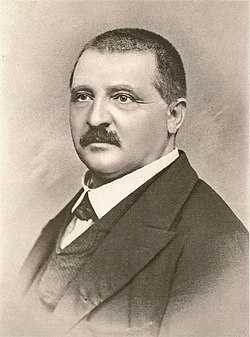
1896년 10월 11일, 오스트리아의 작곡가 ‘독일-오스트리아의 낭만파 최후의 상징’ 요제프 안톤 브루크너 (Joseph Anton Bruckner, 1824 ~ 1896) 별세
요제프 안톤 브루크너 (독: Joseph Anton Bruckner, 1824년 9월 4일 ~ 1896년 10월 11일)는 오스트리아의 작곡가이자 오르가니스트이다.

– 요제프 안톤 브루크너 (Joseph Anton Bruckner)
.본명: 요제프 안톤 브루크너
.출생: 1824년 9월 4일, 오스트리아 제국 안스펠덴
.사망: 1896년 10월 11일 (72세), 오스트리아-헝가리 제국 빈
.직업: 작곡가, 오르가니스트
.장르: 서양고전음악 (후기 낭만주의)
.악기: 오르간
.종교; 가톨릭
오스트리아의 작곡가이자 오르가니스트.
교향곡과, 종교음악, 모테트로 유명하다.
역사상 가장 위대한 교향곡과 종교음악 작곡가 중 한 명으로 평가받는다.
그의 작품은 풍부한 화성, 복잡한 폴리포니, 유도동기, 긴 연주시간으로 유명하여 “독일-오스트리아의 낭만파 최후의 상징”으로 여겨지고 있다.

○ 생애 및 활동
브루크너는 교사이자 오르가니스트인 아버지에게 음악을 배우기 시작했다. 그는 보조교사로도 일했고 마을 악단에서 바이올린을 켜기도 했으며 마침내 성 플로리안 성당의 오르가니스트가 되었다. 생전에 오르가니스트로서 국제적인 명성을 얻었으며, 특히 즉흥 연주에 능했다고 한다.
그는 나이가 들어서도 계속 여러 스승에게 작곡이나 대위법 등을 배워나갔으며 빈 음악원과 빈 대학에서 교직을 맡기도 했다. 그러면서 열한 개의 교향곡과 세 개의 미사, 테 데움 등의 종교 음악을 작곡했다. 그러나 그의 음악은 살아있는 동안 많은 비난을 받았는데, 이는 그가 바그너의 추종자 (바그너파)로 알려져 브람스를 신봉하는 많은 비평가 (브람스파)의 조건 없는 공격 대상이 되었기 때문이기도 하며, 그의 음악을 있는 그대로 이해해주는 사람이 주변에 드물었기 때문이기도 하다. 그의 제자인 페르디난트 뢰베, 프란츠와 요제프 샬크 형제 등은 항상 그의 음악을 청중들이 더 ‘이해하기 쉽게’ 한다는 명분으로 개작하도록 브루크너를 압박했고 이에 브루크너 자신의 유약함 내지 꼼꼼함이 덧붙어 지금까지도 문제가 되는 수많은 개정판이 만들어지게 되었다.
브루크너는 생애의 거의 마지막에 이르러서야 제7번과 제8번 교향곡, 테 데움의 성공을 맛볼 수 있었으나 때는 너무 늦었다. 그는 빈에서 사망했고, 그의 유해는 성 플로리안 성당의 오르간 아래에 안장되어 있다.
- 작품 성향
브루크너의 중요한 작품으로는 교향곡과 종교음악을 꼽을 수 있다.
이외에도 실내악 작품이나 피아노 독주곡 등을 음반으로 찾아볼 수 있다.
19세기 서양고전음악에서 브루크너 작품의 위치는 슈만, 브람스가 계승한 신고전주의적인 구조와 슈베르트가 보여준 개성화된 내용의 결합이며 이러한 경향은 구스타프 말러로 계승된다.
한편, 가톨릭 신자이기도 했고 교회 오르가니스트였기에 브루크너의 종교음악은 펠릭스 멘델스존 바르톨디 이후 낭만주의 종교음악의 맥을 잇는 역할을 했다는 점도 간과할 수 없다.
그의 종교음악은 대규모 합창과 교향악의 결합으로 대변될 수 있으며 이러한 경향은 루트비히 판 베토벤의 장엄미사의 맥을 잇는 것이다.
○ 작품
작품 번호”WAB”는 음악학자 레나토 글라스베르거 (Renate Grasberger)가 편찬한 “브루크너 작품 목록” (Werkverzeichnis Anton Bruckner)의 번호이다. 번호는 149번까지다.
- 교향곡
교향곡 00번 바단조 WAB.99 ‘습작’
교향곡 0번 라단조 WAB.100
교향곡 1번 다단조 WAB.101
교향곡 2번 다단조 WAB.102
교향곡 3번 라단조 WAB.103 ‘바그너’
교향곡 4번 내림마장조 WAB.104 ‘로멘틱’
교향곡 5번 내림나장조 WAB.105
교향곡 6번 가장조 WAB.106
교향곡 7번 마장조 WAB.107 ‘서정적’
교향곡 8번 다단조 WAB.108 ‘묵시적’
교향곡 9번 라단조 WAB.109
바단조 교향곡 (00번)은 브루크너가 습작용으로 작곡해 첫 번째로 시작되는 일련번호를 붙이지 않은 곡이다. 교향곡 0번은 후년에 애정을 느껴 파기할 수 없다고 느낀 작곡자가 고의로 제0번으로 한 것이지 실제로는 첫 작곡 후에 다룰 수 있는 작품이다. 또한, 마지막 교향곡 제9번은 미완성 작품이다. (실질적은 반쪽 완성)

- List of symphonies by Anton Bruckner
.Symphony in F minor
Otto Kitzler, Bruckner’s last composition teacher, set him three final tasks as the climax of his studies: a choral work (Psalm 112), an overture (the Overture in G minor), and a symphony. The Symphony in F minor was completed in 1863. Bruckner later rejected this work, but he did not destroy it. While it certainly reminds one of earlier composers such as Robert Schumann, it also bears the hallmarks of the later Bruckner style. Kitzler simply commented that the work was “not very inspired”. It was first performed in 1924 and not published in its entirety until 1973. It is occasionally listed as “Symphony No. 00”.
.Symphony No. 1 in C minor
Bruckner’s Symphony No. 1 in C minor – sometimes called by Bruckner “das kecke Beserl” (roughly translated as “the saucy maid”), – was completed in 1866, but the original manuscript of this symphony was not reconstructed until 1998. Instead, it is commonly known in two versions, the so-called Linz Version – based mainly on rhythmical revisions made in Vienna in 1877 – and the completely revised Vienna Version of 1891.
Symphony in D minor
Bruckner’s next symphony was the Symphony in D minor of 1869, the so-called “Symphony No. 0” (“Die Nullte”), a work, which was so harshly criticized, that Bruckner retracted it completely. It was not performed at all during his lifetime.
.Symphony in B-flat major
Bruckner’s next attempt was a sketch of the first movement to a Symphony in B-flat major, but he did no further work on it afterwards. There is a single, recent commercially available recording of this sketch: Ricardo Luna, Bruckner unknown, CD Preiser Records PR 91250, 2013.

Vienna period
Symphony No. 2 in C minor
The Symphony No. 2 in C minor of 1871/1872 was revised in 1873, 1876, 1877 and 1892. It is sometimes called the Symphony of Pauses for its dramatic use of whole-orchestra rests, which accentuate the form of the piece. In the Carragan edition of the 1872 version, the Scherzo is placed second and the Adagio third. It is in the same key as No. 1.
.Symphony No. 3 in D minor
Bruckner composed his Symphony No. 3 in D minor in 1873. He presented it to Wagner along with the Second, asking which of them he might dedicate to him. Wagner chose the Third, and Bruckner sent him a fair copy soon after, which is why the original version of the Wagner Symphony is preserved so well despite revisions in 1874, 1876, 1877 and 1888–9. One factor that helped Wagner choose which symphony to accept the dedication of was that the Third contains quotations from Wagner’s music dramas, such as Die Walküre and Lohengrin. Most of these quotations were taken out in the revised versions.
.Symphony No. 4 in E-flat major, Romantic
Bruckner’s Symphony No. 4 in E-flat major was his first great success. It is more commonly known as the Romantic Symphony, the only epithet applied to a symphony by the composer himself. The 1874 version has been seldom played; success came in 1878 but only after major revisions, including a completely new scherzo and finale, and again in 1880–1, once again with a completely rewritten finale. This version was premiered in 1881 (under the conductor Hans Richter). Bruckner made more minor revisions of this symphony in 1886–8.

.Symphony No. 5 in B-flat major
Bruckner’s Symphony No. 5 in B-flat major crowns his most productive era of symphony-writing, finished at the beginning of 1876. Until recently we knew only the thoroughly revised version of 1878. In 2008 the original concepts of this symphony were edited and performed by Akira Naito with the Tokyo New City Orchestra. Many consider this symphony to be Bruckner’s lifetime masterpiece in the area of counterpoint. For example, the Finale is a combined fugue and sonata form movement: the first theme (characterized by the downward leap of an octave) appears in the exposition as a four-part fugue in the strings and the concluding theme of the exposition is presented first as a chorale in the brass, then as a four-part fugue in the development, and culminating in a double fugue with the first theme at the recapitulation; additionally, the coda combines not only these two themes but also the main theme of the first movement. Bruckner never heard it played by an orchestra.
.Symphony No. 6 in A major
The Symphony No. 6 in A major written in 1879 to 1881, is an oft-neglected work; whereas the Bruckner rhythm (two quarters plus a quarter triplet or vice versa) is an important part of his previous symphonies, it pervades this work, particularly in the first movement, making it particularly difficult to perform.
.Symphony No. 7 in E major
The Symphony No. 7 in E major was the most beloved of Bruckner’s symphonies with audiences of the time, and is still popular. It was written 1881–1883 and revised in 1885. During the time that Bruckner began work on this symphony, he was aware that Wagner’s death was imminent, and so the Adagio is slow mournful music for Wagner (the climax of the movement comes at rehearsal letter W), and for the first time in Bruckner’s oeuvre, Wagner tubas are included in the orchestra.
.Symphony No. 8 in C minor
Bruckner began composition of his Symphony No. 8 in C minor in 1884. In 1887 Bruckner sent the work to Hermann Levi, the conductor who had led his Seventh to great success. Levi, who had said Bruckner’s Seventh Symphony was the greatest symphony written after Beethoven, believed that the Eighth was a confusing jumble. Devastated by Levi’s assessment, Bruckner revised the work, sometimes with the aid of Franz Schalk, and completed this new version in 1890. Deryck Cooke writes that “Bruckner not only recomposed [the Eighth]… but greatly improved it in a number of ways…. This is the one symphony that Bruckner did not fully achieve in his first definite version, to which there can be no question of going back.”
.Symphony No. 9 in D minor
The final accomplishment of Bruckner’s life was to be his Symphony No. 9 in D minor, which he started in August 1887, and which he dedicated “To God the Beloved.” The first three movements were completed by the end of 1894, the Adagio alone taking 18 months to complete, and the final eighteen months of Bruckner’s life devoted to the fourth-movement Finale. Work was delayed by the composer’s poor health and by his compulsion to revise his early symphonies, and by the time of his death in 1896 he had not finished the last movement. The first three movements remained unperformed until their premiere in Vienna (in Ferdinand Löwe’s highly revised version) on 11 February 1903. Bruckner suggested using his Te Deum as a Finale, which would complete the homage to Beethoven’s Ninth symphony (also in D minor). The problem was that the Te Deum is in C major, while the Ninth Symphony is in D minor, and, although Bruckner began sketching a transition from the Adagio key of E major to the triumphant key of C major, he did not pursue the idea. By the time of his death on 11 October 1896, Bruckner had completed most, if not all, of the fourth-movement Finale, with approximately 560 bars in numbered, sequential bifolios in Bruckner’s own hand. There have been several attempts to assemble, augment where necessary and prepare the surviving manuscript material of the Finale for performance. The two most familiar completions are by William Carragan (1983–2010) and by a committee of musicologists, composers and conductors – Nicola Samale, John Philips, Benjamin-Gunnar Cohrs and Giuseppe Mazzuca (SPCM, 1984–2012).

참고 = 위키백과, 나무위키
크리스천라이프 편집부