
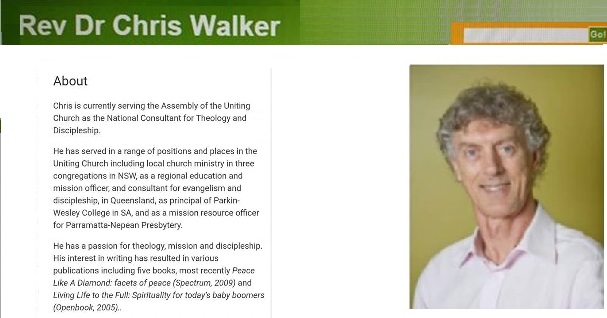
with Rev Dr Chris Walker
Suffering
Everyone experiences suffering in some form. As well as physical suffering from sickness, accidents or abuse, there is mental suffering such as grief and depression. Mental health issues have become much more recognized in recent years especially due to the need for isolation during the COVID-19 pandemic. Suffering is part of life and yet we also protest against it. I will explore suffering from a Christian perspective.
God, it seems, created the world and gave humans life in a context in which suffering is a common experience. God did not create a world which was totally safe and in which suffering had no part. Such a world would be secure but not challenging. Instead, God chose to create a dynamic, changing world in which there was the possibility of suffering but also growth and development. In such a context people are called to grow in their understanding and maturity as they face changes and chances in life.
Nevertheless, the reality of life on earth, especially human life, is that suffering is often very unequal. Some people, those who are well off and have the resources, can live with little suffering while others have to deal with much more suffering. Poorer people inevitably suffer more in times of natural disasters as they necessarily live in areas more likely to be affected, such as in flood prone areas exacerbated recently by climate change.
Then there is the gross suffering humans can inflict on others, such as in times of war and conflict. Those regarded as enemies are deliberately targeted and suffering inflicted upon them. These may be those regarded as ‘others’ such as Jews in the time of Nazi Germany or even one’s own people but seen as threats, such as in Russia under Stalin.
In the past suffering was often considered as sent by God as punishment for sin. Natural disasters such as earthquakes were seen as indications of God’s wrath. Individual disabilities or madness were also seen as God’s punishment on sin, either of the person or their parents. Jesus rejected such explanations. When Jesus came across a man blind from birth, his disciples asked him, “’Rabbi, who sinned, this man or his parents that he was born blind?’ Jesus answered, ‘Neither this man nor his parents sinned; he was born blind so that God’s works might be revealed in him’” (John 9:2-3). He then healed his blindness.
Jesus did not regard God as a God who deliberately sent suffering on people. Instead, he held that his ministry was to do God’s work of bringing healing and wholeness to people in body and mind. Jesus’ ministry was characterized by healing people and casting out demons. When Jesus was in the country of the Gerasenes, which is opposite Galilee, he came across a man who was deranged. For a long time, he wore no clothes and lived in the tombs. Jesus commanded the unclean spirits to come out of him and sent them into a herd of swine. The pigs then rushed down a steep bank into the lake and were drowned. When people came to see what happened they found the man clothed and in his right mind. Jesus told the man to return home and declare what God had done for him (Luke 8:26-39).
Suffering is frequently the outcome of sin in the sense that self-interested people by intention or by neglect cause others to experience suffering. Russia under Putin has inflicted suffering on the people of Ukraine by initiating a war to further Russia’s political and economic interests. The outcome has been the death of many people, the displacement of thousands, and the destruction of homes and infrastructure.
The failure of humans to care for the environment has resulted in the degradation of land and pollution of rivers and oceans. The extent of plastics going into the ocean is now being recognized. By taking away the habitat of other creatures and polluting the rivers and oceans humans have caused the suffering of many other creatures to the point of extinction. Human activity has exacerbated climate change leading to global warming resulting in more extreme weather events and rising ocean levels. People, in particular those living in Pacific Island nations, are experiencing the negative effects of this.
While God has created a world in which suffering is part of life, that does not mean God deliberately wants people to suffer. Rather, as we look as Jesus, the Son of God, we see his ministry being one of alleviating suffering by healing people in body and mind. The kingdom of God Jesus proclaimed was the rule of God in which people would experience well-being, peace and justice.
The goal of life is not a comfortable easy life. Jesus told a parable about a rich man whose land produced abundantly. He decided to build bigger barns to store all his grain and goods. He said to himself, “’you have ample goods laid up for many years; relax, eat, drink, be merry’. But God said to him, ‘You fool! This very night your life is being demanded of you. And the things you have prepared, whose will they be?’ So it is with those who store up treasures for themselves but are not rich toward God” (Luke 12:19-21).
For Jesus we are to grow to maturity in life seeking God’s will, God’s kingdom and righteousness. Part of that is to endeavour to alleviate suffering, to care for people when they experience suffering but also to be willing to accept suffering if necessary. In order to continue to be true to God’s will, Jesus was prepared to accept the suffering that was unjustly inflicted upon him. He did not try to avoid it but deliberately went to Jerusalem to confront the leaders of the nation. The outcome was the cross in which Jesus identified with humanity’s sin and suffering and took it upon himself. In doing so he shows us a God who deeply cares for us especially when we are suffering.
Chris Walker
http://revdrchriswalker.wordpress.com/
Chris is currently serving the Assembly of the Uniting Church as the National Consultant for Theology and Discipleship.
He has served in a range of positions and places in the Uniting Church including local church ministry in three congregations in NSW, as a regional education and mission officer, and consultant for evangelism and discipleship, in Queensland, as principal of Parkin-Wesley College in SA, and as a mission resource officer for Parramatta-Nepean Presbytery.
He has a passion for theology, mission and discipleship. His interest in writing has resulted in various publications including five books, most recently Peace Like A Diamond: facets of peace (Spectrum, 2009) and Living Life to the Full: Spirituality for today’s baby boomers (Openbook, 2005).
고통
모든 사람은 어떤 형태로든 고통을 경험한다. 질병, 사고, 학대 등으로 인한 육체적 고통뿐 아니라 슬픔, 우울증 등 정신적 고통도 있다. 정신 건강 문제는 특히 COVID-19 전염병 동안 격리의 필요성으로 인해 최근 몇 년 동안 훨씬 더 많이 인식되었다. 고통은 삶의 일부이지만 우리는 그것에 반대하기도 합니다. 나는 기독교적 관점에서 고통을 탐구할 것이다.
하나님은 고통을 공통적으로 경험하는 상황에서 세상을 창조하시고 인간에게 생명을 주셨다. 신은 완전히 안전하고 고통이 전혀 관여하지 않는 세상을 창조하지 않았다. 그러한 세상은 안전하지만 도전적이지는 않을 것이다. 그 대신 하나님은 고통뿐 아니라 성장과 발전의 가능성도 있는 역동적이고 변화하는 세상을 창조하기로 선택하셨다. 이러한 맥락에서 사람들은 삶의 변화와 기회에 직면할 때 이해와 성숙도에서 성장하도록 부름을 받았다.
그럼에도 불구하고 지상 생활, 특히 인간 생활의 현실은 고통이 종종 매우 불평등하다는 것이다. 부유하고 재력이 있는 사람들은 거의 고통 없이 살 수 있지만 다른 사람들은 훨씬 더 많은 고통을 처리해야 한다. 가난한 사람들은 최근 기후 변화로 악화된 홍수 취약 지역과 같이 영향을 받을 가능성이 더 높은 지역에 필연적으로 거주하기 때문에 자연 재해 시 더 많은 고통을 겪을 수밖에 없다.
그런 다음 전쟁이나 분쟁이 있을 때와 같이 인간이 다른 사람에게 가할 수 있는 극심한 고통이 있다. 적으로 간주되는 사람들은 의도적으로 표적이 되고 그들에게 고통이 가해진다. 이들은 나치 독일 시대의 유태인이나 심지어 동족을 ‘타인’으로 간주되었지만 스탈린 치하의 러시아와 같이 위협으로 간주되는 사람들일 수 있다.
과거에 고난은 종종 하나님이 죄에 대한 형벌로 보내신 것으로 간주되었다. 지진과 같은 자연 재해는 하나님의 진노의 표시로 여겨졌다. 개인의 장애나 광기는 또한 그 사람이나 그 부모의 죄에 대한 하나님의 형벌로 여겨졌다. 예수께서는 그러한 설명을 거부하셨다. 예수께서 태어날 때부터 소경인 사람을 만나셨을 때 제자들이 “랍비여, 이 사람이 소경으로 난 것이 누구의 죄를 범하였습니까?”라고 물으셨다. 예수께서 대답하셨다. 소경으로 난 것은 그에게서 하나님의 하시는 일을 나타내려 하심이니라” (요한복음 9:2-3). 그런 다음 그는 자신의 실명을 고쳤다.
예수님은 하나님을 고의로 사람들에게 고난을 보내신 하나님으로 여기지 않으셨다. 오히려 그는 그의 사역이 몸과 마음에 있는 사람들에게 치유와 온전함을 가져다주는 하나님의 일을 하는 것이라고 주장했다. 예수님의 사역은 사람들을 고치고 귀신을 쫓아내는 것이 특징이었다. 예수님은 갈릴리 맞은편 거라사인 지방에 계실 때 한 사람을 만나셨다. 그는 오랫동안 옷을 입지 않고 무덤에서 살았다. 예수님은 더러운 귀신들에게 자기에게서 나오라고 명령하시고 그들을 돼지 떼에 보내셨다. 그러자 돼지들은 가파른 둑을 따라 호수로 달려가 익사했다. 사람들이 무슨 일이 일어났는지 보러 왔을 때 옷을 입고 정신이 멀쩡한 사람을 보았다. 예수님은 그 사람에게 집으로 돌아가 하나님이 그에게 행하신 일을 선포하라고 말씀하셨다 (눅 8:26-39).
고통은 종종 이기적인 사람들이 의도나 태만으로 인해 다른 사람들이 고통을 경험하게 한다는 의미에서 죄의 결과이다. 푸틴이 이끄는 러시아는 러시아의 정치적, 경제적 이익을 위해 전쟁을 일으키면서 우크라이나 국민에게 고통을 가했다. 그 결과 많은 사람들이 사망하고 수천 명이 이재민이 되었으며 가옥과 기반 시설이 파괴되었다.
인간이 환경을 돌보지 않아 토지가 황폐해지고 강과 바다가 오염되었다. 바다로 흘러가는 플라스틱의 양이 이제 사회문제로 인식되고 있다. 다른 생물들의 서식지를 빼앗고 강과 바다를 오염시킴으로써 인간은 다른 많은 생물들을 멸종 위기에 처하게 했다. 인간 활동은 지구 온난화로 이어지는 기후 변화를 악화시켜 더 극단적인 기상 현상과 해수면 상승을 초래했다. 사람들, 특히 태평양 섬 국가에 사는 사람들은 이것의 부정적인 영향을 경험하고 있다.
하나님은 고통이 삶의 일부인 세상을 창조하셨지만, 그것이 하나님이 의도적으로 사람들이 고통받기를 원하신다는 의미는 아니다. 오히려 우리가 하나님의 아들 예수를 볼 때 그의 사역은 사람들의 몸과 마음을 치유함으로써 고통을 경감시키는 사역임을 알 수 있다. 예수님께서 선포하신 하나님의 나라는 사람들이 복리와 평강과 정의를 체험하는 하나님의 나라였다.
삶의 목표는 편안하고 쉬운 삶이 아니다. 예수님은 땅에서 소출이 많은 부자에 대한 비유를 말씀하셨다. 그는 모든 곡물과 물품을 저장하기 위해 더 큰 헛간을 짓기로 결정했다. 그는 속으로 이렇게 말했다. 긴장을 풀고, 먹고, 마시고, 즐겁게 지내자. 그러나 하나님은 그에게 ‘바보야! 바로 오늘 밤 네 생명을 거두면 네가 준비한 것들은 누구의 것이 되겠느냐’ 자기를 위하여 재물을 쌓아두고 하나님께 대하여 부요하지 못한 자들도 이와 같으니라” (눅 12:19-21).
예수님을 위해 우리는 하나님의 뜻과 하나님의 나라와 의를 구하는 삶에서 장성하게 자라야 한다. 그 중 일부는 고통을 완화하기 위해 노력하고, 고통을 겪을 때 사람들을 돌보고, 필요하다면 고통을 기꺼이 받아들이는 것이다. 계속해서 하나님의 뜻에 충실하기 위해, 예수님께서는 자신에게 부당하게 가해진 고통을 받아들일 준비가 되어 계셨다. 그는 그것을 피하려고 하지 않고 고의적으로 예루살렘으로 가서 민족의 지도자들을 대적했다. 그 결과는 예수님께서 인류의 죄와 고통을 동일시하시고 스스로 짊어지신 십자가였다. 그렇게 함으로써 그분은 특히 우리가 고통을 당할 때 우리를 깊이 돌보시는 하나님을 보여 주신다.
번역 = 크리스천라이프 편집부