
with Rev Dr Chris Walker
A Time of Waiting
Due to the coronavirus pandemic we are in a time of waiting. We have been waiting the easing of restrictions, waiting to be able to meet with others, waiting for life to return to what it was. Most of us find waiting difficult. Patience is not a virtue many possess. Yet waiting can be a positive experience. It can be a time of reflection, of considering what is really important, of planning to do things differently in the future. Waiting on God can lead to discerning what God wants for and from us.
The Bible has a number of passages dealing with waiting. I will refer to some of them. Psalm 27 has, “I believe I shall see the goodness of the Lord in the land of the living. Wait for the Lord; be strong, and let your heart take courage; wait for the Lord” (Psalm 27:13-14). The psalmist speaks of evildoers, adversaries and foes and cries out for deliverance. Because of enemies there is the call to God to “teach me your way O Lord, and lead me on a level path” (Psalm 27:11). The psalm concludes with the lines first quoted expressing confidence that God will deliver but there is the need to wait and live God’s way for that to happen.
In the same vein Psalm 37 says, “Be still before the Lord, and wait patiently for him; do not fret over those who prosper in their way, over those who carry out evil devices” (Psalm 37:7). The psalm was written for those who are discouraged by the injustices in the world affirming that the wicked will lose out in the end. Meanwhile we are called to wait for the Lord, and keep to his way. Proverbs has similar advice saying, “Do not say, ‘I will repay evil’; wait for the Lord, and he will help you.” (Proverbs 20:22). Wanting to repay evil by violence or in other ways will only lead to more evil in the future. Instead we are to wait for the Lord and rely on his help.
Psalm 130 is a prayer for deliverance from personal trouble. It begins, “Out of the depths I cry to you, O Lord. Lord, hear my voice!” (Psalm 130:1). We are not given the particular concern but something has happened that troubles him deeply. The psalmist recognizes that everyone sins but there is forgiveness with God. Hence, he says, “I wait for the Lord, my soul waits, and in his word I hope; my soul waits for the Lord more than those who watch for the morning” (Psalm 130:5-6). He uses the image of the night watchman waiting for the morning to finally break the darkness. The psalmist concludes by calling on all Israel to hope in the Lord, for with God there is steadfast love and the power to redeem.
Lamentations affirms the desirability of waiting on God. “The Lord is good to those who wait for him, to the soul that seeks him. It is good that one should wait quietly for the salvation of the Lord” (Lamentations 3:25-26). As we wait during this coronavirus pandemic, we can wait quietly in our isolation on God. Good can come out of it. In a famous passage second Isaiah says, “those who wait for the Lord shall renew their strength, they shall mount up with wings like eagles, they shall run and not be weary, they shall walk and not faint” (Isaiah 40:31). As we wait upon the Lord, God can renew our energy and hope and enable us to move confidently into the future.
What might God want for us and from us out of this pandemic? We have seen international cooperation in regard to understanding the virus and how to respond to it. The World Health Organisation has sought to warn and encourage nations to take steps to test for the virus, limit its spread, and provide for those who catch the virus. While many have died and will die from COVID–19, thanks to this cooperation it will be nothing like the number of deaths from the Spanish influenza, H1N1 virus, of a hundred years ago. A third of the then world’s population, some 500 million people, contracted the disease with 20-50 million dying. By our greater medical knowledge, hospital provisions and joint efforts we can do much better. Rather than fight wars against one another, we can together fight the war against this coronavirus. Instead of labelling others as enemies, we can work to overcome this invisible enemy. In regard those who do contract and die from the disease we can show concern for one another and express condolences to those who lose loved ones because of COVID-19.
There are some positives to be gained from this coronavirus pandemic. I have already mentioned the international cooperation and concern that has taken place. The need to secure borders and limit travel has meant that the air is cleaner, the waterways healthier, and the environment has benefitted from the reduction in human activity. The coronavirus pandemic should teach us to act more responsibly as humans towards the environment and other creatures. We know that human caused climate change is impacting the world. May we be led to take more serious action to avoid the negative outcomes of climate change.
At this point, 1 May, poorer nations have not been affected by the pandemic as much as Europe and the USA. Nevertheless, if the pandemic does take hold in places where social distancing is all but impossible the outcome could mean many deaths. This applies to the most vulnerable people such as those living in slums and refugee camps. May the nations of the world work together to prevent this from happening. Western nations in particular need to do so and not just think in terms of getting their economies going again once they are on top of the pandemic. God’s desire is that all people and the environment experience God’s goodness.
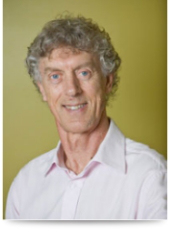
Chris Walker
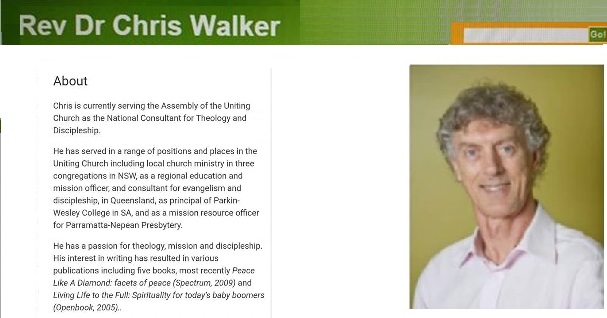
Chris is currently serving the Assembly of the Uniting Church as the National Consultant for Theology and Discipleship.
He has served in a range of positions and places in the Uniting Church including local church ministry in three congregations in NSW, as a regional education and mission officer, and consultant for evangelism and discipleship, in Queensland, as principal of Parkin-Wesley College in SA, and as a mission resource officer for Parramatta-Nepean Presbytery.
He has a passion for theology, mission and discipleship. His interest in writing has resulted in various publications including five books, most recently Peace Like A Diamond: facets of peace (Spectrum, 2009) and Living Life to the Full: Spirituality for today’s baby boomers (Openbook, 2005).