Antisemitism and the State of Israel / Romans 9:1-5, Matthew 14:13-21
Introduction
As Christians, how should we regard and relate to Jewish people? And how should we view the Jewish State, the State of Israel? This is a reflection having wrestled with these issues, so I offer my thoughts for your consideration. I have sought to hear God’s Word through the readings from Romans and Matthew.
In the past, unfortunately, the Church and Christians have often been antisemitic. The Jews were seen as largely rejecting Jesus Christ and Jewish leaders instigated his crucifixion. Jews were viewed negatively. The Christian church was often regarded as having replaced the Jews as God’s people.
Paul
The first followers of Jesus were nearly all Jewish. While looking to Jesus as the Messiah, they continued their Jewish practices. When Gentiles responded to the gospel preached by Paul and others, there emerged some tension in the nascent Christian community about how Gentile believers should live. The Council of Jerusalem reported in Acts 15 resolved that Gentile believers did not have to adopt Jewish practices, such as circumcision, kosher dietary laws, and keeping the Sabbath. Christian worship was on Sunday, the day of Jesus’ resurrection. Faith in Jesus and baptism signified joining the Christian community. Race, ethnicity, being Jewish did not matter. All could be children of Abraham by faith as Paul taught.
In Galatians Paul goes so far as to say, “There is no longer Jew or Greek, there is no longer slave or free, there is no longer male and female; for you are all one in Christ: (Gal 3:28). Racial, economic and gender differences do not matter. All are equal in Christ. He goes on to say, “And if you belong to Christ, then you are Abraham’s offspring, heirs according to the promise” (Gal 3:29). The ancient promises to Abraham and his descendants apply to all who put their faith in Jesus Christ. We can all know that we are God’s people. God will be our God and we will be God’s people. We can be heirs of the kingdom of God announced by Jesus.
Nevertheless, Paul was uneasy about his own people, the people of first century Israel and Jews living in the diaspora. He longed for them to respond to the gospel and recognise that Jesus was indeed the Messiah many had waited for. While he regarded himself as especially the apostle to the Gentiles that did not diminish his concern for his own Jewish people. In Romans 9 he speaks of his great sorrow and unceasing anguish for his own people. Paul even says he wishes he were cut off from Christ for the sake of his own people, his kindred according to the flesh. Paul is very conscious that God specially chose Israel to be God’s people. They were meant to live according to the covenant they had with God. They had the patriarchs, the giving of the law to Moses, forms of worship and promises made by God. From them did come the Messiah, namely Jesus Christ.
Jesus
The reading from Matthew 14 is about the feeding of the 5,000. Just prior to this event Jesus had heard the terrible news that John the Baptist had been beheaded by King Herod, the Jewish king. Jesus’ initial reaction was to withdraw in a boat to a deserted place by himself. He was in grief. But then the crowds found him and he had compassion on them. He no doubt taught as well as healed the sick. Then as evening was coming on, he called his disciples to feed the crowd. They only had five loaves and two fish. Jesus ordered the crowds to sit, then he offered a blessing. Amazingly all had their fill with much left over. More than five thousand were fed.
The background is important. Jesus knew that Jewish rulers had the authority to kill prophets. John the Baptist was not alone. Jesus would have been conscious that his time would come also. The Israelites may have regarded themselves as God’s people but their history was one of frequent betrayal of God and God’s covenant. Prophets who sought to lead people back to God were often mistreated and even killed.
Jesus longed for his own people to respond to him and his message of the reign of God. It was a crisis time and many wanted to rebel against Roman authority and become an independent nation again. Jesus was aware of the coming catastrophe if the people chose the way of rebellion rather than the peaceful way he offered. Luke tells us that Jesus wept over Jerusalem, saying, “If you, even you, had only recognised on this day the things that make for peace! But now they are hidden from your eyes. Indeed, the days will come upon you, when your enemies will set up ramparts around you and surround you, and hem you in on every side. They will crush you to the ground, you and your children within you, and they will not leave within you one stone upon another, because you did not recognise the time of your visitation from God” (Luke 19:42-44).
The ancient prophets warned of the dangers represented by the Assyrians and Babylonians who carried people into exile. They regarded the outcome as God’s judgment on the people for failing to live out the covenant. Now Jesus warned of the coming fall of Jerusalem if he was not heeded. The destruction came in 70CE. The magnificent temple was destroyed, the city devastated, the rebellion violently put down. Further rebellions led to the Romans banishing Jews from Jerusalem and the land which lasted until after the Second World War.
History
Let me sketch Israel’s history so that we know the background to where we are today.
The region known as Canaan or the Holy Land has had human settlement for some 10,000 years. Abraham and his people came to Palestine around 1900 BC. They then went to Egypt during famine and later became enslaved there. About 1250 BC Moses led the Israelites out of Egypt, known as the Exodus. They wandered in the wilderness for some 40 years during which time Moses received the Law on Mount Sinai. Moses had to organise the people who had been slaves into a functioning community. Joshua led the invasion of Canaan around 1210 BC. Israel was at this time a loose confederation of tribes and leadership exercised by figures known as Judges. The people then wanted a king and Saul became the first king followed by David who ruled for 40 years. He established Jerusalem as the capital about 1,000 BC. His son Solomon built the First Temple.
The nation then divided into north and south. Prophets called the people back to God and the covenant with God. The northern kingdom was conquered by the Assyrians in 722 BC. The southern kingdom was able to continue until 586 BC when Jerusalem was conquered by the Babylonians and the temple destroyed. The leaders and many people were taken into exile in Babylon. They were allowed to live as an ethnic community there. The prophets had warned the people and regarded the outcome as God’s judgment on them. The Persians under Cyrus then defeated the Babylonians in 539 BC and allowed Jews to return from exile to Jerusalem. The city and temple were gradually rebuilt, namely after nearly 50 years of exile. Many chose not to return.
The region then came under Hellenistic control following Alexander the Great’s conquest in 332 BC. The Maccabean Revolt led to a brief period of Jewish independence from 166 to 63 BC. Roman conquest followed. Palestine was ruled by puppet kings appointed by Rome. Herod the Great ruled for 40 years and greatly expanded the Second Temple.
The Jewish rebellions of the first and second centuries CE resulted in widespread destruction by the Roman forces and Jews being banned from Palestine. Subsequent centuries saw many contested wars and conquests by different groups. Jews lived in many countries.
The late 19th century saw the rise of Zionism, a movement advocating for a Jewish homeland in Palestine. Following the First World War Britain assumed control over Palestine under the British Mandate supporting the establishment of a Jewish state. Following the Second World War and in light of the Holocaust in which 6 million Jews died, Britain and the USA promoted the establishment of the State of Israel which took place in May 1948. In doing so they displaced Palestinians who had been living there for many generations. The Palestinian term for when Israel was established is “Nakba” meaning catastrophe or catastrophic loss. Neighbouring Arab states, including Egypt, Jordon, Syria, Lebanon and Iraq, invaded immediately initiating the 1948 Arab-Israeli War. Israel emerged victorious and expanded its territory beyond the UN partition. Palestinians have continually lost land and rights due to the creation of Israel. Israeli settlers have encroached on Palestinian land ever since with over 200 illegal settlements established.
Israel has experienced multiple wars and military operations since its founding. Notable conflicts include the 1956 Sinai Campaign, the 1967 Six-Day War and the 1973 Yom Kippur War. Israel also engaged in military operations in Lebanon in 1982 and 2006. Israel has superior weapons, including nuclear weapons. Financially, militarily and in other ways, the USA backs Israel.
Hamas instigated a surprise raid on Israel on October 7, 2023, which resulted in over 1,200 Israeli deaths and hostages taken. In retaliation, Israel has attacked Gaza and killed over 70,000 people, including 20,000 children, in acts of genocide. It also restricted aid coming to desperate people in Gaza. The International Criminal Court (ICC) issued an arrest warrant in November 2024 for Netanyahu for alleged war crimes and crimes against humanity.
The State of Israel
We need to distinguish between the State of Israel and Jews, the majority of whom live outside Israel. While Netanyahu calls any criticism of Israeli actions as antisemitism, we can distinguish between what Israel does as a state which deserves criticism and anti-Jewish sentiment which is wrong. Unfortunately, the two are seen by some as related. The Bondi terror attacks on Sydney Jews would most likely not have taken place had Israel not acted so ruthlessly toward Palestinians. It amazes me that Jewish people recall the Holocaust of WW2, yet the State of Israel can act like Germany in the way it has treated Palestinians for a long time.
A Christian approach
What then is an appropriate Christian response to Jewish people and the State of Israel?
First, in relation to Jewish people, we can appreciate Jewish people and recognise that our Old Testament, the Hebrew Bible for Jews, is an important part of our Bible. Jesus was a Jew who came out of the history and tradition of the Jews of his day. The early Christians scrutinised the Hebrew scriptures in order to understand Jesus. They held that these scriptures pointed to Christ and helped to explain what God was doing through Jesus Christ. The Old Testament continues to be a rich resource for us with its creation stories, its history of God’s dealings with the ancient Israelites, the Psalms with their honest crying out to God, the prophets and their concern for justice and living according to God’s commands. While we read the Old Testament in the light of Christ, which sometimes challenges some of what it says, it continues to be a foundational document for Christians.
As a result of God’s dealings with the ancient Israelites, Jewish people have a particular relationship with God. In God’s call of Abraham, God said he would bless Abraham and in him all the families of the earth will be blessed (Genesis 12:2-3). The Christian Church has not simply superseded the Jews as God’s people. God’s promise remains. However, in order to be that blessing, Jewish people do need to live according to the way God has shown them. Otherwise, God’s judgment will come, as it has in the past. The same applies to the Christian Church. Like ancient Israel, its history has its dark side which needs repentance. The Church and Christians can only be a blessing if they are true to the way of Jesus Christ. That means demonstrating his love and concern for all people, especially the least.
Hence, we can foster positive relationships with Jewish people and learn from one another as we dialogue, share and live together in this nation of Australia. One of my best high school friends was a Jew. He became a doctor. I saw him some years ago at a school reunion. It was good to catch up.
There is no place for antisemitism. Similarly, there is no place for being anti-Muslim, or opposed to any other group in our multicultural society. That includes those who identify as part of the LGBTQI+ community. We do not have to agree with others fully to accept them and treat them with respect, dignity and compassion. Jesus calls us to love one another as he loved. In the account of the feeding of the 5,000 Jesus responded to the many people who sought him out. He healed and taught and then fed them with no conditions attached. We are to do likewise. That is the approach of PCUC with Meals Plus etc.
Second, we can be critical of the State of Israel for its actions. The Hamas raid in October 2023 was terrible. The response of the State of Israel has been to use that to justify its excessive retaliatory actions. It has wanted ethnic cleansing of Palestinians from Palestine. That includes Palestinian Christians. The UN has long sought a two-state solution. Australia has affirmed that. What is required is a willingness on the part of both sides to negotiate and find a way forward to achieve lasting peace. It will only come when there are mutual respect and a willingness to compromise for the good of all in the region. A major part of the difficulty is the USA’s uncritical backing of Israel. The mistaken ideology of Zionism whether Israeli or Christian makes negotiation problematic for it denies any Palestinian claims.
Jesus was willing to criticise the leaders of his day, often in strong terms. He called the scribes and Pharisees who challenged him “hypocrites” (Matthew 23). When told King Herod wanted to kill him, he referred to him as “that fox” (Luke 13:32). We can express disapproval of policies and actions in the political and economic realms. However abusive and hateful speech is not acceptable. It is unfortunate that social media lends itself to such speech. As Christians we need to be considered in what we say. Protest is often needed but what is said has to be expressed appropriately.
Conclusion
We are called to be God’s people as followers of Jesus Christ. Jesus calls us to follow the difficult way of steadfast love. He says blessed are those who mourn, are meek, who hunger and thirst for righteousness, who are merciful, who are peacemakers (Matthew 5:3-10). We are to be like that in how relate to Jewish people and all people, and in how we advocate for God’s will in relation to the issues of the day. Our hope is in God and God’s reign which challenges all political positions. May the Spirit guide us to discern appropriately. Amen
Chris Walker
http://revdrchriswalker.wordpress.com/
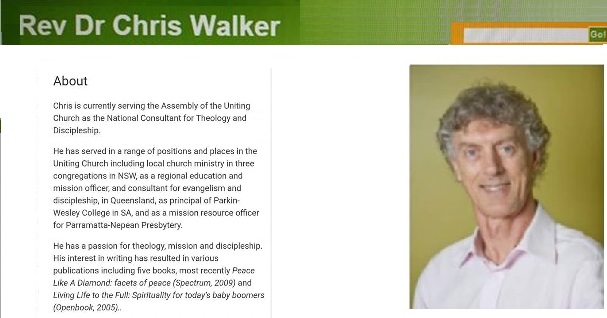
Chris is currently serving the Assembly of the Uniting Church as the National Consultant for Theology and Discipleship.
He has served in a range of positions and places in the Uniting Church including local church ministry in three congregations in NSW, as a regional education and mission officer, and consultant for evangelism and discipleship, in Queensland, as principal of Parkin-Wesley College in SA, and as a mission resource officer for Parramatta-Nepean Presbytery.
He has a passion for theology, mission and discipleship. His interest in writing has resulted in various publications including five books, most recently Peace Like A Diamond: facets of peace (Spectrum, 2009) and Living Life to the Full: Spirituality for today’s baby boomers (Openbook, 2005)
반유대주의와 이스라엘 국가 (로마서 9:1-5, 마태복음 14:13-21)
서론
그리스도인으로서 우리는 유대인들을 어떻게 생각하고 그들과 어떤 관계를 맺어야 할까요? 그리고 유대 국가인 이스라엘 국가를 어떻게 바라보아야 할까요? 저는 이러한 문제들을 깊이 고민해 왔기에, 제 생각을 여러분과 나누고자 합니다. 저는 로마서와 마태복음 말씀을 통해 하나님의 말씀을 듣고자 노력했습니다.
과거에 교회와 그리스도인들은 불행히도 종종 반유대주의적인 태도를 보였습니다. 유대인들은 예수 그리스도를 거부했고, 유대 지도자들은 그의 십자가형을 사주했다고 여겨졌습니다. 유대인들은 부정적으로 인식되었습니다. 기독교 교회는 종종 유대인들을 대신하여 하나님의 백성이 되었다고 여겨졌습니다.
바울
예수님의 초기 제자들은 거의 모두 유대인이었습니다. 그들은 예수를 메시아로 바라보면서도 유대교 관습을 계속 지켰습니다. 바울과 다른 이들이 전파한 복음에 이방인들이 응답하면서, 초기 기독교 공동체 안에서는 이방인 신자들이 어떻게 살아야 하는지에 대한 약간의 긴장이 생겨났습니다. 사도행전 15장에 기록된 예루살렘 공의회는 이방인 신자들이 할례, 코셔 음식 규정, 안식일 준수와 같은 유대인의 관습을 따를 필요가 없다고 결의했습니다. 기독교 예배는 예수님의 부활일인 일요일에 드려졌습니다. 예수님에 대한 믿음과 세례는 기독교 공동체의 일원이 되는 것을 의미했습니다. 인종, 민족, 유대인이라는 사실은 중요하지 않았습니다. 바울이 가르친 대로, 모든 사람은 믿음으로 아브라함의 자녀가 될 수 있었습니다.
갈라디아서에서 바울은 “유대인이나 그리스인이나, 종이나 자유인이나, 남자나 여자나 차별이 없습니다. 여러분은 그리스도 안에서 모두 하나입니다.”(갈라디아서 3:28)라고까지 말합니다. 인종, 경제적 지위, 성별의 차이는 중요하지 않습니다. 그리스도 안에서는 모두 평등합니다. 그는 이어서 “그리스도께 속한 사람은 아브라함의 자손이요 약속의 상속자입니다.”(갈라디아서 3:29)라고 말합니다. 아브라함과 그의 후손에게 주어진 옛 약속은 예수 그리스도를 믿는 모든 사람에게 적용됩니다. 우리는 모두 하나님의 백성임을 알 수 있습니다. 하나님은 우리의 하나님이 되시고 우리는 하나님의 백성이 될 것입니다. 우리는 예수님께서 선포하신 하나님의 나라의 상속자가 될 수 있습니다.
그럼에도 불구하고 바울은 자신의 백성, 즉 1세기 이스라엘 백성과 디아스포라에 살고 있는 유대인들에 대해 마음이 편치 않았습니다. 그는 그들이 복음에 반응하고 예수님이 많은 사람들이 기다려온 메시아이심을 알아차리기를 간절히 바랐습니다. 그는 자신을 특히 이방인을 위한 사도로 여겼지만 말입니다. 그렇다고 해서 바울이 자신의 유대 민족에 대한 염려가 줄어든 것은 아니었습니다. 로마서 9장에서 그는 자신의 민족을 향한 큰 슬픔과 끊임없는 고뇌에 대해 이야기합니다. 바울은 심지어 육신의 동족인 자신의 민족을 위해 그리스도와 끊어지는 것이라도 마다하지 않겠다고까지 말합니다. 바울은 하나님께서 이스라엘을 특별히 택하셔서 하나님의 백성으로 삼으셨다는 사실을 잘 알고 있었습니다. 그들은 하나님과 맺은 언약에 따라 살도록 창조되었습니다. 그들에게는 족장들이 있었고, 모세에게 율법이 주어졌으며, 예배 형식과 하나님께서 주신 약속들이 있었습니다. 그리고 그들에게서 메시아, 곧 예수 그리스도가 나오셨습니다.
예수
마태복음 14장의 말씀은 5천 명을 먹이신 기적에 관한 것입니다. 이 사건 직전에 예수님은 유대 왕 헤롯이 세례 요한의 목을 베었다는 끔찍한 소식을 들으셨습니다. 예수님은 처음에는 슬픔에 잠겨 배를 타고 외딴 곳으로 물러가셨습니다. 그러나 군중이 그분을 찾아왔고, 예수님은 그들을 불쌍히 여기셨습니다. 틀림없이 그곳에서 가르치시고 병든 자들을 고쳐주셨을 것입니다. 그리고 저녁이 되어서야 이어서 예수님은 제자들을 불러 무리를 먹이도록 하셨습니다. 그들에게는 빵 다섯 개와 물고기 두 마리밖에 없었습니다. 예수님은 무리에게 앉으라고 하신 후 축복 기도를 하셨습니다. 놀랍게도 모두가 배불리 먹고도 많이 남았습니다. 오천 명이 넘는 사람들이 먹었습니다.
이 사건의 배경은 중요합니다. 예수님은 유대 지도자들이 예언자들을 죽일 권한을 가지고 있다는 것을 알고 계셨습니다. 세례 요한만이 그런 일을 겪은 것이 아니었습니다. 예수님도 자신에게도 그런 일이 일어날 것을 알고 계셨을 것입니다. 이스라엘 백성은 스스로를 하나님의 백성이라고 여겼지만, 그들의 역사는 하나님과 하나님의 언약을 자주 배신해 온 역사였습니다. 사람들을 하나님께로 인도하려 했던 예언자들은 종종 학대받고 심지어 죽임을 당하기도 했습니다.
예수님은 자신의 백성이 자신과 하나님의 나라에 대한 메시지에 응답하기를 간절히 바라셨습니다. 당시에는 위기의 시대였고, 많은 사람들이 로마의 권위에 반항하고 다시 독립 국가를 세우기를 원했습니다. 예수님은 백성들이 자신이 제시한 평화로운 길 대신 반역의 길을 택한다면 다가올 재앙을 알고 계셨습니다. 누가복음은 예수님이 예루살렘을 보고 우시며 “만일 너희가, 너희가 만일…”이라고 말씀하셨다고 기록하고 있습니다. 오늘날 평화를 이루는 것들이 바로 너희의 본모습이니라. 그러나 이제 그것들이 너희 눈에서 감추어져 있도다. 너희 원수들이 너희 주위에 성벽을 쌓고 너희를 에워싸 사방에서 너희를 포위할 날이 오리라. 그들이 너희와 너희 자녀들을 땅에 짓밟아 돌 하나도 남기지 아니할 것이니, 이는 너희가 하나님께서 너희를 찾아오신 때를 분별하지 못했기 때문이니라.” (누가복음 19:42-44)
고대 예언자들은 앗수르와 바빌로니아의 침략으로 사람들이 포로로 잡혀가는 위험에 대해 경고했습니다. 그들은 이러한 결과를 언약을 지키지 못한 백성에 대한 하나님의 심판으로 여겼습니다. 예수님께서도 만약 자신의 경고를 듣지 않는다면 예루살렘이 멸망할 것이라고 경고하셨습니다. 실제로 서기 70년에 예루살렘은 파괴되었습니다. 웅장했던 성전은 무너지고, 도시는 황폐해졌으며, 반란은 폭력적으로 진압되었습니다. 이후에도 여러 차례의 반란이 이어지자 로마는 유대인들을 예루살렘과 그 주변 지역에서 추방했고, 이러한 상황은 제2차 세계 대전 이후까지 지속되었습니다.
역사
오늘날 우리가 처한 상황을 이해하기 위해 이스라엘의 역사를 간략하게 살펴보겠습니다.
가나안 또는 성지로 알려진 이 지역에는 약 1만 년 전부터 사람들이 거주해 왔습니다. 아브라함과 그의 백성은 기원전 1900년경 팔레스타인에 도착했습니다. 그 후 기근을 피해 이집트로 피신했고, 그곳에서 노예 생활을 했습니다. 기원전 1250년경 모세가 이스라엘 백성을 이끌고 이집트를 탈출했는데, 이를 출애굽이라고 합니다. 그들은 약 40년 동안 광야를 방황했고, 그 기간 동안 모세는 시내산에서 율법을 받았습니다. 모세는 노예였던 백성들을 조직하여 하나의 공동체를 이루도록 해야 했습니다. 여호수아는 기원전 1210년경 가나안 땅을 침공했습니다. 당시 이스라엘은 여러 지파가 느슨하게 연합된 형태였으며, 사사라고 불리는 통치자들이 지도력을 행사했습니다. 백성들은 왕을 원했고, 사울이 초대 왕이 되었으며, 그 뒤를 이어 다윗이 40년 동안 통치했습니다. 다윗은 기원전 1000년경 예루살렘을 수도로 삼았습니다. 그의 아들 솔로몬은 첫 번째 성전을 건축했습니다.
이후 나라는 북쪽과 남쪽으로 나뉘었습니다. 예언자들은 백성들을 하나님께로, 그리고 하나님과의 언약으로 돌아오도록 촉구했습니다. 북왕국은 기원전 722년에 앗수르에 정복당했습니다. 남왕국은 기원전 586년까지 존속했지만, 그 해 예루살렘이 바빌로니아에 함락되고 성전이 파괴되었습니다. 지도자들과 많은 백성들은 바빌론으로 포로로 잡혀갔습니다. 그들은 그곳에서 민족 공동체를 이루어 살도록 허락받았습니다. 예언자들은 백성들에게 경고했고, 그들은 이 결과를 하나님의 심판으로 여겼습니다. 기원전 539년, 키루스 왕이 이끄는 페르시아 제국은 바빌로니아를 정복하고 유대인들이 예루살렘으로 돌아올 수 있도록 허락했습니다. 도시와 성전은 약 50년간의 유배 끝에 점차 재건되었습니다. 그러나 많은 유대인들은 돌아오지 않았습니다.
이후 기원전 332년 알렉산더 대왕의 정복으로 이 지역은 헬레니즘의 지배를 받게 되었습니다. 마카베오 혁명은 기원전 166년부터 63년까지 유대인들이 잠시 독립을 누리는 계기가 되었습니다. 그 후 로마가 정복을 감행했고, 팔레스타인은 로마가 임명한 꼭두각시 왕들의 통치를 받았습니다. 헤롯 대왕은 40년간 통치하며 제2성전을 크게 확장했습니다.
1세기와 2세기에 일어난 유대인들의 반란은 로마군의 대규모 파괴와 유대인들의 팔레스타인 추방으로 이어졌습니다. 이후 수 세기 동안 여러 집단 간의 전쟁과 정복이 반복되었고, 유대인들은 여러 나라에 흩어져 살게 되었습니다.
19세기 후반, 팔레스타인에 유대인 국가 건설을 주장하는 시오니즘 운동이 부상했습니다. 제1차 세계 대전 후, 영국은 팔레스타인을 위임통치하고 유대 국가 수립을 지원했습니다. 제2차 세계 대전 후, 600만 명의 유대인이 학살당한 홀로코스트를 계기로 영국과 미국은 1948년 5월 이스라엘 건국을 추진했습니다. 이 과정에서 여러 세대에 걸쳐 그곳에 살아온 팔레스타인 사람들은 강제로 이주당했습니다. 이스라엘 건국을 팔레스타인어로 “나크바”라고 하는데, 이는 대재앙 또는 참혹한 상실을 의미합니다. 이집트, 요르단, 시리아, 레바논, 이라크 등 주변 아랍 국가들은 즉시 침공하여 1948년 아랍-이스라엘 전쟁을 일으켰습니다. 이스라엘은 승리하여 유엔 분할선을 넘어 영토를 확장했습니다. 팔레스타인 사람들은 이스라엘 건국 이후 지속적으로 토지와 권리를 박탈당해 왔습니다. 이스라엘 정착민들은 건국 이후 팔레스타인 땅을 침범하여 200개가 넘는 불법 정착촌을 건설했습니다.
이스라엘은 건국 이후 여러 차례 전쟁과 군사 작전을 경험했습니다. 대표적인 분쟁으로는 1956년 시나이 전쟁, 1967년 6일 전쟁, 1973년 욤 키푸르 전쟁이 있습니다. 이스라엘은 또한 1982년과 2006년에 레바논에서 군사 작전을 수행했습니다. 이스라엘은 핵무기를 포함한 우월한 무기를 보유하고 있습니다. 미국은 재정적, 군사적, 그리고 다른 여러 방면으로 이스라엘을 지원하고 있습니다.
하마스는 2023년 10월 7일 이스라엘을 기습 공격하여 1,200명이 넘는 이스라엘인이 사망하고 인질이 발생했습니다. 이에 대한 보복으로 이스라엘은 가자 지구를 공격하여 2만 명의 어린이를 포함한 7만 명이 넘는 사람들을 학살하는 집단 학살을 자행했습니다. 또한 가자 지구의 절망에 빠진 사람들에게 들어오는 구호 물자를 제한했습니다. 국제형사재판소(ICC)는 2024년 11월, 네타냐후 총리에 대해 전쟁 범죄 및 반인도적 범죄 혐의로 체포영장을 발부했습니다.
이스라엘 국가
우리는 이스라엘 국가와 대다수가 이스라엘 밖에 거주하는 유대인을 구분해야 합니다. 네타냐후는 이스라엘의 행동에 대한 모든 비판을 반유대주의라고 부르지만, 우리는 이스라엘 국가가 비판받아야 할 행위와 잘못된 반유대 정서를 구분할 수 있습니다. 불행히도 일부 사람들은 이 두 가지를 연관 짓습니다. 시드니 유대인들을 대상으로 한 본다이 테러 공격은 이스라엘이 팔레스타인에 대해 그토록 무자비하게 행동하지 않았더라면 일어나지 않았을 가능성이 큽니다. 유대인들이 제2차 세계 대전의 홀로코스트를 기억하면서도, 이스라엘 국가가 오랫동안 팔레스타인을 대하는 방식에서 마치 독일처럼 행동하는 것을 보면 놀랍습니다.
기독교적 관점
그렇다면 유대인과 이스라엘 국가에 대한 적절한 기독교적 대응은 무엇일까요?
첫째, 유대인과 관련하여 우리는 유대인을 존중하고 유대인을 위한 히브리어 성경인 구약성경이 우리 성경에서 중요한 부분을 차지한다는 것을 인식해야 합니다. 예수님은 당시 유대인의 역사와 전통 속에서 나온 유대인이었습니다. 초기 기독교인들은 예수님을 이해하기 위해 히브리 성경을 면밀히 연구했습니다. 그들은 이 성경이 그리스도를 가리키며, 예수 그리스도를 통해 하나님께서 행하시는 일을 설명하는 데 도움이 된다고 믿었습니다. 구약 성경은 창조 이야기, 고대 이스라엘 백성과 하나님의 관계, 하나님께 솔직하게 부르짖는 시편, 정의를 추구하고 하나님의 계명을 따라 살고자 했던 예언자들의 기록 등 풍부한 자료를 제공합니다. 우리는 그리스도의 관점에서 구약 성경을 읽으며, 때로는 그 내용 중 일부가 이의를 제기하기도 하지만, 구약 성경은 여전히 기독교인들에게 중요한 기초 문서입니다.
고대 이스라엘 백성과 하나님의 관계를 통해 유대인들은 하나님과 특별한 관계를 맺게 되었습니다. 하나님께서는 아브라함을 부르시면서 “아브라함을 축복하면 그를 통하여 땅의 모든 족속이 축복을 받으리라”고 말씀하셨습니다(창세기 12:2-3). 기독교 교회가 단순히 유대인들을 하나님의 백성으로서 대체한 것이 아닙니다. 하나님의 약속은 여전히 유효합니다. 그러나 유대인들이 그 축복을 받기 위해서는 하나님께서 보여주신 길대로 살아가야 합니다. 그렇지 않으면 과거처럼 하나님의 심판이 임할 것입니다. 이는 기독교 교회에도 마찬가지입니다. 고대 이스라엘처럼 기독교 역사에도 회개가 필요한 어두운 면이 있습니다. 교회와 그리스도인들은 예수 그리스도의 길에 충실할 때에만 축복이 될 수 있습니다. 이는 모든 사람, 특히 가장 소외된 사람들에 대한 예수님의 사랑과 관심을 보여주는 것을 의미합니다.
그러므로 우리는 유대인들과 긍정적인 관계를 맺고, 대화하고, 나누고, 호주라는 이 나라에서 함께 살아가면서 서로에게 배울 수 있습니다. 제 고등학교 친구 중 한 명은 유대인이었는데, 의사가 되었습니다. 몇 년 전 동창회에서 그를 만났는데, 오랜만에 만나 이야기를 나눌 수 있어서 좋았습니다.
반유대주의는 설 자리가 없습니다. 마찬가지로 반이슬람주의나 다문화 사회의 다른 어떤 집단에 대한 반대도 설 자리가 없습니다. 여기에는 LGBTQI+ 커뮤니티에 속한 사람들도 포함됩니다. 우리는 다른 사람들과 완전히 의견이 일치하지 않더라도 그들을 받아들이고 존중과 존엄, 연민으로 대해야 합니다. 예수님은 우리에게 그분이 사랑하신 것처럼 서로 사랑하라고 말씀하셨습니다. 예수님께서는 5천 명을 먹이신 기적에서 자신을 찾아오는 많은 사람들에게 응답하셨습니다. 그분은 아무런 조건 없이 병을 고치고 가르치신 후 음식을 나눠주셨습니다. 우리도 마찬가지로 해야 합니다. PCUC(장로교회연합)의 Meals Plus 프로그램 등이 바로 그러한 접근 방식입니다.
둘째, 우리는 이스라엘 국가의 행동을 비판할 수 있습니다. 2023년 10월 하마스의 공격은 끔찍한 사건이었습니다. 이스라엘은 이를 빌미로 과도한 보복 조치를 정당화했습니다. 이스라엘은 팔레스타인에서 팔레스타인인들을 인종 청소하려 하고 있으며, 여기에는 팔레스타인 기독교인들도 포함됩니다. 유엔은 오랫동안 두 국가 해법을 추구해 왔으며, 호주 또한 이를 지지해 왔습니다. 필요한 것은 양측 모두 협상에 나서서 지속적인 평화를 이룰 수 있는 길을 찾는 것입니다. 이는 상호 존중과 지역 전체의 이익을 위한 타협 의지가 있을 때에만 가능합니다. 이러한 어려움의 주요 원인 중 하나는 미국이 이스라엘을 무비판적으로 지지하는 데 있습니다. 이스라엘이든 기독교든 시오니즘의 잘못된 이념은 팔레스타인의 모든 요구를 부정하기 때문에 협상을 어렵게 만듭니다.
예수님은 당대 지도자들을 비판하는 데 주저함이 없으셨고, 때로는 강하게 비판하기도 하셨습니다. 자신에게 이의를 제기하는 서기관과 바리새인들을 “위선자”라고 부르셨습니다(마태복음 23장). 헤롯 왕이 자신을 죽이려 한다는 소식을 들었을 때는 그를 “저 여우”라고 부르셨습니다(누가복음 13:32). 우리는 정치와 경제 분야의 정책과 행동에 대해 불만을 표현할 수 있습니다. 그러나 모욕적이고 증오에 찬 발언은 용납될 수 없습니다. 안타깝게도 소셜 미디어는 그러한 발언을 부추기는 환경이 되고 있습니다. 그리스도인으로서 우리는 말에 신중해야 합니다. 항의는 필요할 때도 있지만, 발언의 내용은 적절하게 표현되어야 합니다.
결론
우리는 예수 그리스도를 따르는 하나님의 백성으로 부르심을 받았습니다. 예수님은 우리에게 변함없는 사랑이라는 어려운 길을 따르라고 부르십니다. 예수님은 “애통하는 자와 온유한 자와 의에 굶주리고 목마른 자와 긍휼히 여기는 자와 화평케 하는 자는 복이 있도다”(마태복음 5:3-10)라고 말씀하셨습니다. 우리는 유대인들과 모든 사람들을 대할 때, 그리고 당면한 문제들에 대해 하나님의 뜻을 옹호할 때 이러한 모습을 닮아야 합니다. 우리의 소망은 하나님과 모든 정치적 입장에 도전하는 하나님의 통치에 있습니다. 성령께서 우리를 인도하셔서 합당하게 분별하게 하소서. 아멘.
호주 크리스천라이프 & 에듀라이프 주간 신문사
Christian & Edu Life Australia PTY LTD
Address: 16 Lake St, North Parramatta NSW 2151 Australia
Mobile: 0412 683 278
E-mail: auchlife@gmail.com