
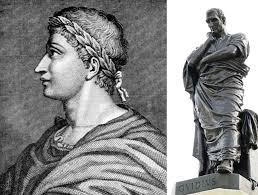
BC 43년 3월 20일, 로마의 시인 오비디우스 (Publius Ovidius Naso, BC 43 ~ AD 17/18) 출생
‘푸블리우스 오비디우스 나소’ 또는 ‘오비드’ (라: Publius Ovidius Naso, 푸블리우스 오위디우스 나소 / 영: Ovid, 기원전 43년 3월 20일 ~ 기원후 17년/18년)는 통칭 ‘오비디우스’라 불린다. 로마 제국 시대의 시인이다.

– 푸블리우스 오비디우스 나소 (Publius Ovidius Naso)
.출생: BC 43년 3월 20일, 이탈리아 Sulmona
.사망: AD 17년/18년, 로마 Constanța
.주요 저작: 변신 이야기 (The Metamorphoses, AD 8), 여걸들의 서한 (Heroides, BC 19), 사랑의 노래 (Amores), 사랑의 기술 (Ars Amatoria, AD 2), 사랑의 치유 (Remedia Amoris, AD 2) 등
푸블리우스 오비디우스 나소 (Publius Ovidius Naso, 기원전 43년 ~ 기원후 17년 또는 18년)는 기원전 43년부터 기원후 17/18년까지 활동한 고대 로마의 위대한 시인으로, 보통 오비디우스라고 불린다.
그는 아우구스투스 황제 시대에 베르길리우스, 호라티우스와 함께 로마 문학의 황금기를 이끈 3대 시인 중 한 명으로 평가받는다
오비디우스는 로마사와 로마 문학사에서 흔히 ‘아우구스투스 시대’라고 부르는, BC 43년 중부 이탈리아 펠리그니의 술모(Sulmo, 현재 술모나)의 기사 가문의 아들로 태어났다.
그는 로마에서 웅변술의 대가였던 아우렐리우스 푸스쿠스와 포르키우스 라트로에게서 수사학을 사사한 뒤 잠시 법관으로 관료 생활을 했다.
하지만 얼마 지나지 않아 아버지의 반대를 무릅쓰고 자신의 신분 계층이라면 시간만 지나면 따놓은 당상이었던 원로원직을 과감히 포기하고 작품 활동에 전념했다.
BC 70년에 태어난 베르길리우스보다는 한 세대 젊다.
후대 언어인 프랑스어, 영어 등에선 오비드 (Ovid, 프: Ovide)라 한다.
로마 제국 시대의 시인으로 즐거움을 노래하는 연애시로 유명하며 호라티우스와 더불어 로마 문학의 황금시대를 이루었다.

○ 생애 및 활동
오비디우스는 이탈리아 중부 아브루치 주의 술모에서 지방의 부유한 기사 가문에서 태어났다.
그의 생애에 관해서는 무엇보다도 자신이 말년에 유배지에서 쓴 트리스티아와 여기저기서 자신의 출생과 성장과정 및 시대적 배경을 바탕으로 어느 정도 추적해볼 수 있다.
당시의 많은 기사층 출신의 자녀들처럼 오비디우스는 일찍 로마로 유학하여 관리가 되기 위한 필수교육인 수사학과 웅변술을 배웠다.
법조계로 진출하는 것이 부친의 소망이었으나 본인은 법률 공부보다는 시작이나 화려한 사교를 즐겨, 법정변론을 하려 해도 “말이 저절로 시가 되었다”고 한다.
또한 문화의 중심지 아테네로 유학을 한 것으로 알려져 있다. 로마로 돌아와 약간 관리 경력을 쌓지만 곧 이를 포기하고 시인이 되고자 마음을 굳힌다. 이와 때를 같이하여 문인들을 후원하는 메살라 코르비누스에 발탁되어 당시의 유명 문인들과 교류를 갖게 된다.
티불루스 등의 시인 서클에 가담, 당시 유행했던 엘레게이아풍의 연애시로 필재를 휘둘러 명성을 얻었다. 그러나 연애의 농락술을 교훈시풍으로 엮은 ‘사랑의 기술’ (Ars Amatoria)이 풍속을 문란케 하는 책이라 하여 아우구스투스 황제의 노여움을 샀다.
그 후 연애시와는 결별하고 이야기시의 제작에 몰두, 필생의 대작 ‘변신 이야기’ (Metamorphoses)를 완성했다. 아우구스투스 황제에게 헌정하려던 ‘행사력’ (Fasti)을 제작 중이던 서기 8년 황제로부터 돌연 로마 추방을 선고 받았는데 이 추방에 얽힌 경위는 지금까지도 수수께끼로 남아 있다.
말년은 전반이 화려했던 것에 비해 비참했다. 흑해 연안의 벽지 토미스 (콘스탄차)에서 호소와 애원이 담긴 서신을 고국에 띄우며 10년을 보내다가 그곳에서 별세했다.
- 유배와 말년
오비디우스는 서기 8년경, 아우구스투스 황제에 의해 흑해 연안의 변방인 토미스 (오늘날 루마니아의 콘스탄차)로 돌연 유배되었다. 그는 자신의 유배 원인을 ‘시 (carmen)와 실수 (error)’ 때문이라고 언급했으나 구체적인 이유는 여전히 역사적 수수께끼로 남아 있다. 일설에는 《사랑의 기술》이 황제가 추진하던 도덕 개혁 정책에 반했기 때문이거나, 황실 내부의 추문과 관련이 있다는 추측이 있다. 그는 유배지에서 고향 로마를 그리워하며 《슬픔의 노래 (Tristia)》 등을 집필하다가 그곳에서 생을 마감했다.

○ 저작 활동
서사시 ‘변신 이야기’(AD 8)로 가장 유명하지만, 실제로 그가 남긴 시 중에는 사랑에 관한 저작이 압도적으로 많다.
‘여걸들의 서한’ (Heroides, BC 19), ‘사랑의 노래’ (Amores, BC 15), ‘사랑의 기술’ (Ars Amatoria, AD 2), ‘사랑의 치유’ (Remedia Amoris, AD 2) 등이 있다.
이 중 ‘사랑의 기술’과 ‘사랑의 치유’는 묶어서 한 작품으로 취급되는데, ‘사랑의 기술’은 남자를 위한 여자 사귀는 법, 여자를 위한 남자 사귀는 법을 설명하고 ‘사랑의 치유’는 실연당했을 때 극복하는 법을 설명한다.
이 외에도 ‘로마의 축제일’ (Fasti, AD 8) 등의 시를 썼다.
여러모로 심각하고 근엄한 베르길리우스에 비하면 다채롭고 자유분방한 시가 많다.
이러한 시의 분위기를 형성한 데에는 작가가 수십 년간의 혼란기를 겪지 않은 채 아우구스투스 치하의 평화로운 시대적 분위기 (소위 ‘팍스 로마나’)를 당연한 것으로 누리며 살았던 것이 작용한 것으로 보인다.
AD 8년, 그가 쓴 ‘사랑의 기술’이 외설적이라는 이유로 아우구스투스가 내린 칙령에 의해 흑해 서안의 토미스로 유배를 당했다.
그는 유배된 뒤에도 시를 썼으나 주로 유배된 처지를 한탄하거나 사면을 구하는 내용이고, 더 이상 사랑에 관한 시는 쓰지 않았다. 끝내 사면되지 못한 채 유배지에서 죽었다.
사랑의 기술이 나온 지 몇 년이 지나서야 유배행에 처해지고 평생 사면되거나 조금이라도 로마에 가까운 곳으로 옮겨지지 않은 것은 그가 정치에 줄을 잘못 댄 댓가라는 관점이 있기도 하다.
어쨌거나 작가가 추방되고 나서도 제국 정부에서 그 작가의 작품에 일절 손을 대진 않아서 오비디우스의 작품은, 중세 동로마 제국 멸망 때까지 계속 제국내에서 출판되었다.
‘변신 이야기’ (The Metamorphoses)는 천지창조부터 율리우스 카이사르가 신이 되는 과정까지를 그린 시인데, 변신이라는 주제를 가진 수많은 이야기를 써나간다.
그리스 로마 신화에 보면 수많은 변신 이야기가 있어 그 양은 상상은 초월하는데, 일부는 변신과 별 상관이 없지만 마지막에 자그마한 변신이 있는 등, 이야기에 변신이라는 요소만 있으면 다 들어간다.
예를 들어 아이아스의 자살 이야기는 마지막에 가서야 아이아스가 죽고 그 피에서 히아신스 꽃이 피어나는 것으로 이야기에 변신이 들어간다.
물론 비유적인 의미의 변신이나, 언급만 되고 자세히 나오지 않은 변신도 포함하면 그 수는 엄청나게 많아진다.
신화의 다양한 부분을 다루고 있기 때문에 참고자료로서도 가치가 있지만, 일부 이야기는 오비디우스가 이야기를 살짝 바꾸거나 후일담을 추가하기도 한다.
위에서 말한 아이아스의 자살얘기도 원전 등은 밤중에 아이아스가 자살하지만 변신 이야기에서는 말싸움에서 지자마자 검을 빼들어 모두가 보는 앞에서 자살하며 오르페우스 전설의 경우는 오르페우스가 죽고 에우리디케와 재회하는 모습도 그리고 있다.
2017년 12월, 정확히 사후 2000년 만에 로마 시의회에 의해 추방이 취소되었다.

○ 평가
베르길리우스와 함께 로마의 황금기를 대표하는 시인으로 우리에게는 그리스.로마 신화를 집대성한 『변신 이야기』의 작가로 알려져 있다.
그는 한 살 위인 형과 함께 로마에 가서 아버지의 요청에 따라 당시 엘리트 청년들이 그러하듯 법률가나 정치가가 되기 위해 수사학을 공부한다.
공부를 마친 뒤 그리스의 아테나이와 소아시아와 시킬리아를 여행하고 로마로 돌아와 하급 관리직에 취임했으나 문학에 대한 미련 때문에 관직을 버리고 시인이 된다.
베르길리우스와 호라티우스 등 선배 시인이 세상을 떠나고 오비디우스가 로마의 문학계를 대표하며 시인으로서의 최고의 명예를 누리던 어느 날 그는 『사랑의 기술』이 너무 선정적이라는 이유로 금서로 지정하면서 아우구스투스 황제에 의해 로마에서 멀리 떨어진 변방인 흑해 서안으로 유배를 간다.
그리고 그는 로마로 다시 돌아가지 못하고 오늘날의 시베리아나 다름없는 그곳에서 생명의 위협을 느끼며 비참하고 쓸쓸한 만년을 보내다가 유배된 지 10년 만에 유배지에서 세상을 떠난다.
- 주요평가
서구 예술의 영원한 마르지 않는 샘: 그의 대표작 《변신 이야기》 (Metamorphoses)는 그리스·로마 신화를 집대성한 백과사전적 서사시로, 단테, 초서, 셰익스피어, 괴테 등 후대 대문호들은 물론 르네상스와 바로크 시대의 수많은 화가들에게 영감의 원천이 되었다.
세련된 연애 문학의 선구자: 《사랑의 기술》 (Ars Amatoria) 등을 통해 당시 로마 상류사회의 세련된 유희와 사랑을 재치 있게 묘사했다. 이는 당대의 엄격한 도덕관과는 충돌했으나, 인간의 심리와 감정을 다루는 탁월한 기교를 보여주었다.
탁월한 언어의 마술사: 베르길리우스가 숭고하고 장중한 문체를 구사했다면, 오비디우스는 매우 유연하고 화려하며 재치 있는 문체를 구사했다. 독자의 상상력을 자극하는 생생한 묘사 능력은 고대 시인들 중 으뜸으로 꼽힌다.
비운의 천재: 아우구스투스 황제의 도덕 개혁 정책에 반하는 작품 활동과 의문의 사건 (error)에 연루되어 흑해 연안의 오지로 유배당했다. 유배지에서 쓴 《슬픔의 노래》 (Tristia)는 개인의 고통과 향수를 담은 애가(elegy)의 정점으로 평가받기도 한다.
- 문학적 영향력
오비디우스의 작품, 특히 《변신 이야기》는 중세와 르네상스를 거쳐 단테, 초서, 셰익스피어, 괴테 등 후대 수많은 작가와 예술가들에게 그리스 로마 신화의 원천으로서 막대한 영감을 주었다.

○ 작품
주요 작품으로는 《변신 이야기 Metamorphoseon Libri》, 《여걸들의 서한 Heroides》, 《비탄가 Tristia》, 《흑해에서의 편지 Epistulae ex Ponto》, 《로마의 축제일 Fasti》, 《여성의 얼굴 화장법 Medicamina Faciei Femineae》 등이 있다.
- 주요 저작
변신 이야기 (Metamorphoses): 그의 가장 유명한 걸작으로, 천지창조부터 율리우스 카이사르의 신격화까지 신화 속 ‘변신’을 주제로 한 250여 개의 이야기를 담은 서사시다.
사랑의 기술 (Ars Amatoria): 남녀 간의 사랑과 유혹의 기술을 다룬 교훈 시집으로, 당시 로마 사회에 큰 반향을 일으켰다.
여인들의 편지 (Heroides): 신화 속 여주인공들이 떠나간 연인에게 보내는 가상의 편지 형식을 빌린 시집이다.
사랑의 시 (Amores): 초기 작품으로 연애를 주제로 한 서정시들이다.
– Works, authors, and artists influenced by Ovid
- Literary and artistic
(c. 800–810) Moduin, a poet in the court circle of Charlemagne, who adopts the pen name Naso.
(12th century) The troubadours and the medieval courtoise literature. In particular, the passage describing the Holy Grail in the Conte du Graal by Chrétien de Troyes contains elements from the Metamorphoses.[105]
(13th century) The Roman de la Rose, Dante Alighieri
(14th century) Petrarch, Geoffrey Chaucer, Juan Ruiz
(15th century) Sandro Botticelli
(16th century–17th century) Luís de Camões, Christopher Marlowe, William Shakespeare, John Marston, Thomas Edwards
(17th century) John Milton, Gian Lorenzo Bernini, Miguel de Cervantes’s Don Quixote, 1605 and 1615, Luis de Góngora’s La Fábula de Polifemo y Galatea, 1613, Landscape with Pyramus and Thisbe by Nicolas Poussin, 1651, Stormy Landscape with Philemon and Baucis by Peter Paul Rubens, c. 1620, “Divine Narcissus” by Sor Juana Inés de la Cruz c. 1689.[106]
(1820s) During his Odessa exile, Alexander Pushkin compared himself to Ovid; memorably versified in the epistle To Ovid (1821). The exiled Ovid also features in his long poem Gypsies, set in Moldavia (1824), and in Canto VIII of Eugene Onegin (1825–1832).
(1916) James Joyce’s A Portrait of the Artist as a Young Man has a quotation from Book 8 of Metamorphoses and introduces Stephen Dedalus. The Ovidian reference to “Daedalus” was in Stephen Hero, but then metamorphosed to “Dedalus” in A Portrait of the Artist as a Young Man and in Ulysses.
(1920s) The title of the second poetry collection by Osip Mandelstam, Tristia (Berlin, 1922), refers to Ovid’s book. Mandelstam’s collection is about his hungry, violent years immediately after the October Revolution.
(1951) Six Metamorphoses after Ovid by Benjamin Britten, for solo oboe, evokes images of Ovid’s characters from Metamorphoses.
(1960) God Was Born in Exile, the novel by the Romanian writer Vintilă Horia about Ovid’s stay in exile (the novel received the Prix Goncourt in 1960).
(1961) The eight-line poem “Ovid in the Third Reich” by Geoffrey Hill transposes Ovid to National Socialist Germany.
(1960s–2010s) Bob Dylan has made repeated use of Ovid’s wording, imagery, and themes.
(2006) His album Modern Times contains songs with borrowed lines from Ovid’s Poems of Exile, from Peter Green’s translation. The songs are “Workingman’s Blues #2”, “Ain’t Talkin'”, “The Levee’s Gonna Break”, and “Spirit on the Water”. “Huck’s Tune” also quotes from Green’s translation.
(1971) Genesis’ song “The Fountain of Salmacis” from their album Nursery Cryme faithfully reports the myth of Hermaphroditus and Salmacis as narrated in Ovid’s Metamorphoses.
(1978) Australian author David Malouf’s novel An Imaginary Life is about Ovid’s exile in Tomis.
(1988) The novel The Last World by Christoph Ransmayr uses anachronisms to weave together parts of Ovid’s biography and stories from the Metamorphoses in an uncertain time setting.
(2000) The Art of Love by Robin Brooks, a comedy emphasizing Ovid’s role as lover. Broadcast 23 May on BBC Radio 4, with Bill Nighy and Anne-Marie Duff (not to be confused with the 2004 radio play by the same title on Radio 3).
(2004) The Art of Love by Andrew Rissik, a drama, part of a trilogy, which speculates on the crime that sent Ovid into exile. Broadcast 11 April on BBC Radio 4, with Stephen Dillane and Juliet Aubrey (not to be confused with the 2000 radio play by the same title on Radio 4).
(2007) Russian author Alexander Zorich’s novel Roman Star is about the last years of Ovid’s life.
(2007) the play The Land of Oblivion by Russian-American dramatist Mikhail Berman-Tsikinovsky was published in Russian by Vagrius Plus (Moscow). The play was based on author’s new hypothesis unrevealing the mystery of Ovid’s exile to Tomis by Augustus.
(2008) “The Love Song of Ovid”, a two-hour radio documentary by Damiano Pietropaolo, recorded on location in Rome (the recently restored house of Augustus on the Roman forum), Sulmona (Ovid’s birthplace) and Constanta (modern day Tomis, in Romania). Broadcast on the Canadian Broadcasting Corporation, CBC Radio One, 18 and 19 December 2008.
(2012) The House Of Rumour, a novel by British author Jake Arnott, opens with a passage from Metamorphoses 12.39–63, and the author muses on Ovid’s prediction of the internet in that passage.
(2013) Mikhail Berman-Tsikinovsky’s “To Ovid, 2000 years later, (A Road Tale)” describes the author’s visits to the places of Ovid’s birth and death.
(2015) In The Walking Dead season 5, episode 5 (“Now”), Deanna begins making a long-term plan to make her besieged community sustainable and writes on her blueprint a Latin phrase attributed to Ovid: “Dolor hic tibi proderit olim”.[108] The phrase is an excerpt from the longer phrase, “Perfer et obdura, dolor hic tibi proderit olim” (English translation: Be patient and tough; someday this pain will be useful to you”).[109]
(2017) “…and while there he sighs” for 31-tone organ and mezzo-soprano by composer Fabio Costa is based on the Syrinx and Pan scene from Metamorphoses, with performances in Amsterdam (2017, 2019).
(2017) Canadian composer Marc Sabat and German poet Uljana Wolf collaborated on a free homophonic translation of the first 88 lines of Ovid’s Metamorphoseon to create the cantata Seeds of skies, alibis premiered by the vocal ensemble Ekmeles in New York on 22 February 2018.
(2024 – 2025) Hanseatic Thespian artists and writers Regina Anacker and Ludwig Jurich from Dortmund, FRG created the spectacle “Geschöpfe” and the stage reading “Echos” based on the poetic work Metamorphoses by Publius Ovidius Naso. Vocal ensemble “Sprechchor Dortmund” under the guidance of Regina Anacker implemented on stage this Ovidius legacy in Dortmund – Tremonia.
Dante twice mentions him in:
De vulgari eloquentia, along with Lucan, Virgil and Statius as one of the four regulati poetae (ii, vi, 7)
Inferno as ranking alongside Homer, Horace, Lucan and Virgil (Inferno, IV, 88)

- Retellings, adaptations, and translations of Ovidian works
(1609) The Wisdom of the Ancients, a retelling and interpretation of Ovidian fables by Francis Bacon
(1767) Apollo et Hyacinthus, an early opera by Wolfgang Amadeus Mozart
(1916) Ovid’s Metamorphoses Vols 1–2 translation by Frank Justus Miller
(1926) Orphée, a play by Jean Cocteau, retelling of the Orpheus myth from the Metamorphoses
(1938) Daphne, an opera by Richard Strauss
(1949) Orphée, a film by Jean Cocteau based on his 1926 play, retelling of the Orpheus myth from the Metamorphoses
(1978) Ovid’s Metamorphoses (Translation in Blank Verse), by Brookes More
(1978) Ovid’s Metamorphoses in European Culture (Commentary), by Wilmon Brewer
(1988) The Last World by Christoph Ransmayr
(1997) Polaroid Stories by Naomi Iizuka, a retelling of Metamorphoses, with urchins and drug addicts as the gods.
(1994) After Ovid: New Metamorphoses edited by Michael Hofmann and James Lasdun is an anthology of contemporary poetry envisioning Ovid’s Metamorphoses
(1997) Tales from Ovid by Ted Hughes is a modern poetic translation of twenty four passages from Metamorphoses
(2000) Ovid Metamorphosed edited by Phil Terry, a short story collection retelling several of Ovid’s fables
(2002) An adaptation of Metamorphoses of the same name by Mary Zimmerman was performed at the Circle in the Square Theatre
(2006) Patricia Barber’s song cycle, Mythologies
(2008) Tristes Pontiques, translated from Latin by Marie Darrieussecq
(2011) A stage adaptation of Metamorphoses by Peter Bramley, entitled Ovid’s Metamorphoses was performed by Pants on Fire, presented by the Carol Tambor Theatrical Foundation at the Flea Theater in New York City and toured the United Kingdom
(2012) “The Song of Phaethon”, a post-rock/musique concrète song written and performed by Ian Crause (former leader of Disco Inferno) in Greek epic style, based on a Metamorphoses tale (as recounted in Hughes’ Tales from Ovid) and drawing parallels between mythology and current affairs
(2013) Clare Pollard, Ovid’s Heroines (Bloodaxe), new poetic version of Heroides
(2014) Christophe Honoré, “Métamorphoses”, a film adaptation of the eponymous poem in a contemporary French setting
(2019) Nina MacLaughlin, Wake, Siren: Ovid Resung is a novel that reimagines the Metamorphoses from the perspective of the female characters
(2024 – 2025) “Geschöpfe” play and “Echos” stage reading by Regina Anacker and Ludwig Jurich in Dortmund, FRG.


참고 = 위키백과
크리스천라이프 편집부