

with Rev Dr Chris Walker
Black Preaching
Recently we had the royal wedding of Prince Harry and Meghan Markle at St Georges Chapel, Windsor. It was a very grand, public event with some 1.8 billion people watching. The highlight of the wedding was the sermon by Bishop Michael Curry, the first black bishop of the Episcopal Church in the USA. It was notable because he did not change from his black preaching style and preached a dynamic faithful message. The emphasis was on love in all its dimensions which included reference to poverty and war. It was a message that did not compromise but proclaimed his conviction about Jesus Christ. It is difficult to know how it was received by people but it certainly did register.
What are some of the characteristics of black preaching that can inform all preaching? Bishop Curry was clearly passionate about his faith and it conveyed. That should be true of all preachers. He preached with his whole body. He used his hands and face and body to help convey his message. His voice varied depending on what he was saying. He spoke to the audience not as a lecturer providing information but as a preacher seeking to convince and persuade. His whole person was involved in what he said. Preaching at its best should come from the heart as well as the mind and be conveyed by the voice and body of the preacher.
Bishop Curry preached with conviction. He demonstrated confidence concerning the value of the biblical text to say something to us today. Central was reference to Jesus Christ. Many of his allusions were to other biblical texts than the main readings. While preachers need to analyse the text using the various techniques available to us, finally we need to move beyond critical analysis to listening to the text and what God might be saying to us through it. Paul Ricoeur speaks of moving to a ‘second naivety’. What he means is that we need to go past a superficial reading to critical analysis but then to a post-critical reading. This is informed by the preceding critical examination but goes beyond it. Preaching seeks to hear then express God’s word to the people through the biblical word and points people to Jesus. Jesus was the word made flesh who lived among us and is now the living risen Lord.
Bishop Curry drew on the black tradition from which he comes. He made reference to Dr Martin Luther King Jr the most famous black preacher and civil rights leader. His words have authority and he used them to effect.
The late Dr Martin Luther King Jr once said, and I quote: “We must discover the power of love, the redemptive power of love. And when we do that, we will make of this old world a new world, for love is the only way.”
There’s power in love. Don’t underestimate it. Don’t even over-sentimentalize it. There’s power, power in love.
Preachers can use quotes from famous people to enhance what they want to say. The quote however needs to be relatively short. Too long a quote and it sounds like you are reading someone else’s thoughts and no longer preaching out of your own thinking and convictions. Bishop Curry used the quote from Dr King to give weight to what he wanted to say and to expand on.
Bishop Curry also referred to southern black slaves and the spiritual song “There is a balm in Gilead.” Without condemning white people and the nation that had a history of slave trading, he used the song which arose out of the experience of slavery.
In his preaching Bishop Curry used a great deal of repetition. Love was the theme and the expression “when love is the way” was used many times. Some of this is as follows.
Imagine this tired old world where love is the way. When love is the way – unselfish, sacrificial, redemptive.
When love is the way, then no child will go to bed hungry in this world ever again.
When love is the way, we will let justice roll down like a mighty stream and righteousness like an ever-flowing brook.
When love is the way, poverty will become history. When love is the way, the earth will be a sanctuary.
When love is the way, we will lay down our swords and shields, down by the riverside, to study war no more.
When love is the way, there’s plenty good room – plenty good room – for all of God’s children.
“Because when love is the way, we actually treat each other, well… like we are actually family.
This is effective preaching because preaching is an oral not written activity. Repetition can be boring if it simply repeats what was said previously. Here the repetition of the phrase “when love is the way” is given content and breadth by all the examples of what it can do. Preachers do well to appreciate the oral nature of preaching and use techniques such as repetition to enable the hearers to really take in the message.
Another feature of black preaching is the use of story. Given the time constraints he was under Bishop Curry did not use story but it is characteristic of black preaching to do so. Stories grasp our attention and convey meaning in a way that abstract argument does not. It seems we humans are made for stories. In our culture just think of the movies, the dramas on television, and the many series that capture people’s attention. Using stories has always been effective in preaching. Jesus himself was a master story teller with all his parables.
People often use the word ‘preach’ in the negative sense of being told what to do. ‘Do not preach at me’ they say. Bishop Curry showed that what preaching is really about which is inspiring and encouraging people to recognize what is really important and to respond appropriately for themselves.
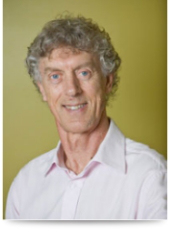
Chris Walker
http://revdrchriswalker.wordpress.com/
Chris is currently serving the Assembly of the Uniting Church as the National Consultant for Theology and Discipleship.
He has served in a range of positions and places in the Uniting Church including local church ministry in three congregations in NSW, as a regional education and mission officer, and consultant for evangelism and discipleship, in Queensland, as principal of Parkin-Wesley College in SA, and as a mission resource officer for Parramatta-Nepean Presbytery.
He has a passion for theology, mission and discipleship. His interest in writing has resulted in various publications including five books, most recently Peace Like A Diamond: facets of peace (Spectrum, 2009) and Living Life to the Full: Spirituality for today’s baby boomers (Openbook, 2005).