
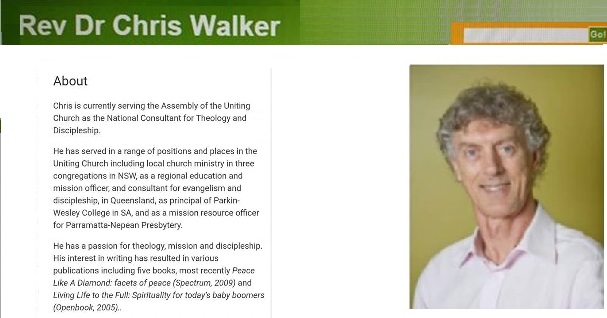
with Rev Dr Chris Walker

Christians and Politics
Religion and politics are necessarily related. In Jesus’ time religion and politics were not separate but bound together. Like the prophets of ancient Israel, Jesus was critical of the leaders of Israel for their failings. The early church communities were not in a position to influence the policies of the Roman Empire and often suffered persecution. This changed when the Emperor Constantine adopted Christianity. Christianity became the favoured religion and then the official religion of the Roman Empire. The long period of Christendom ensued with the church having a significant influence on political decisions.
At the time of the Reformation different approaches to the relationship between Christians and politics developed. The Roman Catholic church has always sought to have political influence. The Lutherans were dependent on State leaders for protection when they broke with the Roman Catholic church. Martin Luther developed the two-kingdom approach which distinguished between the roles of the state and the church. The Radicals of the Reformation went further and wanted a clear distinction between church and state with minimal influence between them. The Reformed tradition stemming from John Calvin had a stronger relationship between the church and state even to the point of challenging unjust leaders if necessary.
The Enlightenment brought the attitude that there was a difference between the political and social realm and the personal and private realm of life. Christian faith was relegated to the latter. Hence many people thought that politics and religion should be kept separate. This is still a common attitude. Faith is private and if it influences one’s political decisions this is not discussed. Often political attitudes are governed by other ideologies rather than by Christian faith.
The Uniting Church comes from the Reformed tradition. The Presbyterian, Methodist and Congregational traditions all had involvement in the political process. The Uniting Church from its inception has understood itself to have a role to play in public life influencing political decisions. A “Statement to the Nation” was issued at the inauguration of the Uniting Church in 1977. Uniting Church leaders have often commented on social issues seeking to have a democratic influence in the political process. In a post-Christendom era, the church has to present its arguments along with other voices. The Uniting Church has made many thoughtful statements on a range of issues.
Uniting Church people are not Lutherans with their two-kingdom approach, not Baptists with their separation of church and state, nor Roman Catholics and Anglicans who assume they have a place in the political realm. Our theology is informed by Calvin and Wesley. Both of them were concerned about political issues such as refugees, prison reform and slavery. As Christians we should have a particular concern for ‘the least’ and using money for the well-being of others not just for ourselves and for the already rich and powerful. Jesus spoke about this and warned about the misuse of money in failing to care for others. This has implications for political and economic policy.
Our Christian faith, particularly as Uniting Church people, should influence how we make decisions in every aspect of life including politics. It is a mistake to distinguish between the personal and the political with our faith not influencing the latter. Pentecostals may tend to do that but it is not appropriate. It is helpful to discuss issues and seek to discern what might be more in line with God’s will for our society.
There is no clear position on Christians’ political responsibilities. Nevertheless, our faith and discipleship should influence our political views and values and shape how we vote. It is a matter of looking to what the implications of different policies are and the kind of society we want. If we want Australia to be more like the kingdom of God, then we should consider the implications of policies with the following questions in mind: how will they impact ‘the least’, will they move us towards a more compassionate society, will they be fair for all people, will people be enabled to contribute according to their abilities, will they show we care for people in other countries and not just our own, will they be in accord with international standards especially as recommended by the United Nations?
In considering political policies it is helpful to draw on the notion of “middle axioms” – working principles that provide guidance for Christians in public affairs but can also be recognised by those not of Christian faith. They can be deduced from higher Christian principles, such as love, justice, and reconciliation, and are in harmony with them, but are less abstract. They provide a general direction for action, but are not as specific as actual prescriptions for action.
Middle axioms move us beyond the primary Christian value, namely to love God and love our neighbours as ourselves. Love needs to be expressed in more concrete ways. The middle axiom might be as follows: compassion and assistance for the disadvantaged, justice and a greater voice for indigenous people, treating all people equally, enabling everyone to participate in our society, rich organisations paying their share in taxation, concern for the intrinsic value and well-being of the environment and all creatures.
What factors actually shape a person’s political views? Realistically a person’s upbringing, their parent’s views, their life experiences, socio-economic status, friends and social grouping to which they belong, education and training, all have influence. Nevertheless, our Christian faith should lead us to consider why we hold the political and economic views that we do and modify them in the light of what we understand to be God’s desire for our nation. We can do so drawing especially on what Jesus did and taught, what the OT prophets said, our Uniting Church tradition, and seeking the Spirit’s guidance in prayer and discussion with others.
As Christians living in a democracy, we are involved in the political process even if it is just by voting which is compulsory in Australia. It is not a matter of whether we should be politically involved but rather how we can be involved and how our faith should influence our political views and decisions.
Chris Walker
http://revdrchriswalker.wordpress.com/
Chris is currently serving the Assembly of the Uniting Church as the National Consultant for Theology and Discipleship.
He has served in a range of positions and places in the Uniting Church including local church ministry in three congregations in NSW, as a regional education and mission officer, and consultant for evangelism and discipleship, in Queensland, as principal of Parkin-Wesley College in SA, and as a mission resource officer for Parramatta-Nepean Presbytery.
He has a passion for theology, mission and discipleship. His interest in writing has resulted in various publications including five books, most recently Peace Like A Diamond: facets of peace (Spectrum, 2009) and Living Life to the Full: Spirituality for today’s baby boomers (Openbook, 2005).
기독교인과 정치
종교와 정치는 필연적으로 관련되어 있다. 예수 시대에 종교와 정치는 분리된 것이 아니라 함께 묶여 있었다. 고대 이스라엘의 선지자들처럼 예수님은 이스라엘 지도자들의 실패에 대해 비판적이었다. 초대교회 공동체는 로마제국의 정책에 영향을 미칠 수 있는 위치에 있지 않았고 종종 박해를 받았다. 이것은 콘스탄티누스 황제가 기독교를 받아들였을 때 바뀌었다. 기독교는 선호 종교가 되었고 로마 제국의 공식 종교가 되었다. 교회가 정치적 결정에 중대한 영향을 미치면서 그리스도교국의 오랜 기간이 이어졌다.
종교 개혁 당시 기독교와 정치의 관계에 대한 다양한 접근 방식이 발전했다. 로마 가톨릭 교회는 항상 정치적 영향력을 추구해 왔다. 루터교인들은 로마 가톨릭 교회와 결별했을 때 보호를 위해 국가 지도자들에게 의존했다. 마틴 루터는 국가와 교회의 역할을 구분하는 이중 왕국 접근 방식을 개발했다. 종교 개혁의 급진파는 한 걸음 더 나아가 교회와 국가 사이에 최소한의 영향을 미치는 명확한 구분을 원했다. 존 칼빈에서 비롯된 개혁주의 전통은 필요하다면 불의한 지도자들에게 도전할 정도로 교회와 국가 사이의 관계가 더 강했다.
계몽주의는 정치적 사회적 영역과 개인적이고 사적인 삶의 영역 사이에 차이가 있다는 태도를 가져왔다. 기독교 신앙은 후자로 강등되었다. 따라서 많은 사람들은 정치와 종교를 분리해야 한다고 생각했다. 이것은 여전히 일반적인 태도이다. 신앙은 사적인 것이며 그것이 자신의 정치적 결정에 영향을 미치는 경우 논의되지 않는다. 종종 정치적 태도는 기독교 신앙보다는 다른 이데올로기의 지배를 받는다.
연합교회는 개혁주의 전통에서 나온다. 장로교, 감리교 및 회중 전통은 모두 정치 과정에 참여했다. 연합교회는 창립 초기부터 정치적 결정에 영향을 미치는 공적 생활에서 자신의 역할을 이해해 왔다. 1977년 연합 교회의 취임식에서 “국가에 대한 성명서”가 발표되었다. 연합 교회 지도자들은 종종 정치 과정에서 민주적 영향력을 행사하려는 사회적 문제에 대해 언급했다. 포스트 기독교 시대에 교회는 다른 목소리와 함께 자신의 주장을 제시해야 한다. 연합교회는 다양한 문제에 대해 많은 사려 깊은 성명을 발표했다.
연합 교회 사람들은 두 왕국 접근 방식의 루터교도, 교회와 국가의 분리를 주장하는 침례교 신자도, 정치적 영역에서 자신의 자리가 있다고 생각하는 로마 가톨릭교도와 성공회도 아니다. 우리의 신학은 Calvin과 Wesley에 의해 알려졌다. 두 사람 모두 난민, 교도소 개혁, 노예제와 같은 정치적 문제에 대해 우려했다. 그리스도인으로서 우리는 ‘가장 작은 자’에 대한 특별한 관심을 가져야 하며, 우리 자신과 이미 부유하고 권력 있는 사람들을 위해서가 아니라 다른 사람들의 복지를 위해 돈을 사용해야 한다. 예수께서는 이에 대해 말씀하시고 다른 사람들을 돌보지 않는 데 돈을 남용하는 것에 대해 경고하셨다. 이는 정치 및 경제 정책에 영향을 미친다.
특히 연합교회 교인으로서 우리의 기독교 신앙은 정치를 포함한 삶의 모든 면에서 결정을 내리는 방식에 영향을 주어야 한다. 후자에 영향을 미치지 않는 우리의 믿음으로 개인적인 것과 정치적인 것을 구별하는 것은 실수이다. 오순절파는 그렇게 하는 경향이 있지만 적절하지 않다. 문제에 대해 토론하고 우리 사회에 대한 하나님의 뜻에 더 부합할 수 있는 것이 무엇인지 분별하려고 노력하는 것이 도움이 된다.
그리스도인의 정치적 책임에 대한 명확한 입장은 없다. 그럼에도 불구하고 우리의 신앙과 제자도는 우리의 정치적 견해와 가치에 영향을 미치고 투표(참여) 방식을 형성해야 한다. 다양한 정책의 함의가 무엇이며 우리가 원하는 사회가 어떤 것인지 살펴보는 문제다. 호주가 더 하나님의 왕국과 같기를 바란다면 다음과 같은 질문을 염두에 두고 정책의 의미를 고려해야 한다. 정책이 ‘가장 작은 사람’에게 어떤 영향을 미칠지, 우리를 더 자비로운 사회로 이끌 것인가, 모든 사람에게 공정하고, 사람들이 자신의 능력에 따라 기여할 수 있는가? 그들은 우리가 우리 나라뿐만 아니라 다른 나라의 사람들을 돌보고 있음을 보여주고 특히 UN에서 권장하는 국제 표준에 부합한가?
정치 정책을 고려할 때 “중간 공리”라는 개념을 사용하는 것이 도움이 된다. 즉, 공무에서 기독교인에게 지침을 제공하지만 기독교 신앙이 아닌 사람들도 인식할 수 있는 작동 원칙이다. 그것들은 사랑, 정의, 화해와 같은 더 높은 기독교 원리들로부터 추론될 수 있고 그것들과 조화를 이루지만 덜 추상적이다. 그것들은 행동에 대한 일반적인 지침을 제공하지만 행동에 대한 실제 처방만큼 구체적이지 않다.
중간 공리는 우리를 기독교의 주된 가치, 즉 하나님을 사랑하고 이웃을 내 몸과 같이 사랑하라는 것 이상으로 이끈다. 사랑은 좀 더 구체적으로 표현해야 한다. 중간 공리는 다음과 같을 수 있다: 불우한 사람들에 대한 연민과 지원, 원주민을 위한 정의와 더 큰 목소리, 모든 사람들을 평등하게 대우하고, 모든 사람이 우리 사회에 참여할 수 있도록 하며, 세금을 내는 부유한 조직들, 본질적 가치에 대한 관심 환경과 모든 생물의 웰빙 (등이다).
실제로 어떤 요소가 개인의 정치적 견해를 형성하는가? 현실적으로 개인의 성장과정, 부모의 견해, 삶의 경험, 사회경제적 지위, 친구와 소속된 사회집단, 교육과 훈련 등이 모두 영향을 미친다. 그럼에도 불구하고 우리의 기독교 신앙은 우리가 왜 우리가 정치적, 경제적 관점을 유지하고 우리 나라에 대한 하나님의 갈망이라고 이해하는 것에 비추어 그것을 수정하는 지를 고려하도록 인도해야 한다. 우리는 특히 예수께서 행하시고 가르치신 것, 구약의 선지자들이 말한 것, 연합 교회의 전통을 바탕으로 기도하고 다른 사람들과 토론할 때 성령의 인도를 구함으로써 그렇게 할 수 있다.
우리는 민주주의 시대에 사는 기독교인으로서 호주에서 의무적인 투표를 통해서라도 정치 과정에 참여한다. 그것은 우리가 정치적으로 관여해야 하는지 여부가 아니라 우리가 어떻게 참여할 수 있고 우리의 믿음이 우리의 정치적 견해와 결정에 어떻게 영향을 미쳐야 하는 지의 문제이다.
번역 = 크리스천라이프 편집부