
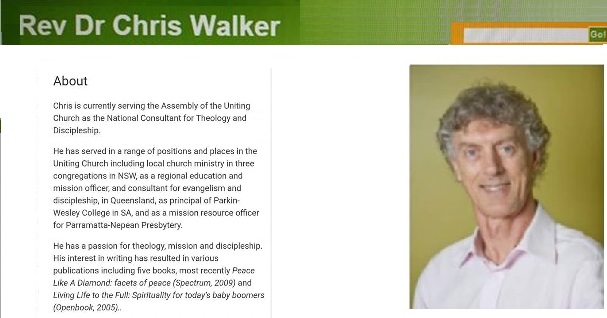
with Rev Dr Chris Walker
Fortress Mentality or Open Gates
I have recently read Richard Fidler’s, Ghost Empire about the thousand year story of Constantinople. Constantinople was the ‘new Rome’ as the emperor Constantine in 330 CE shifted the Roman Empire’s capital to the east. It was at the crossroads of Europe and Asia. The site was on a promontory surrounded by water on three sides. Its location was very defensible and beautiful. A wall was built across the land side to protect it from invaders. In time the legendary land walls of Theodosius were built: a massive triple layered defensive network of thick stone and brick walls and towers that were a wonder of the medieval world. In 1453 the city however did fall to the Ottoman Turks and was renamed Istanbul. In contrast, the ‘new Jerusalem’ envisioned by John in Revelation has God dwelling with people. The city has 12 gates with angels at them. The gates are made of pearl and are never shut. The perpetually open gates symbolize perfect safety. People bring into the city the glory and honour of the nations. Let me suggest these two approaches have much to say to us today.
The first approach is being implemented by US President Donald Trump. He seeks to ‘make America great again’ by expanding the already massive military might of the USA including even making new nuclear weapons. He will cut back on other areas such as health and welfare. The intention is to ensure that the USA has vastly superior military strength than any possible opponent. He proposes to build a wall between Mexico and the USA to keep out illegal immigrants from coming across the border. It would be a huge and expensive undertaking. He also wants to restrict migration into the USA to keep Muslims out seeing them as potential terrorists.
Trump is not alone in this protectionist attitude. Israel since its reestablishment in May 1948 has made sure it has superior military strength to its opponents. In the wars it has fought Israel has occupied territories that Palestinians deem as theirs and continues to encroach on these areas building Jewish settlements. The wall to separate the areas is now notorious making it difficult for Palestinians who work on the Israeli side. The current Prime Minister of Israel is a hard liner who is not open to negotiate with the Palestinians for the two state solution that many regard is the way to achieve long term peace. Israel is known for its skilful intelligence and military personnel and is highly armed. It also has backing from the USA where many Jews live.
Apartheid South Africa also had this approach. The white rulers had the military and police might. It had laws that legitimatised its approach. It separated the races. It was based on fear of the black majority. Whites had their gated communities. Security was based on fear doing what was necessary to keep others away from one’s areas. Yet it finally gave way to a new multiracial nation.
This protectionist approach seems plausible and sensible. Like Constantinople in the past, isn’t it smart to have stronger armies, better weapons, and protective walls? Doesn’t it make sense to regard all those who are not your people as potential enemies if not actual enemies? Such an approach leading not just to gated communities but gated nations, is based on fear of the other and the need to be able to overpower them if need be and to keep them away.
Let me suggest that this might seem plausible but is not in fact wise. As the world is tragically finding, terrorists are able to wreak havoc without huge military forces and sophisticated weapons. Bombs are not difficult to make. Suicide bombers are very difficult to detect and stop. The ideology of terrorism is only enhanced when those it regards as enemies retaliate with violent force. New recruits are not hard to gain including among those in Western nations. The arms trade is a lucrative one, so weapons are readily bought and sold and people are armed. Weapons developed by various nations end up in the hands of people who are driven by hatred who can use them for their purposes. The spiral of violence is one that continues unless something different than violence and counter violence takes place. Peace talks only work when there is a willingness to trust the other and compromise. This is difficult if there is a long term history of antagonism and perceived injustice.
If we are to achieve peace then there is an alternative that is much more likely to result in lasting peace and positive relationships between people and nations. The World Council of Churches is promoting the idea of ‘just peace’, namely peace through justice. Justice is a major theme in the bible as is ‘shalom’ which is peace in the fullest sense of the word. Shalom has to do with wholeness, fulfilment, well-being, community, harmony, health, agreement, security and prosperity. In the bible God through the prophets repeatedly calls people to practice justice and righteousness. Jesus demonstrated and taught about God’s reign which is characterised by compassion, justice and peace.
What might this second approach look like? It emphasizes communication, involving deep listening to the other, a willingness to admit wrong, and seeking to achieve a better future for all involved. It uses third party people as mediators to avoid ‘us – them’ confrontations. It treats the other with respect and consideration. It is prepared to compromise and take steps that demonstrate good will. It is open and welcoming. It wants to achieve a positive outcome for all, not just one’s own people.
Beyond areas of conflict, this second approach emphasizes the importance of foreign aid and working to realize the Sustainable Development Goals the United Nations has set for overcoming extreme poverty and improving people’s living conditions. Yet the world’s nations continue to spend an enormous amount on the military and weapons. The way to lasting peace I suggest is by dealing with the causes of discontent rather than seeking to have superior might.
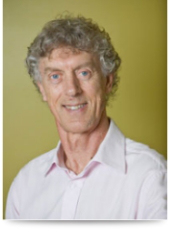
Chris Walker
(National Consultant Christian Unity, Doctrine & Worship)
chrisw@nat.uca.org.au
http://revdrchriswalker.wordpress.com/
Chris is currently serving the Assembly of the Uniting Church as the National Consultant for Theology and Discipleship.
He has served in a range of positions and places in the Uniting Church including local church ministry in three congregations in NSW, as a regional education and mission officer, and consultant for evangelism and discipleship, in Queensland, as principal of Parkin-Wesley College in SA, and as a mission resource officer for Parramatta-Nepean Presbytery.
He has a passion for theology, mission and discipleship. His interest in writing has resulted in various publications including five books, most recently Peace Like A Diamond: facets of peace (Spectrum, 2009) and Living Life to the Full: Spirituality for today’s baby boomers (Openbook, 2005).