
with Rev Dr Chris Walker
Gratitude versus Entitlement
I have become increasingly aware of the importance of gratitude as the best attitude to take in life. Gratitude involves appreciation and thankfulness. The opposite is entitlement, the idea that I have a right to various things. They should be given to me because of who I am. The latter attitude is all too common especially by those who are already well off. Jeffrey Epstein was a glaring example. Gratitude is less common, especially as an overall attitude to life rather than for specific things. I will explore these ideas further.
First, entitlement. The most recent case of notorious sex abuse, of taking advantage of underage girls, is that of Jeffrey Epstein, an American financier who became a multimillionaire. He had contact with many of the world’s financial, political and cultural elite. He was convicted of sex crimes in 2008 for procuring an underage girl for prostitution. US Federal officials identified 36 girls, some as young as 14, whom Epstein sexually had abused. He served 13 months in custody. In July 2019 he was arrested on charges of sex trafficking of minors in Florida and New York. He died in his jail cell on 10 August 2019, most likely by suicide to avoid facing court. Ten days later the case against him was closed.
Epstein and those who associated with him had an attitude of entitlement. He was a multimillionaire. He felt entitled to do what he liked. He could satisfy his sexual drive with underage girls and procure them for others also. People with an entitlement attitude only think of themselves. What happens to others does not matter. They may well justify what they do by saying they paid for it. It was a financial transaction, not taking advantage of underage girls. Because of who they were, they had the right to do what they wanted.
While this is an example of a high-profile person, the same entitlement attitude is all too common. Many young people in Western nations assume the right to an easy life with access to technology and the attitude that they deserve to have the good things of life. If parents, for example, try to limit their use of computers to play games which can become addictive, they are incensed. They have the right, they think, to play games as much as they want. They feel entitled to be provided for and only think of their own enjoyment and satisfaction.
Often when people travel from rich Western nations such as Australia to poorer nations, for example in the Pacific or Asia, they are surprised that the people often seem happier than people back home. Despite their lack of money and material things, there is more laughter and smiles among the people especially the children. They do not have the entitlement attitude but seem to be grateful for what they do have, especially family and simple pleasures.
So, what does an attitude of gratitude involve? It means appreciating what we do have and not focusing on what others have. An expression I dislike is when people look to the very rich and say “That is how the other half live.” No, that is not the other half, it is a small minority of people who have a disproportionate amount of the world’s wealth. To compare oneself with them is to imply dissatisfaction with one’s own life when we too are well-off compared to the poorest half of the world’s population. We should be thankful for what we have when so many others live in situations of poverty, refugee camps, the threat of violence, or are discriminated against.
We in Australia live in a rich country that is stable politically, economically strong, provides education and health services, and has an environment we can enjoy. We are fortunate because of living here in such a country. This is not to imply there are not people in Australia who are disadvantaged, or experience discrimination, and who could be treated better. Nevertheless, we do live in a land that provides so much.
Some secular people also say an attitude of gratitude is desirable. For them the gratitude is for family, friends or nation. As a Christian, I hold that finally it is a matter of being grateful to God. It is God who gives us life, it is God who we can rely on even more than family and friends who can let us down, it is God not nation who cares for each and every one of us. God is the Creator and Lord of all and so everything finally comes from God. Moreover, God has a purpose for creation. We find our own purpose best when we participate in God’s good purposes. That purpose has to do with the reconciliation and renewal of all creation. We can join with Jesus who proclaimed and inaugurated God’s coming kingdom in which love, justice and peace will reign.
We can be grateful that God loves us deeply. Even when we go against God’s will, God is ready to forgive and enable us to start again. The reason for our living by gratitude is a response to the grace of God. Because God loves us, God would graciously guide and enable us, God is with us by God’s Spirit to comfort and strengthen us in times of trouble. How do we know this? We know it especially as we look to Jesus, God’s Son sent to reveal God and God’s purposes to us. As we look to Jesus and listen to his teaching, we see God and God’s intentions.
The chorus ‘Give Thanks’ expresses the Christian attitude of gratitude. It says, “Give thanks with a grateful heart, give thanks to the Holy One, give thanks because he’s given Jesus Christ his Son. And now let the weak say I am strong, let the poor say I am rich because of what the Lord has done for us. Give thanks, give thanks.” (717 Together in Song).
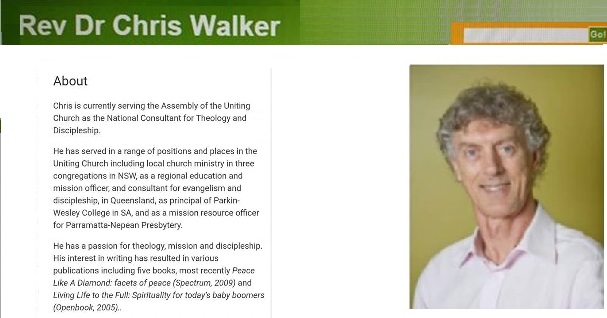
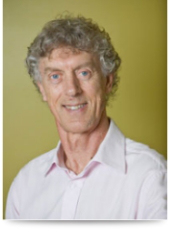
Chris Walker
Chris is currently serving the Assembly of the Uniting Church as the National Consultant for Theology and Discipleship.
He has served in a range of positions and places in the Uniting Church including local church ministry in three congregations in NSW, as a regional education and mission officer, and consultant for evangelism and discipleship, in Queensland, as principal of Parkin-Wesley College in SA, and as a mission resource officer for Parramatta-Nepean Presbytery.
He has a passion for theology, mission and discipleship. His interest in writing has resulted in various publications including five books, most recently Peace Like A Diamond: facets of peace (Spectrum, 2009) and Living Life to the Full: Spirituality for today’s baby boomers (Openbook, 2005).