
with Rev Dr Chris Walker
Vocation
We have had major renovations on our house. For quite some time tradespeople worked on our house knocking walls down and rebuilding them, renovating the bathroom, painting etc. Then there was a burst water pipe in our street which meant the water had to be turned off for hours while the council workmen fixed the problem. These events made me very conscious of how much I depend on people carrying out their work well in order for me to live comfortably in our house. They have skills I do not have and I have some skills that others hopefully benefit from. It is a matter of different vocations that collectively lead to the common good in our society. While the idea of ‘vocation’ is now understood in a secular way without reference to God, it goes back to Luther and Calvin at the time of the Reformation.
In the Middle Ages a ‘double standard’ developed in relation to Christian life and ethics. Some Christians sought to obey the ‘counsels of perfection’ while others only the ‘evangelical precepts’. That is, only those who entered monastic orders were considered to have a divine vocation. This vocation included taking the vows of poverty, chastity and obedience. Ordinary Christians were to follow Christ in their lives but they were not regarded as having a divine vocation.
Luther rejected both the double standard and the monastic vows. He disagreed that the vows implied salvation through the monastic life. It gave people a false sense of security he said. True faith in God is to be worked out in the circumstances of family life and ordinary tasks. All stations in life in which it is possible to live honestly and productively are divine vocations. They include those which are to be found in the family – to be husband, father, mother wife, son, daughter etc. Those which belong to economic and commercial life – cobbler, shopkeeper, milkmaid, farmer etc. And those which are part of political life – king, governor, subject etc. The calling to ordained ministry is one vocation among many. Each Christian is to look to God in doing their tasks.
Calvin interpreted vocation in a similar way to Luther. God has appointed duties and a way of living for everyone and these ways of living are ‘vocations’. This is God’s provision for the stability of the common life. A person of humble station, as well as the magistrate, will perform their functions more willingly because they know they have been given by God. All tasks are worthy in God’s sight. Max Weber noted a connection between Calvin’s teaching on vocation and the development of capitalism, though other scholars hold that this overstated the closeness of the connection, since for Calvin vocation is to be seen in its religious context.
There is, however, still the idea among many that religious vocations are what ‘vocation’ is really about. For Catholics this means ordination to the priesthood, or joining a religious order, while for Protestants it relates to becoming an ordained minister or may be extended somewhat to include non-ordained leadership roles in the church. In both cases the emphasis is on specific vocations that relate to the church.
While the religious element has now been removed from the concept of vocation for most people in our secular society, it seems to me that for Christians at least a recovery of the Reformers’ idea of what vocation was about would be desirable. Many churches speak in terms of the ministers of the church being not only the Minister of the Word but all the people of the congregation. Nevertheless, in practice this still relates to the life of the church predominantly rather than mean daily living. Lay ministry involves taking leadership in worship, pastoral care, home groups, church organisation etc. For most, one’s family life and work are not understood in terms of vocation.
We do well to rediscover the Reformer’s understanding and reinterpret it for our context. Let me offer some thoughts. The Christian’s primary calling is to follow Jesus, to respond to his call on our lives to live as his disciples. The challenging words of Jesus apply to every person who wants to follow Jesus. This is starkly put by Jesus in Luke’s gospel, “Whoever comes to me and does not hate father and mother, wife and children, brothers and sisters, yes, and even life itself, cannot be my disciple. Whoever does not carry the cross and follow me cannot be my disciple” (Luke 14:26-27). Elsewhere in Luke Jesus says to a would-be follower who asks to first say farewell to those at his home, “No-one who puts a hand to the plow and looks back is fit for the kingdom of God” (Luke 9:62). What Jesus desires of followers is complete loyalty. I do not think he means we should reject family for Jesus himself even on the cross made provision for his mother (John 19:26-27). Nevertheless, allegiance to Jesus and his message of the kingdom of God is to take priority even over family.
In our calling to follow Jesus we do this in different ways depending on whether we are married or single. It relates to how we use our time, talents and finances. Our vocation is to live as followers of Jesus in our family life, our economic life, and in our community life. We are to seek to be loving and consistent parents and children; honest and capable workers in whatever trade or profession we enter; and seek to contribute positively to community life, to the common good, which includes our responsibility as citizens. As Christians this does include relating to a church for we are followers of Jesus not just as individuals but as members of a community of faith. Vocation however has much broader connotations than simply the life of the church. We are to seek to follow Christ and live by the values of the reign of God in every part of our lives.
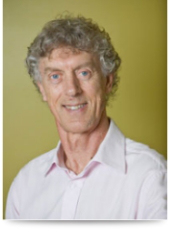
Chris Walker
(National Consultant Christian Unity, Doctrine & Worship)
chrisw@nat.uca.org.au
http://revdrchriswalker.wordpress.com/
Chris is currently serving the Assembly of the Uniting Church as the National Consultant for Theology and Discipleship.
He has served in a range of positions and places in the Uniting Church including local church ministry in three congregations in NSW, as a regional education and mission officer, and consultant for evangelism and discipleship, in Queensland, as principal of Parkin-Wesley College in SA, and as a mission resource officer for Parramatta-Nepean Presbytery.
He has a passion for theology, mission and discipleship. His interest in writing has resulted in various publications including five books, most recently Peace Like A Diamond: facets of peace (Spectrum, 2009) and Living Life to the Full: Spirituality for today’s baby boomers (Openbook, 2005).