
with Rev Dr Chris Walker
Exclusion and Embrace
I have just finished reading Miroslav Volf’s notable book, Exclusion and Embrace. I have known about it for some time but did not get around to reading it until now. As we emerge from the COVID – 19 restrictions which emphasized social distancing and avoiding touching and embracing, it seemed an appropriate book to read. We continue to quarantine overseas arrivals, excluding them until we are sure they are safe, and while we now embrace those we love, we are still hesitant to get too close to others. What can we learn from Volf about exclusion and embrace?
Volf uses the metaphors of exclusion and embrace to discuss what in traditional language would be termed sin and salvation. He gives two primary aspects of exclusion. The first has to do with cutting the bonds that connect, removing oneself from interdependence and claiming a position of sovereign independence. The other then is either an enemy or a nonentity. This is like pride with its rejection of God and assertion of oneself. Second is separation, not recognising the other as someone who in his or her otherness belongs to the pattern of interdependence. The other then is seen as inferior who must be made like oneself or subjugated to the self. This is a strong form of not loving one’s neighbour as oneself, instead hating or devaluing the other.

The metaphor of embrace Volf uses to bring together three interrelated themes. These are as follows. First is the mutuality of self-giving love in the Trinity in the Christian understanding of God. Second is the outstretched arms of Jesus Christ on the cross for the ‘godless’ which has to do with the understanding of Christ and atonement. Third is the open arms of the ‘father’ receiving the ‘prodigal’ which deals with the understanding of salvation. He acknowledges that ‘embrace’ is a metaphor used to assist him develop his ideas. He says, “the will to give ourselves to others and ‘welcome’ them, to readjust our identities to make space for them, is prior to any judgment about others, except that of identifying them in their humanity.” The will to embrace precedes any judgment concerning others. Moreover, he holds that this is necessary in the struggle against deception, injustice and violence. Full reconciliation, however, cannot take place until truth has been said and justice done.
He points out that it is not satisfactory to remove boundaries to overcome exclusion for that creates non-order or chaos. He makes a distinction between ‘differentiation’ and ‘exclusion’. Judgment is needed to distinguish between differentiation and exclusion. Differentiation acknowledges difference whereas exclusion cuts people off. Judgment can be used to exclude people or to exploit them. There is the need to distinguish between legitimate differentiation and illegitimate exclusion.
Embrace seeks reconciliation between people. He argues that forgiveness is the boundary between exclusion and embrace. It heals the wounds that the power-acts of exclusion have inflicted and breaks down the dividing wall of hostility. Forgiveness has to be received and fault acknowledged to result in reconciliation. On the cross Jesus offers forgiveness. He does not let the other remain an enemy. Volf says the arms of the crucified are open, a sign of God’s invitation to embrace even the enemy.
The offense of the cross is that it is opposed to the world of exclusion and violence. It goes against the desire for revenge towards those who inflict violence. Volf argues that the very nature of the triune God is reflected in the cross of Christ. Christ’s passion is God’s passion. The life of God is one of self-giving and other-receiving love. When the triune God turns to the world, the Son and the Spirit become the two arms of God by which humanity is taken into God’s embrace. Humanity, who has become an enemy of God, is embraced by God and the result was the cross. Embrace involves opening the arms in invitation, waiting, then closing the arms when there is reciprocity, and finally opening the arms again recognising the difference between the two.
Our world is characterised by exclusions and injustices of one kind or another leading to violence. We have the Muslim countries and extremist groups and the Western ‘Christian’ or secular nations and far right groups. China is asserting its new found power in opposition to other nations. We have rich nations seeking to keep their colonial economic advantages and poor nations still feeling exploited, often by their own elites in power. While the prospect of world war has diminished, civil wars and terrorism are all too common. Ordinary people are the losers forced to become internally displaced or refugees. The violence inflicted in exploiting the planet especially over the past 50 years has resulted in humanity polluting the land, waters and sky and taking away the habitat of many creatures. Humanity is causing mass extinctions and climate change to the detriment of all.
The way of exclusion, violence and exploitation will only lead to counter rejection, violence and abuse. This takes place both at an individual and corporate level. What is needed is to acknowledge our evil and mistaken ways and change. God holds out forgiveness and desires that we be reconciled with God and with one another. We can move from exclusion to embrace but there has to be the will to do so.
Christians who genuinely follow the way of Christ should know that we are not to exclude people but to appreciate differences. We are to practice nonviolence in seeking to overcome injustices and abuses. We are to care for the creation for God has given us a special place in it and that includes valuing all creatures. It is possible to achieve a more reconciled and renewed world as we work together with the aid of God’s Spirit. As we emerge out of the pandemic, may we not exclude but embrace one another. God embraced us in sending his Son at Christmas time. The extent of God’s loving embrace was seen at Easter.
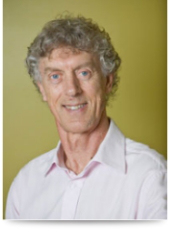
Chris Walker
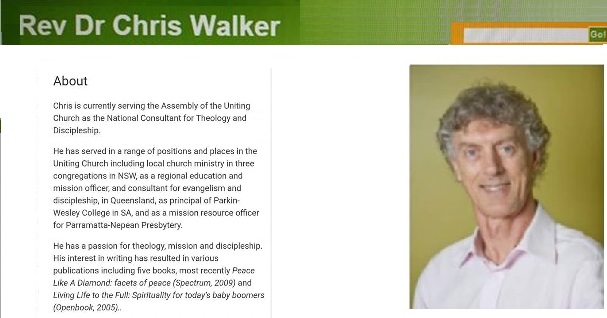
Chris is currently serving the Assembly of the Uniting Church as the National Consultant for Theology and Discipleship.
He has served in a range of positions and places in the Uniting Church including local church ministry in three congregations in NSW, as a regional education and mission officer, and consultant for evangelism and discipleship, in Queensland, as principal of Parkin-Wesley College in SA, and as a mission resource officer for Parramatta-Nepean Presbytery.
He has a passion for theology, mission and discipleship. His interest in writing has resulted in various publications including five books, most recently Peace Like A Diamond: facets of peace (Spectrum, 2009) and Living Life to the Full: Spirituality for today’s baby boomers (Openbook, 2005).