
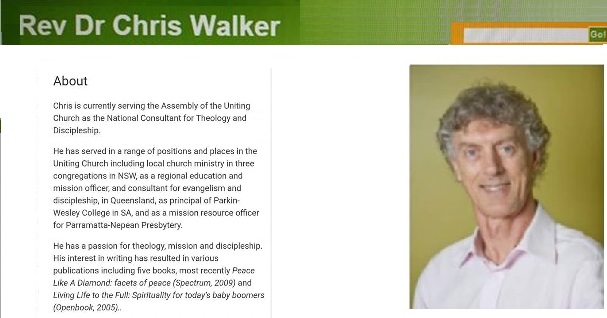
with Rev Dr Chris Walker
Federer and Nadal – Champions
I was on leave during the time of the Australian Open tennis championships. So I was able to follow it closely. I watched a number of matches, especially the men’s semi -finals and final. The final between Roger Federer and Rafael Nadal was a classic. Every point was contested. A lapse meant losing a game or a set. Both men played outstanding tennis. Some of their shots were amazing. In the end Federer finally prevailed. As he said in his speech after the match, he would have been happy with a draw but tennis does not have draws. Someone does finally win and someone loses. Both Federer and Nadal are real champions in my view. But what makes a champion?
In terms of tennis, a champion is one who wins major tournaments. Both Federer and Nadal have certainly done that. Federer has now won 18 grand slam tournaments and Nada has won 14. Federer has been in 28 grand slam finals, so he has had to cope with losing 10 times also, especially to Nadal who defeated him in six of those. Both men are also champions in my view because of the way they conduct themselves. On the court they are true sportspeople. They do not have tantrums. They do not give up. They always give of their best. You can be sure their matches will be contested with respect for their opponents and the umpire. Their post-match interviews have them acknowledging their opponents and displaying humility not arrogance. Tennis is fortunate to have such champions as not all the players are like this.
We rightly admire such people and can hope to show some of their characteristics in our own lives. All of us are to develop the gifts and talents God has given us so we can do some things well. We may not be world champions, but we can gain expertise in some field and make our contribution to the lives of others. Federer and Nadal have exceptional talent for playing tennis. They entertain us with their skills and determination. They also work hard on fitness, have overcome injury, and constantly practice their shots. We too are to work on our area of expertise so that we do it really well and in order that others will benefit.
Federer and Nadal are also to be admired for their humility and graciousness. It is evident when they speak. They come across not only as skilled tennis players, but also as decent human beings. They are able to see beyond themselves. They do appreciate others. They know life is more than tennis even though it is their livelihood and passion. We too are to seek to show those qualities in our lives.
What are the qualities God values in people? Jesus highlights these especially in the beatitudes. Jesus calls ‘blessed’ those who are ‘poor in spirit,’ namely those who recognise their need of God. Those who are humble and acknowledge God will be those who will have a place in the kingdom of God. He says blessed also are those who ‘mourn’. This is surprising as worldly values would pity not admire such people. Yet Jesus affirms those who know loss and can sympathise with those who have suffered loss. Blessed are the ‘meek’. Jesus says they will inherit the earth. This is a reversal of the usual way of the world in which the proud and powerful dominate and gain ownership of the land. Jesus calls blessed those who ‘hunger and thirst for righteousness’. Again, so often this world is unjust and yet Jesus says such people will be satisfied. Blessed are the ‘merciful’. Those who show mercy will receive mercy from God. Jesus affirms the ‘pure in heart’. Those who have a good heart, who care for others, who are not deceitful, are those to whom God will reveal God’s self. Those who are ‘peacemakers’ will be called God’s children, not those who wage war and terrorism. Jesus even says people are blessed when they are ‘persecuted for righteousness’ sake’. The reality of this world is that good people are not necessarily appreciated. Others may even revile and act against these people for they show them up. However Jesus promises such people a reward in the kingdom of heaven (Matthew 5: 1-12).
In his writings Paul contrasts what he terms living according to the ‘flesh,’ namely selfish desires, with living by the Spirit. Living by selfish desires means such activities as: impurity, licentiousness, enmities, strife, jealousy, anger, quarrels, dissensions, envy, drunkenness and the like. He contrasts these with the fruit of the Spirit which are: “love, joy, peace, patience, kindness, generosity, faithfulness, gentleness and self-control.” He urges people to be guided by the Spirit (Galatians 5:16-25).
We can admire champions, whether in sport or other endeavours. They are people who have achieved highly in their particular field. What they have done benefits others, whether it be entertainment or in more practical ways. Each of us depends on the expertise of many people. All of us can aim to be champions or experts, at least to some extent, in our lives. In our families we can be champions to our own children. In our work we can be known for the quality of our work and for the way we conduct ourselves.
When we think of champions, it does matter who we look to. If we look to certain people then what we admire may well not be what God values. For so often famous people are not especially worthy. They may in fact not display the values and qualities God desires of us. Wealth and fame may enable them to look appealing but God sees everyone as they really are. God would assist us by God’s Spirit to develop those characteristics that are truly admirable. Only these qualities will lead to God’s affirmation and a place in God’s kingdom.
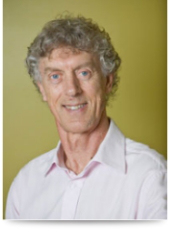
Chris Walker
(National Consultant Christian Unity, Doctrine & Worship)
chrisw@nat.uca.org.au
http://revdrchriswalker.wordpress.com/
Chris is currently serving the Assembly of the Uniting Church as the National Consultant for Theology and Discipleship.
He has served in a range of positions and places in the Uniting Church including local church ministry in three congregations in NSW, as a regional education and mission officer, and consultant for evangelism and discipleship, in Queensland, as principal of Parkin-Wesley College in SA, and as a mission resource officer for Parramatta-Nepean Presbytery.
He has a passion for theology, mission and discipleship. His interest in writing has resulted in various publications including five books, most recently Peace Like A Diamond: facets of peace (Spectrum, 2009) and Living Life to the Full: Spirituality for today’s baby boomers (Openbook, 2005).