
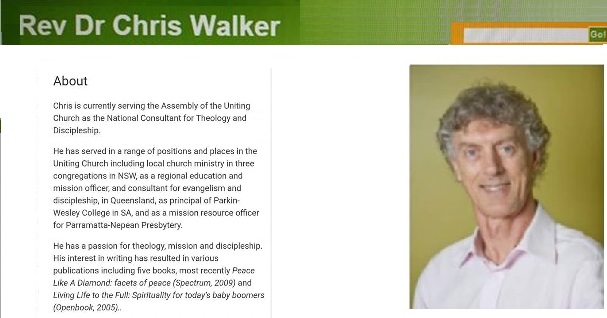
with Rev Dr Chris Walker
Leonard Cohen’s Hallelujah
Leonard Cohen, a much admired song writer and singer best known for his songs Hallelujah and Suzanne, died recently on 7 November, 2016. His YouTube performance of Hallelujah on 2 October, 2009 in London has had over 58 million hits. Rolling Stone magazine called it his most famous song that brilliantly mingles religion and sex. It was written in 1984 at a low point in Cohen’s music career. His previous albums did not sell well and his usual record company Columbia chose not to release the album with it. So he had to get it released by another record company. Later Columbia did buy the rights. Apparently he had written many verses but chose just four for the song. However in later performances, such as the one on YouTube, there are six verses making it a long song of over seven minutes. The lyrics vary in the two versions though the last verse is common. Bob Dylan was one of the first to recognise the song’s brilliance and included it in his performances in 1988. Jeff Buckley did a cover of it in 1994 on his album Grace. This much loved version went on to create something of a cult around it. It has been covered by many artists from Bono to Bon Jovi. Rufus Wainwright has an inspiriting version using the audience as the choir or backing vocals. The song was featured in the film Shrek in 2001. The word ‘hallelujah’ means ‘praise the Lord’. It comes from Cohen’s Jewish biblical background.
Cohen was born in Montreal, Canada and wanted to be a writer. In the 1960s he wrote poetry and novels. He moved to New York and became involved in the scene there. His musical career started in 1967 at the age of 33. His first album, Songs of Leonard Cohen, released that year was well received as were his next albums, notably Songs of Love and Hate in 1971. Some well-known singers, such as Judy Collins and James Taylor, sang some of his songs. His Book of Mercy Poems of 1984 won an award for poetry in Canada. It was influenced by the Hebrew Bible and Zen Buddhist writings. That was the same year Hallelujah was released. He grew up within Judaism and never abandoned it. Cohan observed the Sabbath all his life. He became interested in Zen Buddhism and attributed it to curbing his depressive episodes. He did not see a conflict with Judaism as this form of Buddhism had meditative practices and did not believe in a god. In 1995 he entered the Mount Baldy Zen Centre near Los Angeles and came under its master. He became an ordained Buddhist monk the next year. He also considered other religions and was impressed by Jesus, touched by him but not institutional Christianity. In later life he toured frequently. His last album, You Want it Darker, was released three weeks before his death aged 82.
Though it draws on biblical references, the song is really a ‘secular hallelujah’. Here I will analyse the six verse version. The song begins with a reference to King David then immediately has the line referring to a lover, “You don’t really care for music do you?” This is followed by more biblical allusions, first to King David having strong faith but on seeing Bathsheba he sinfully desired her. Then there is talk of hair being cut which relates to the Samson and Delilah story where Samson’s strength was weakened by this act of Delilah. The implication is that human sexual desire can lead to unfortunate consequences. He next asks, “Maybe there’s a God above?” but is unsure. This is followed by a clever statement that all he learned from love is to shoot others before they do the same to you. It suggests that human love cannot be trusted. He rejects that he is some kind of pilgrim. Rather he is a broken person who can still say, hallelujah. He goes on to speak about being here before, walking this floor, before he knew his lover. Surprisingly he says love is a lonely hallelujah. Human love reaches out to praise. He goes on to say there was a time when his lover let him know “but now you never show it to me, do you.” He used to have sex with her, and with another religious allusion says “the holy dove” was in the experience also. Sex leads to saying hallelujah. He finishes by saying that he has done his best which he admits “wasn’t much”. Though he told the truth, it all went wrong. Nevertheless he says, “I’ll stand before the Lord of song with nothing on my tongue but hallelujah.” The melody is lilting and the chorus of “hallelujah” memorable. Cohan has a haunting base voice and the backing singers make the “hallelujahs” strong. Despite being typical of Cohen’s realistic or even pessimistic outlook, the song is not depressing but uplifting. Hallelujah is an affirmation of life. The song therefore takes us from struggle and conflict, to resignation, and finally to the climactic closing line and the offer of praise, “hallelujah”.
I like many others appreciate the song both as a song and as a thoughtful comment on life. I also think it shows that the human spirit does want to reach out to something beyond itself, beyond that which is human. As I said the word ‘hallelujah’ means ‘praise the Lord,’ so in the song Cohen is expressing, perhaps even despite himself, the recognition that there is a mystery beyond which Christians, Jews and Muslims call God. Cohen’s Jewish background provides him with biblical references and a sense of God. Singing “hallelujah” lifts us above our mundane lives and presents us before the mystery of God, the unseen Lord of life and song. The song affirms the value of praise in the face of confusion, doubt and loss. It conveys a sense of hope through praise.
Chris Walker
(National Consultant Christian Unity, Doctrine & Worship)
chrisw@nat.uca.org.au
http://revdrchriswalker.wordpress.com/
Chris is currently serving the Assembly of the Uniting Church as the National Consultant for Theology and Discipleship.
He has served in a range of positions and places in the Uniting Church including local church ministry in three congregations in NSW, as a regional education and mission officer, and consultant for evangelism and discipleship, in Queensland, as principal of Parkin-Wesley College in SA, and as a mission resource officer for Parramatta-Nepean Presbytery.
He has a passion for theology, mission and discipleship. His interest in writing has resulted in various publications including five books, most recently Peace Like A Diamond: facets of peace (Spectrum, 2009) and Living Life to the Full: Spirituality for today’s baby boomers (Openbook, 2005).