
with Rev Dr Chris Walker
Shaped by Jesus
I have been reading Dietrich Bonhoeffer’s Discipleship and Keith Johnson’s The Essential Karl Barth. Barth and Bonhoeffer are two of the most important theologians of the 20th century who still are having an impact on Christian thinking. One of the things that struck me in regard to both is that they did not just speak ‘about’ Jesus and the Christian message. They saw the need to be shaped ‘by’ Jesus. I will explore this further.
In a famous lecture on “The Humanity of God” in 1956 Karl Barth explained how he came to a reassessment of his theology. His early theology was a reaction against the liberal theology he had studied that he found so lacking when he was a pastor in a Swiss village during the First World War. He strongly opposed the German justification of the war and was shocked to learn that many of his former teachers had signed a declaration of support for the German war policy. This prompted him to question everything they had taught him. He came to reject what he now regarded was their human based theology. The outcome was his study of Romans which when published in 1919 immediately established him as a new voice in theology. Others joined him and the movement was called ‘Dialectical Theology’ because of the way they approached theology. Barth emphasized God as ‘wholly Other” who breaks in upon us “perpendicularly from above” and that there is an “infinite qualitative distinction” between God and humanity. The movement was strong on rejecting liberal theology but not strong on what it affirmed. This led to Barth developing his Church Dogmatics begun in 1932 which were his life work, still unfinished at the time of his death in 1968 despite all the words he had written.
He said that his early theology was largely a matter of clearing away rather than the message of Jesus’ resurrection which was the real aim of theology. The living God has come to us in Jesus Christ. This togetherness of God with humanity is determined, delimited and ordered by God. Christology is the basis for theology. Jesus Christ as he is attested in the Bible is not a human in the abstract. Nor are we dealing with God in the abstract. In Jesus Christ is true God and true human. He is the Lord humbled for communion with humanity and likewise the servant exalted to communion with God. He is the Word spoken from the loftiest transcendence and heard from the deepest immanence. In this oneness Jesus is the Mediator and Reconciler between God and humanity and is also the Revealer. Jesus Christ is the revealing and reconciling address of God to humanity. Hence theology is not just a matter of words about God, about Jesus Christ, but is reflection on what God has said primarily in the Bible and in Jesus. Living as a Christian is not only affirming the Christian message but seeking to let Jesus shape our lives by living in conformity with his life and teaching.
Bonhoeffer says the call to discipleship is a commitment solely to the person of Jesus Christ. It is a breaking through all legalisms by the grace of him who calls. It is a gracious call, a gracious commandment. He argues that an idea about Christ, a doctrinal system, a general religious recognition of grace or forgiveness of sins does not require discipleship. One enters into a relationship with an idea by way of knowledge, enthusiasm and even by carrying it out but not by personal obedient discipleship. Christianity without the living Jesus Christ remains necessarily a Christianity without discipleship. Bonhoeffer says that Jesus’ call to discipleship mandates obedience. It is God’s own word, so simple obedience is required. Jesus’ call breaks the ties with the naturally given surroundings of a person’s life such as family and nation. Christ unties the person’s immediate connections with the world and binds the person to himself. Jesus puts himself between the person and the given circumstances of the world. Everything should happen only through him. Jesus stands not only between me and God, he also stands between me and the world, between me and other people and things. He is the mediator, not only between God and human persons but also between person and person, and between person and reality. For disciples there are no unmediated relationships neither to God nor to the world. While there are plenty of other gods and the world that want to offer immediate access. Breaking with these is to recognize Jesus Christ as the Son of God, the mediator. People called by Jesus to be disciples see all relationships through him.
Both Barth and Bonhoeffer were not only people who were teachers and theologians but disciples. Both were leading figures in the Confessing Church movement that opposed the compromising position of the majority of German Christians who supported Hitler and the Nazis. They rejected the anti-Jewish policies and Aryan beliefs of the Nazis. Bonhoeffer was eventually arrested and hanged just before the end of the Second World War. Barth was dismissed from the University of Bonn and returned to Switzerland.
Bonhoeffer wrote about discipleship and the cross. He said that Jesus made it clear to his disciples that the need to suffer applied to them as well as to himself. If we are to be shaped by Jesus and not just believe in him then we need to take seriously what he said and how he lived. Jesus lived in full obedience to God and the way of love and non-violence. If we want to live as his disciples then we are to follow the way he showed us. Moreover, Jesus is not just a past prophet who lived and died for God. God raised Jesus from the dead to be the living Christ. As such he continues to call us to discipleship in our time. We are to be shaped by Jesus as we follow him and serve God’ reign.
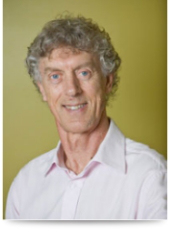
Chris Walker
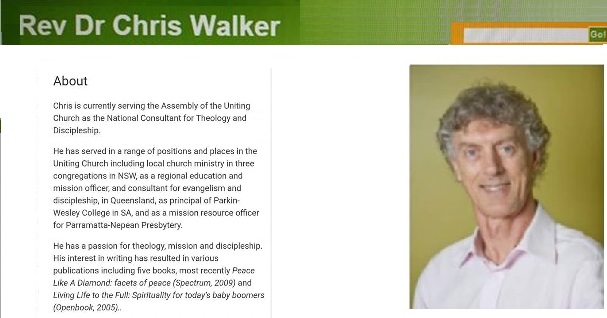
Chris is currently serving the Assembly of the Uniting Church as the National Consultant for Theology and Discipleship.
He has served in a range of positions and places in the Uniting Church including local church ministry in three congregations in NSW, as a regional education and mission officer, and consultant for evangelism and discipleship, in Queensland, as principal of Parkin-Wesley College in SA, and as a mission resource officer for Parramatta-Nepean Presbytery.
He has a passion for theology, mission and discipleship. His interest in writing has resulted in various publications including five books, most recently Peace Like A Diamond: facets of peace (Spectrum, 2009) and Living Life to the Full: Spirituality for today’s baby boomers (Openbook, 2005).