
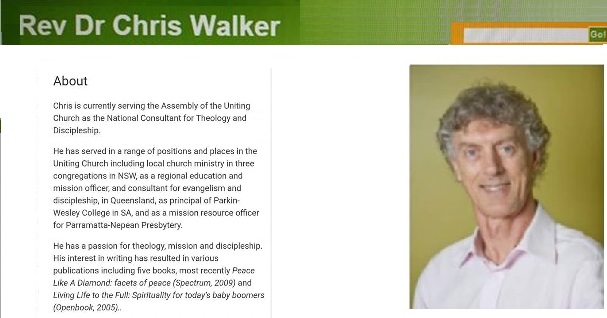
with Rev Dr Chris Walker
Truth, Language and Integrity in the age of Trump
I have read a perceptive article by Bret Stephens on intellectual integrity in the age of Donald Trump which was a lecture he gave at the University of California. He writes for the foreign affairs column of The Wall Street Journal for which he won the 2013 Pulitzer Prize for commentary. He is himself fairly conservative politically which makes his lecture even more remarkable. So I will draw on it in writing about truth, language and integrity.
The lecture was the Daniel Pearl Memorial Lecture commemorating an investigative journalist kidnapped by terrorists and killed in 2002. Many journalists have died in recent years going into dangerous places. He begins his lecture pointing out that The Wall Street Journal seeks to ensure that what you read is factual – not probably, not partially, not alternatively factual. He notes that Donald Trump routinely describes reporting he dislikes as ‘fake news’. The current Administration calls the press ‘the opposition party’. Trump is trying to depose mainstream media in favour of the media he likes that routinely support him. Stephens discerningly says that what Trump objects to in the news media is not a liberal bias that gets in the way of objectivity. That would be a fair thing to do. Trump objects to objectivity itself.
Stephens says that Donald Trump should not be regarded as dumb but as darkly brilliant. Trump responds to a claim of fact not by denying fact but by showing that for him the facts do not matter. Facts are interchangeable with opinion. Truth is what you can get away with. Twitter cuts out the middle person between politicians and the public. Trump’s take on things, his opinions, are immediately available.
Trump lies frequently but because it is done so often it is accepted and does not matter. He uses shameless rhetoric. His assaults on human decency are seen by his supporters as refreshing examples of personal authenticity and political incorrectness. Stephens points out that the politics of dishonesty, insult and scandal is entertaining. It is exhilarating. To tell a lie is wrong but to tell a lie with brass takes skill. Trump brazens his way through press conferences.
In summary Stephens says we accept Trump’s behaviour by: 1) normalising it, 2) it excites us, 3) we adopt new metrics of judgment – it is about perceptions, and 4) we rationalise it. People offer explanations for Trump. For example his disastrous first month is called by some a month characterised by refreshing openness.
Is truth important? Does careful language matter? Is intellectual integrity no longer considered valuable? We live in an age in which perceptions can be readily posted for all to read and see. As a follower of Jesus I want to affirm strongly that truth is important, that our language does need to be considered and respectful, that intellectual integrity and integrity of character are values to uphold and pursue.
Early in John’s gospel we read, “And the Word became flesh and lived among us, and we have seen his glory, the glory as of a father’s only son, full of grace and truth” (John 1: 14). Jesus was fully human but in him God was present. He was the image of God, the glory of God the Father. His life was characterised by love and truth. In all he said and did he was a person of utter integrity. He treated people with compassion and respect, especially those who were mistreated or overlooked by others. While he could be critical of the religious leaders of his day, he criticised their actions and did not simply use abusive language. He proclaimed God’s kingdom and invited people into it. People could know they were the loved sons and daughters of God if they responded in faith.
The authorities were threatened by Jesus’ words and actions. They plotted against him. At his trial they had false witnesses speak against him. When questioned about his teaching, Jesus responded that he spoke openly and invited the officials to speak to those who heard what he said. When struck on the face by one of the police Jesus answered, “If I have spoken wrongly, testify to the wrong. But if I have spoken rightly, why do you strike me?” (John 18:23). Unjustly arrested and mistreated by others Jesus remained calm and respectful.
Asked by the Roman governor Pilate if he was the king of the Jews, Jesus answered, “My kingdom is not from this world.” He went on to says, “For this I was born and for this I came into the world, to testify to the truth. Everyone who belongs to the truth listens to my voice.” Pilate’s response was to ask, “What is truth?” (John 18:38).
Jesus was indeed a person of integrity, full of grace and truth. He lived, died and rose again fulfilling his role as God’s Son proclaiming and demonstrating God’s reign. He calls us to live concerned for the truth in all areas of life, not least in political life which can so often put political expediency before the truth. We need the media to seek the truth and not be satisfied with statements that are given to placate. This applies to the church as an institution also. It too can be less than truthful and cover up practices that are not acceptable. Jesus wants us to be people of integrity and to seek the truth. He would also have us use language that is considerate and respectful. Unfortunately there is a trend to tolerate abusive language and hateful language. As Christians we need to oppose this by our own example and to stand up for others as needed.
May all of us recognise what is happening in our world at this time. Jesus would have us look to God and God’s ways in all of life. For God cares of all of us and wants the best for and from us.
Chris Walker
(National Consultant Christian Unity, Doctrine & Worship)
chrisw@nat.uca.org.au
http://revdrchriswalker.wordpress.com/
Chris is currently serving the Assembly of the Uniting Church as the National Consultant for Theology and Discipleship.
He has served in a range of positions and places in the Uniting Church including local church ministry in three congregations in NSW, as a regional education and mission officer, and consultant for evangelism and discipleship, in Queensland, as principal of Parkin-Wesley College in SA, and as a mission resource officer for Parramatta-Nepean Presbytery.
He has a passion for theology, mission and discipleship. His interest in writing has resulted in various publications including five books, most recently Peace Like A Diamond: facets of peace (Spectrum, 2009) and Living Life to the Full: Spirituality for today’s baby boomers (Openbook, 2005).