
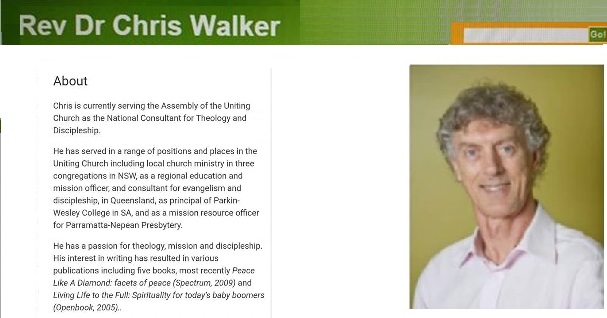
with Rev Dr Chris Walker
What is Success?
I have been to a men’s lunch with men from my church. As well as the lunch we have a conversation led by one person. This time we were asked to reflect on our working lives. The question of what amounts to success was raised. People shared about the different work situations they have been involved in. In terms of success, it was hard to know how to evaluate this. Most work situations have guidelines that are expected. If people carry them out they are considered as doing a good job. If not, they are likely to be asked to leave. Within those guidelines people said they sought to be helpful to the people they were serving. Even in a difficult situation one person did this and was appreciated for how he conducted himself. So, what is real success?
Let me suggest, drawing on my Christian faith, that success is not to be evaluated in terms of financial success, numerical growth or fame. These are worldly criteria for success and can be misleading. Financial success depends on popularity or favourable circumstances or even luck. This is also true of numerical growth. Fame tends towards those who have done something unusual that has gained attention. True success however is not a matter of seeking these directly. They may come as a result of doing something well which then is rewarded financially and with becoming widely known.
Jesus Christ was not a financial success. While he gained attention during his earthly ministry and was a popular speaker, at the end of his ministry few followed him and he was executed as a criminal. The movement he led seemed to be over and his closest followers fled in fear. Yet Jesus is now regarded as the most notable person in human history, indeed as Son of God by many of us. Christianity is the largest of the world’s religions and is to be found on every continent. While at present it may be declining in Western nations, though some churches continue to grow, it is growing in other parts of the world such as Africa, South America and Asia including China. Jesus himself however was less concerned about numbers than that people really followed him and lived as his disciples. For him successful living was expressed in terms of the beatitudes, not Key Performance Indicators or the worldly criteria for success mentioned earlier.
What do the beatitudes tell us about true success? The first thing to note is that they are not readily measurable or obvious. They are internal qualities for the most part though they necessarily are expressed outwardly. The first beatitude says, “Blessed are the poor in spirit.” For Jesus success is not what is really important, recognising ones’ poverty in the presence of God is. This relates to humility not self-abnegation. In the presence of God, we are not rich and famous but people who should recognise our poverty and need of God. As we do so God promises a place in the kingdom of heaven. Winners are grinners is a common expression. Those who are successful, those who win, are the happy ones. Jesus turns this upside down and says, “Blessed are those who mourn.” Those who have suffered loss, those who grieve are the ones who will receive God’s comfort. Compassion is more important that winning. God is more interested in those who show the capacity to mourn than in those who are successful, often at the expense of others. Jesus next says, “Blessed are the meek.” Meekness is similar to humility. It is not weakness but is gentle and willing to suffer. This again is the opposite to the worldly need for assertiveness in order to get attention and get ahead. Jesus lifts up those who are not noticed but have the quality of meekness. God will give them the inheritance of the earth.
Jesus goes on to speak about more qualities people need to display if they are to be affirmed by God, if they are to be rich in God’s sight. “Blessed are those who hunger and thirst for righteousness.” Justice and righteousness go together. Justice is the social dimension as it were and righteousness the personal dimension. Those who have a passion for righteousness will not be content when they see injustice and people mistreated. In worldly success people are often exploited in order for the company to make large profits for the owners and shareholders. Jesus is on the side of the poor and exploited and indicates it is God’s desire to fill such people. “Blessed are the merciful” is similar to the beatitude about blessed are those who mourn. Those who are merciful are compassionate and forgiving. Just as those who mourn will be comforted so those who are merciful will receive God’s mercy. “Blessed are the pure in heart.” This is not primarily about sexual or other purity but rather has to do with being single-minded about God’s will and freedom from mixed motives. The pure in heart are focussed on doing what is God’s will, on what is right and will not compromise on this. They are promised a vision of God. Next comes, “Blessed are the peacemakers.” Peacemakers are not those who avoid conflict or always try to pacify a situation. They are those who seek to make peace, build lasting peace. Jesus says they will be called children of God. To be known as a true child of God is the greatest success, for God is the one we want to affirm our lives above all others, even parents and colleagues. Finally, Jesus says, “Blessed are those who are persecuted for righteousness’ sake.” Rather than worldly success Jesus calls blessed those who are persecuted because they are involved in righteous or just causes which are opposed by those in power. For such people Jesus promises a place in the kingdom of heaven. May we heed what Jesus says and not be swayed by worldly ideas of success.
Chris Walker
(National Consultant Christian Unity, Doctrine & Worship)
chrisw@nat.uca.org.au
http://revdrchriswalker.wordpress.com/
Chris is currently serving the Assembly of the Uniting Church as the National Consultant for Theology and Discipleship.
He has served in a range of positions and places in the Uniting Church including local church ministry in three congregations in NSW, as a regional education and mission officer, and consultant for evangelism and discipleship, in Queensland, as principal of Parkin-Wesley College in SA, and as a mission resource officer for Parramatta-Nepean Presbytery.
He has a passion for theology, mission and discipleship. His interest in writing has resulted in various publications including five books, most recently Peace Like A Diamond: facets of peace (Spectrum, 2009) and Living Life to the Full: Spirituality for today’s baby boomers (Openbook, 2005).